Apúntalo todo, planifica el día con IA alrededor de tu calendario y reúne áreas, objetivos, proyectos, notas y hábitos en un solo sistema. Crea una cuenta Cloud en un minuto.
Gratis durante 14 días, sin tarjeta. Después, mensual o anual, cancela cuando quieras.
Apunta las cosas en cuanto surgen, planifica el día alrededor de tus reuniones con IA y avanza bloque a bloque.
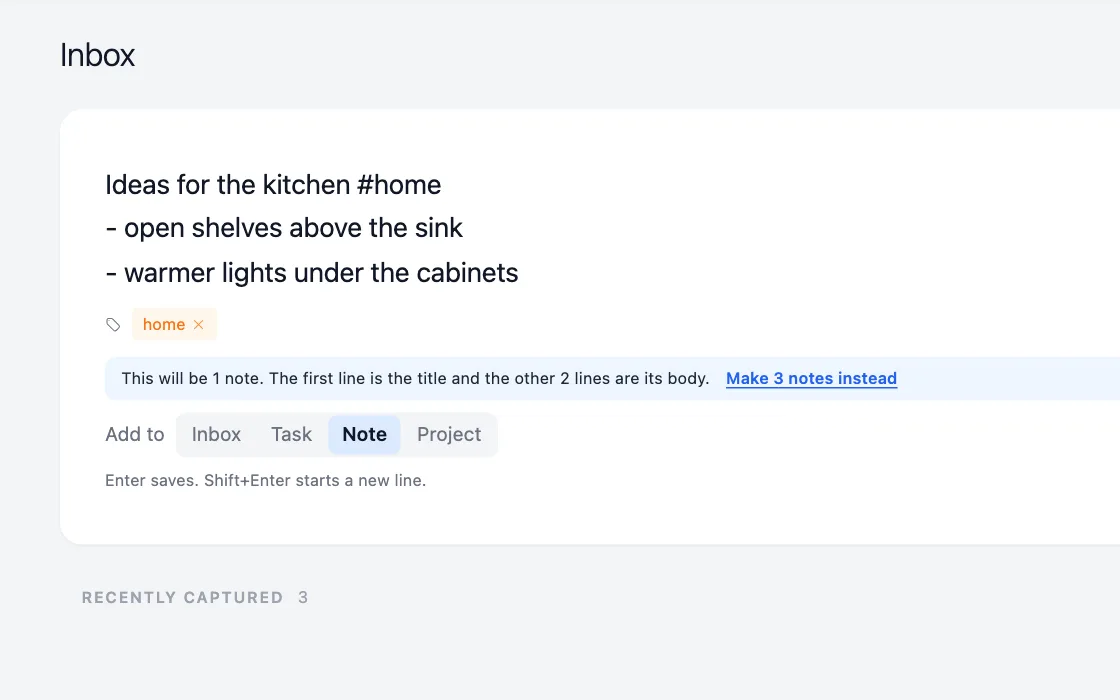
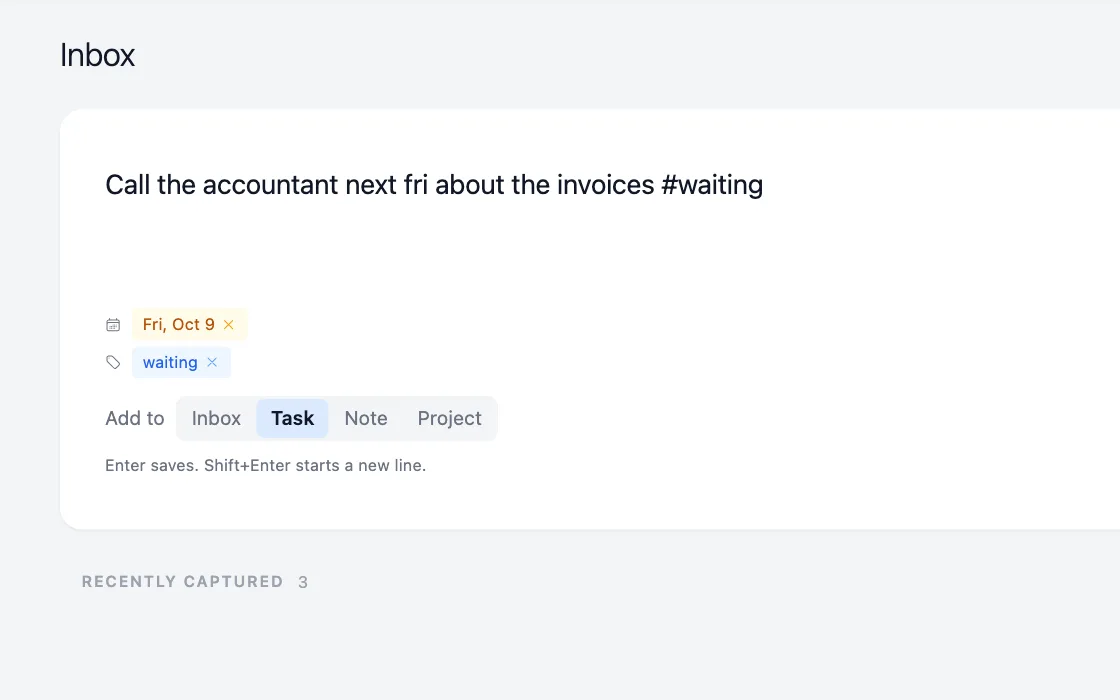
Una sola caja para la bandeja de entrada, tareas, notas y proyectos, en toda la app. Escribe como piensas y tududi completa el resto.
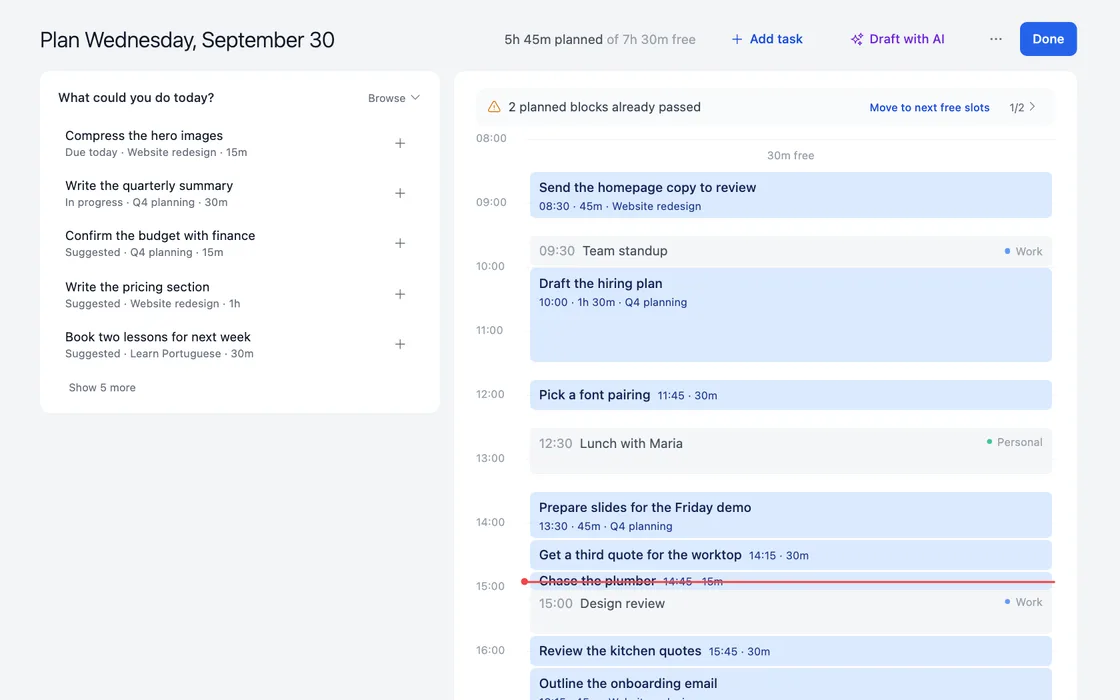
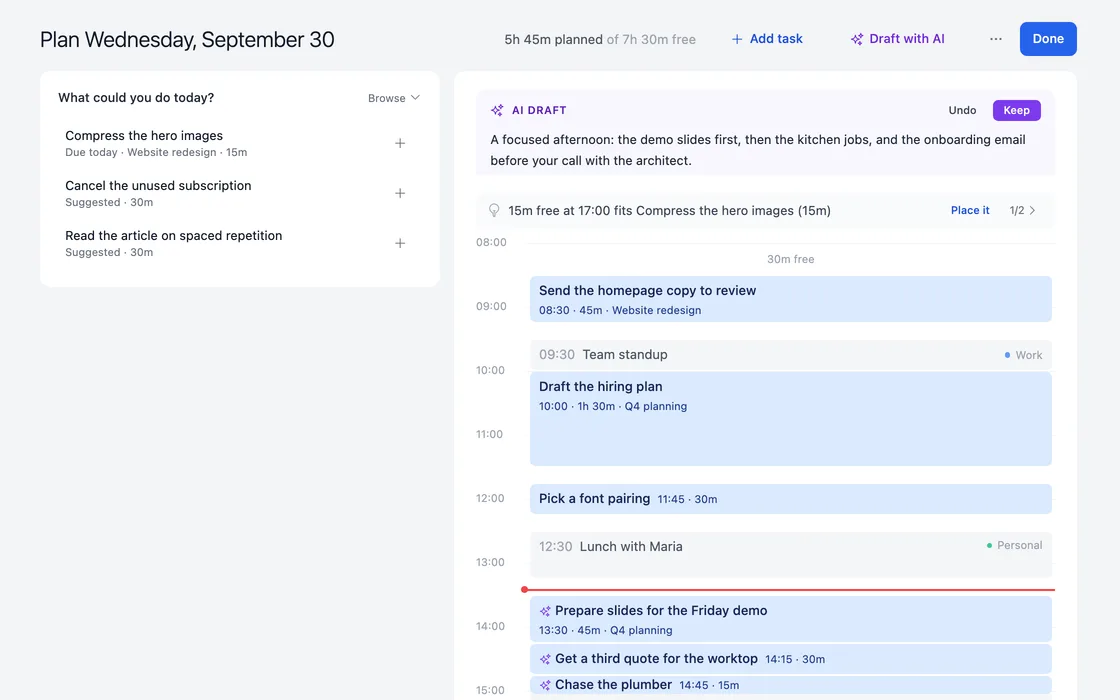
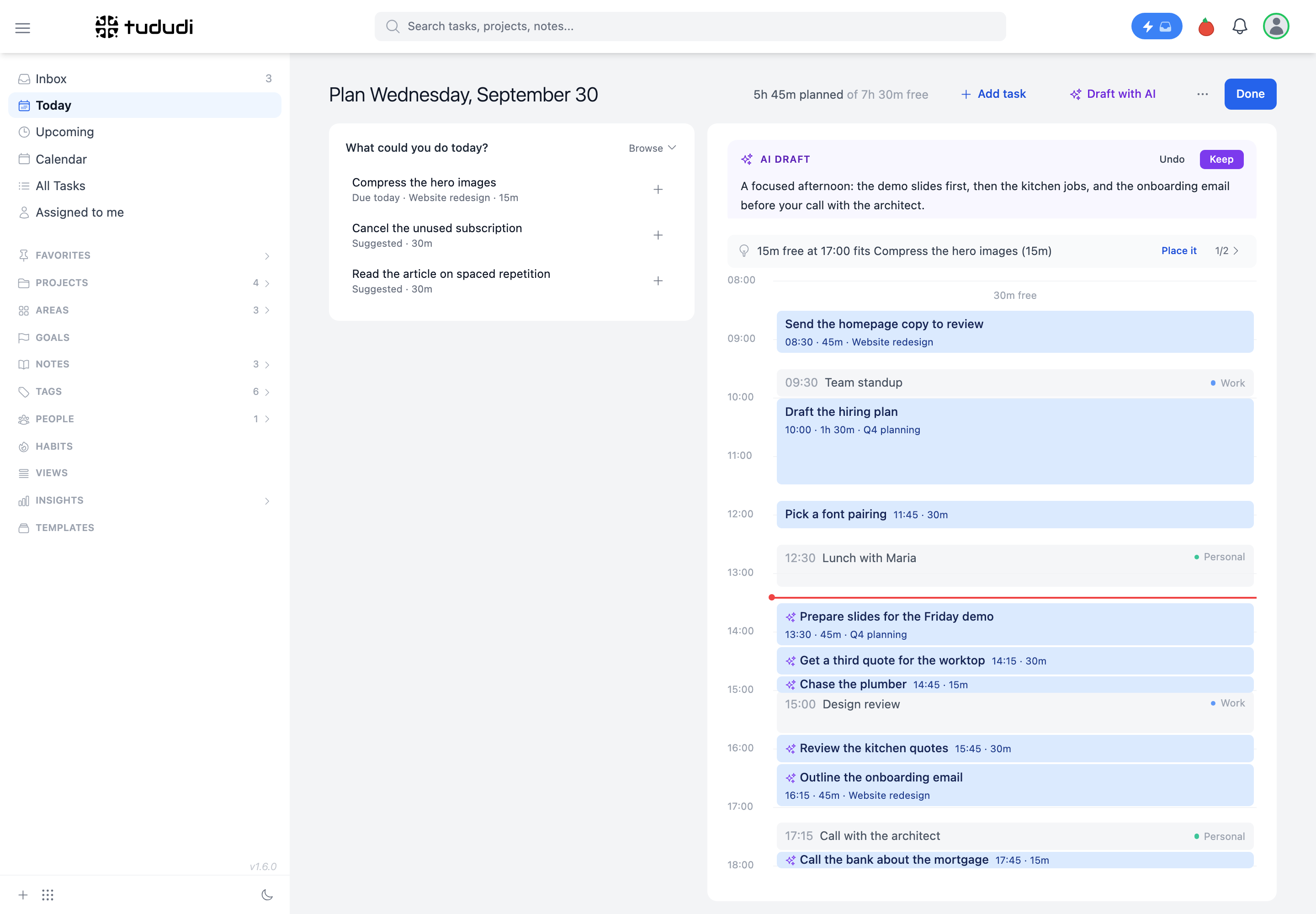
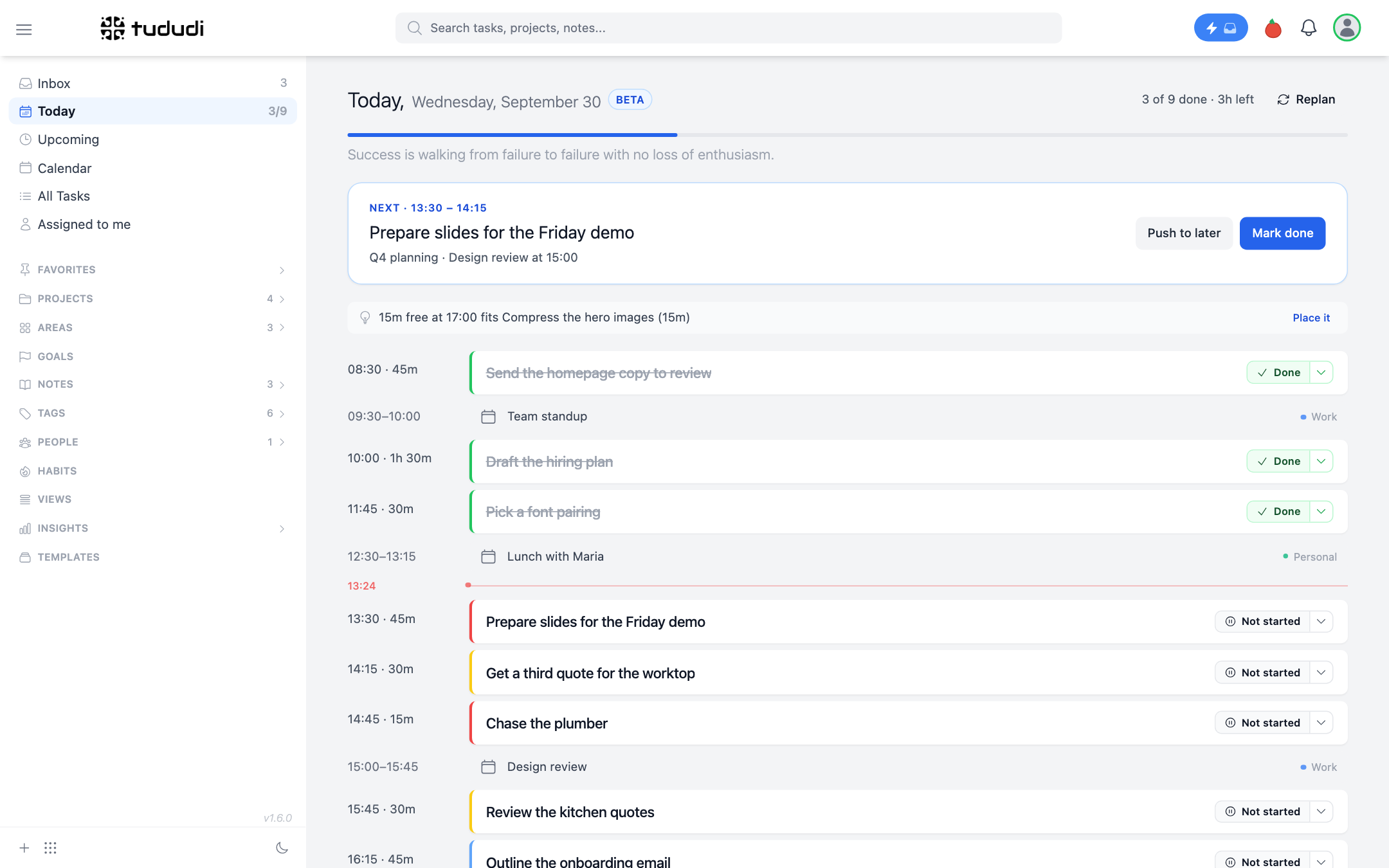
El planificador muestra lo que cabe hoy, en el orden que elijas. Dale una duración a cada tarea y colócala en el hueco entre reuniones, o deja que la IA proponga el día entero.
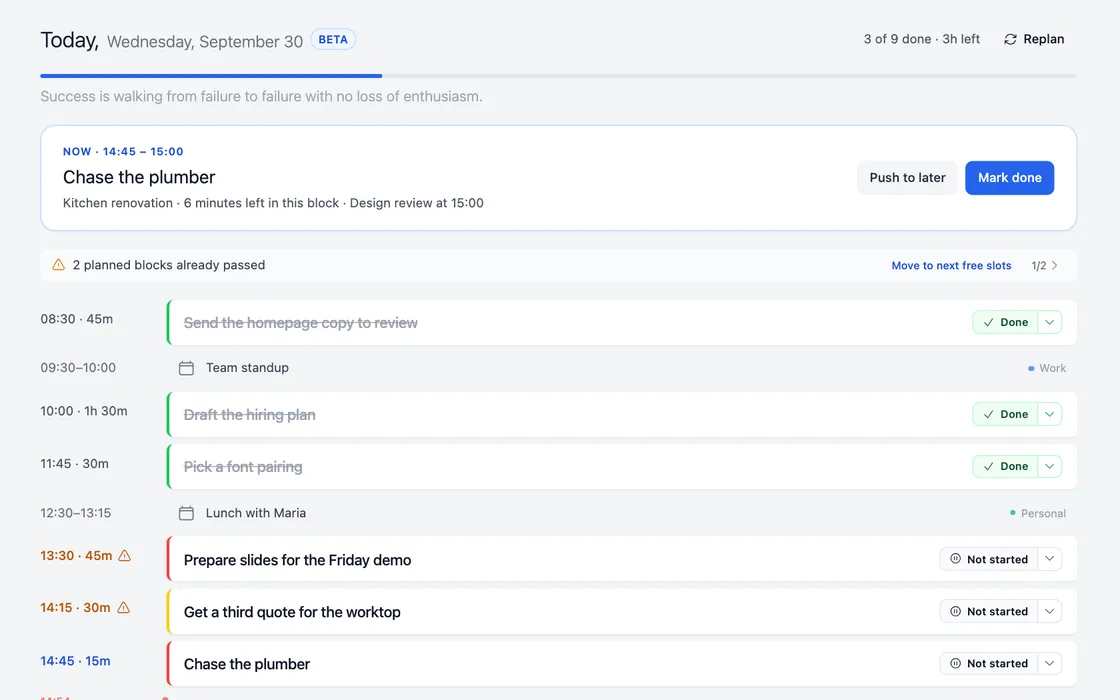
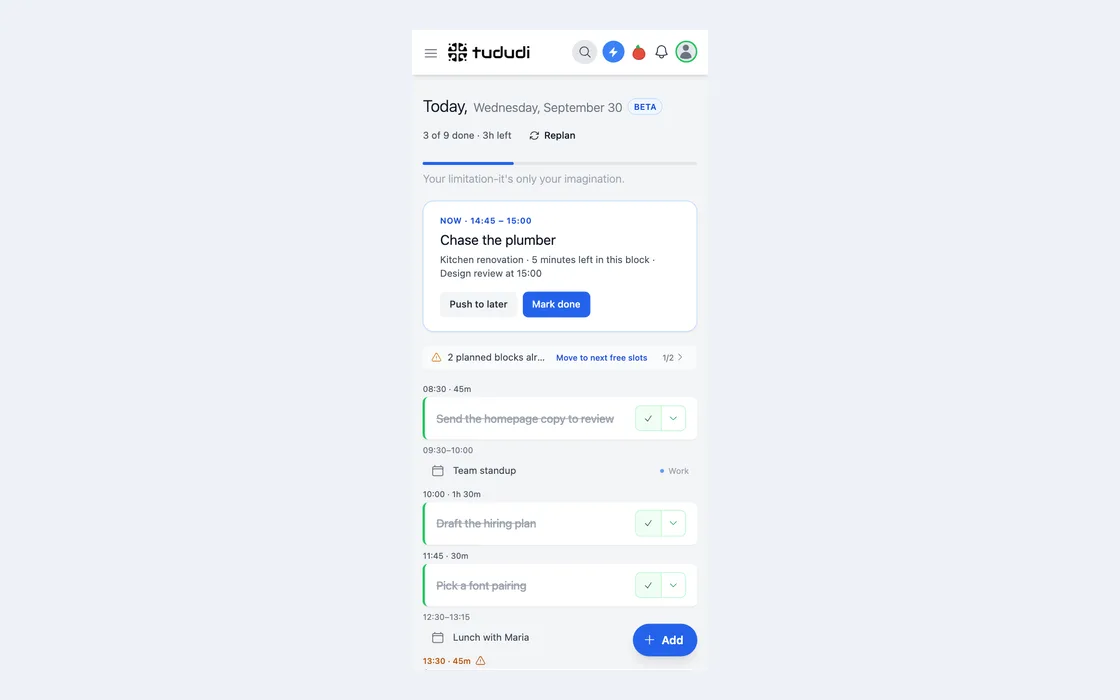
Empieza el día y Hoy muestra solo lo que te propusiste: el bloque actual y luego la agenda, con tus reuniones de Google, Apple u Outlook en medio.
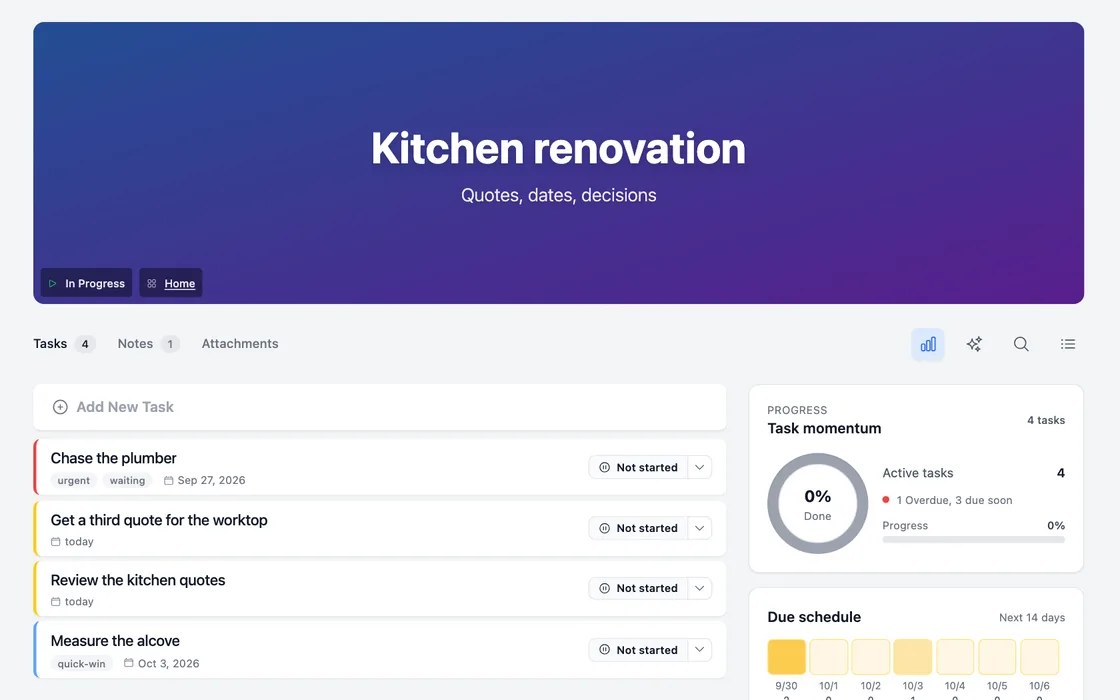
tududi combina objetivos, proyectos, tareas, notas y vistas inteligentes en un solo sistema tranquilo y enfocado. Déjanos gestionarlo por ti, o gestiónalo tú mismo si lo prefieres.
Añade elementos a la bandeja, tareas, notas o proyectos desde cualquier sitio, con archivos. Pega una captura y se convierte en el elemento.
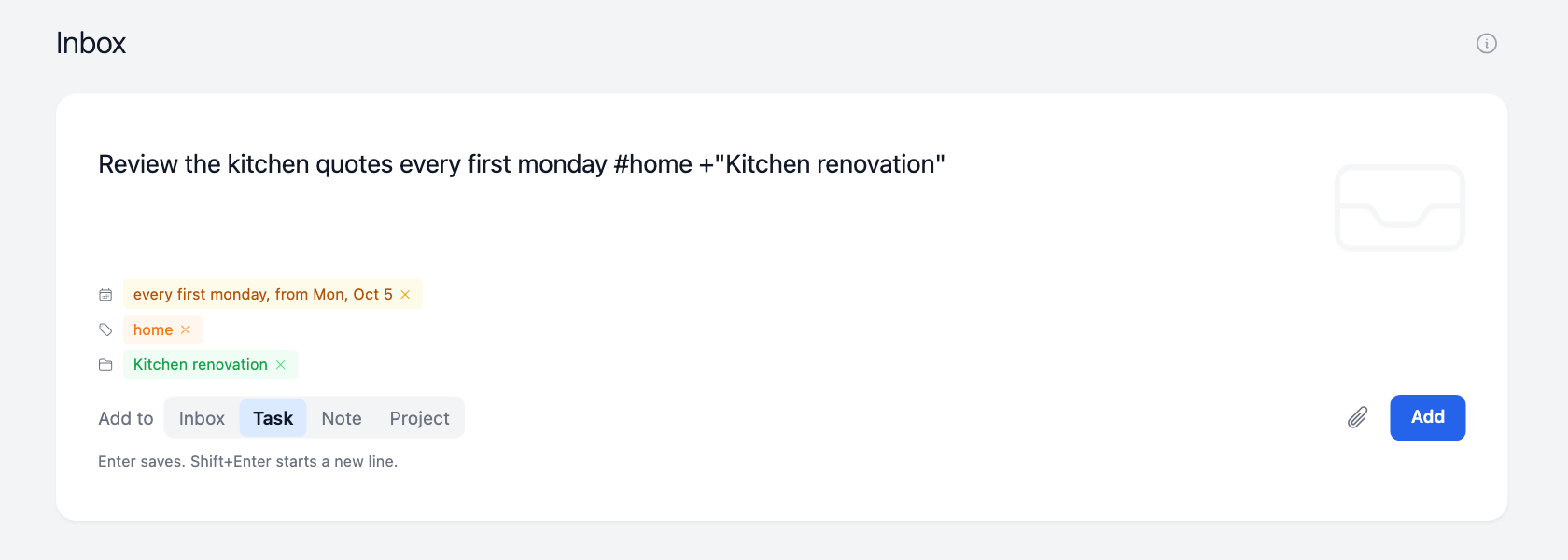
Vista previa“tomorrow”, “next fri”, “every weekday”: fechas y repeticiones se leen al escribir, junto con #etiquetas, +Proyecto y @persona.
Vista previaUn planificador que coloca tareas en el tiempo libre entre reuniones, con duraciones, sugerencias ordenadas y consejos.
Vista previaConecta calendarios de Google, Apple u Outlook y ve las reuniones junto a tus tareas, con el bloque actual arriba.
Vista previaPropón el día con IA, obtén duraciones estimadas y un cierre del día que traslada lo pendiente.
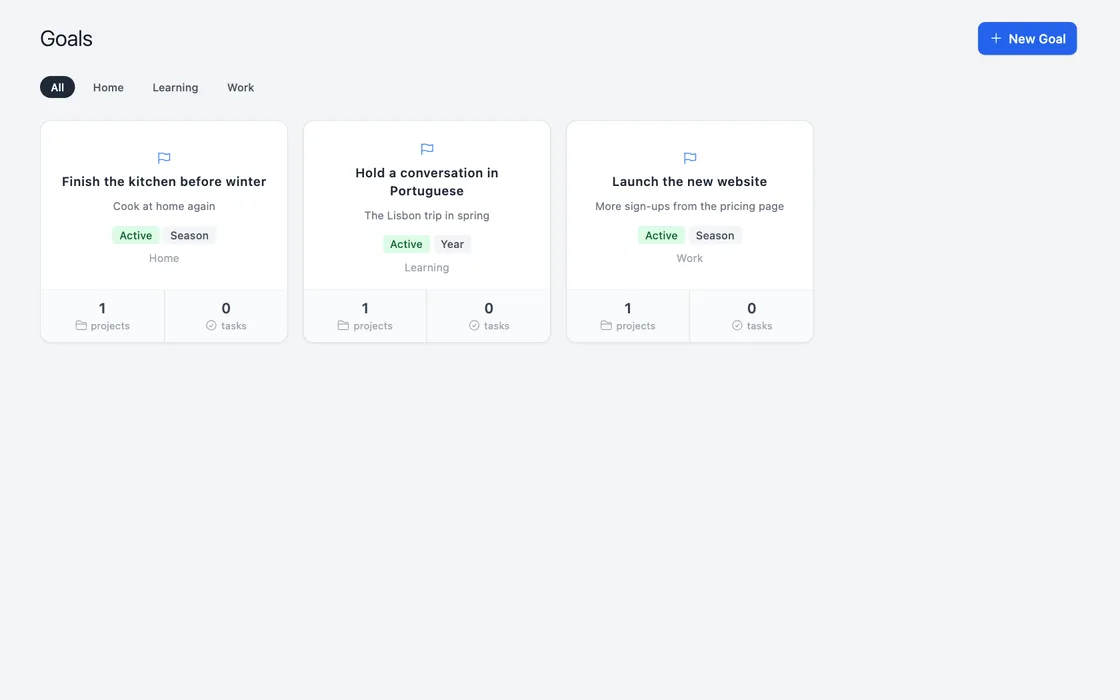
Vista previaDefine resultados para una temporada o un año, y comprueba qué Áreas y Proyectos los están impulsando de verdad.
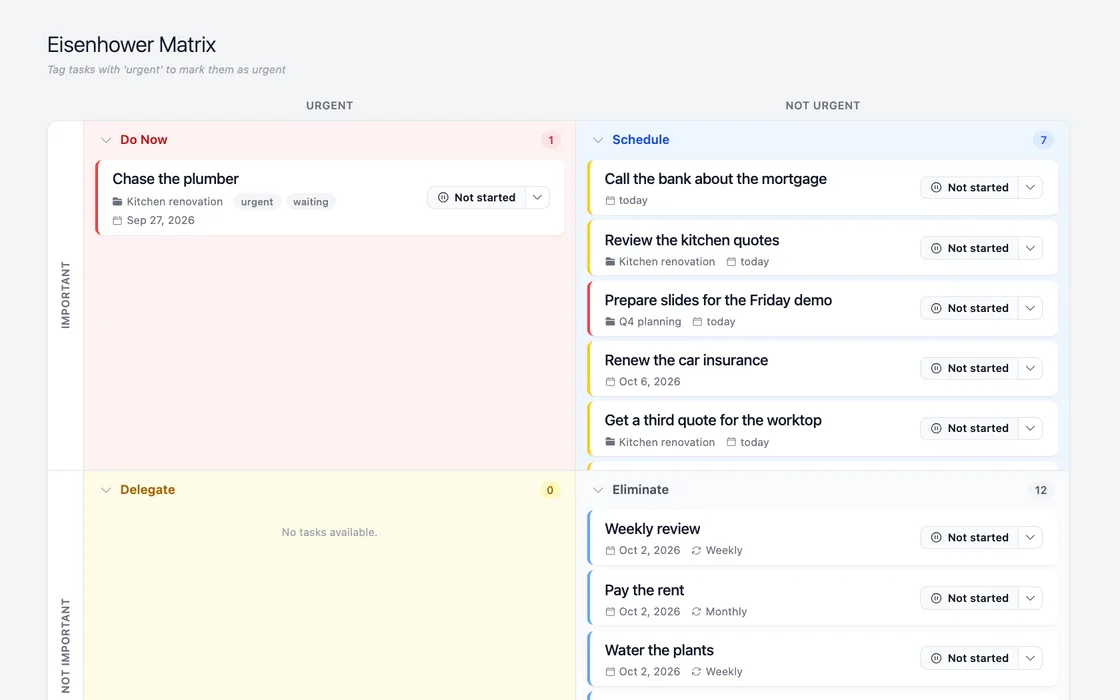
Vista previaCambia a una matriz de Eisenhower o a un tablero Kanban cuando la pregunta es simplemente: qué hago ahora.
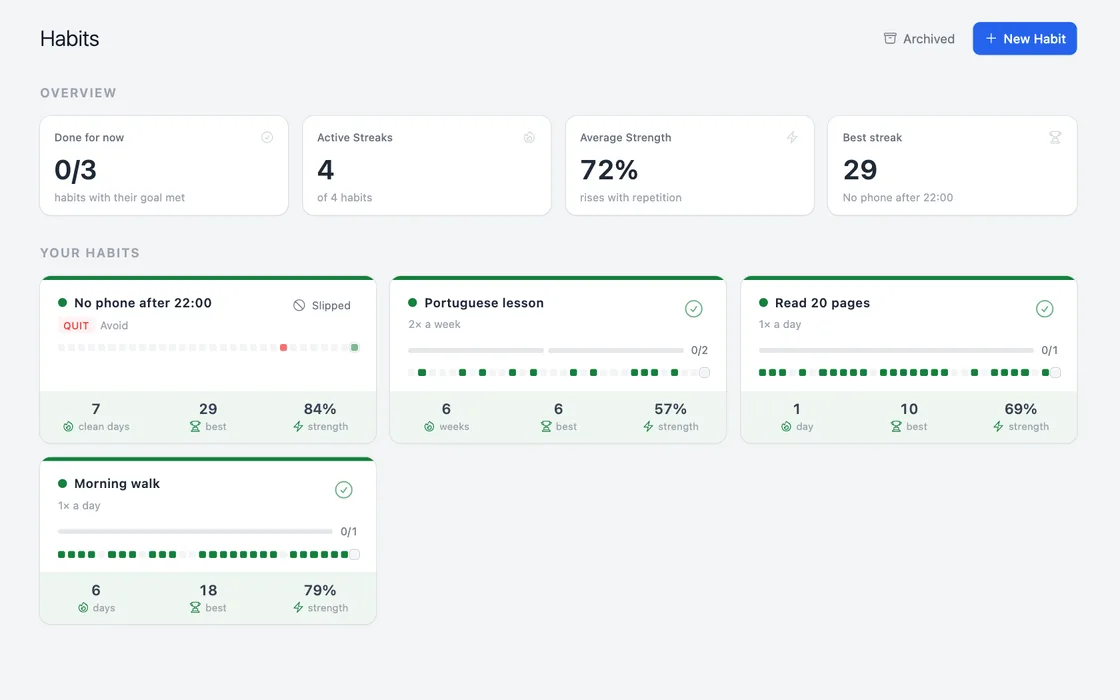
Vista previaSigue tus hábitos recurrentes junto a tareas y proyectos, con rachas e historial sencillos.
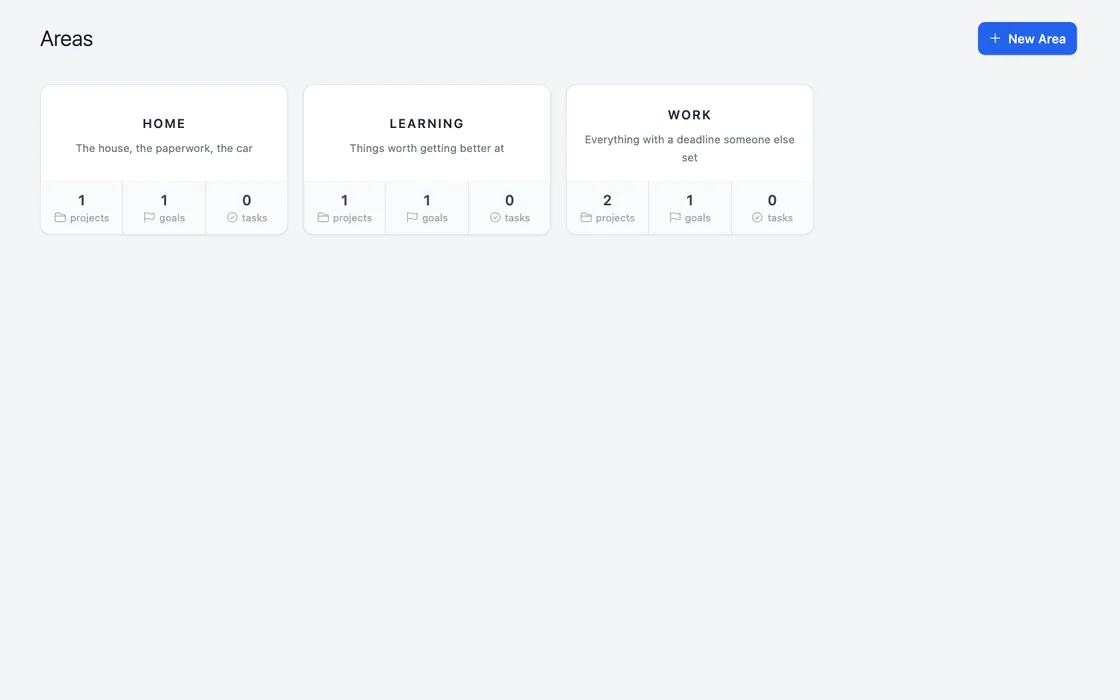
Vista previaObjetivos y Áreas conviven en la cima: resultados a largo plazo y ámbitos permanentes de tu vida. Ambos contienen Proyectos, que contienen Tareas.
Vista previaOrganiza los proyectos por áreas de vida - Trabajo, Personal, Salud, Aprendizaje.
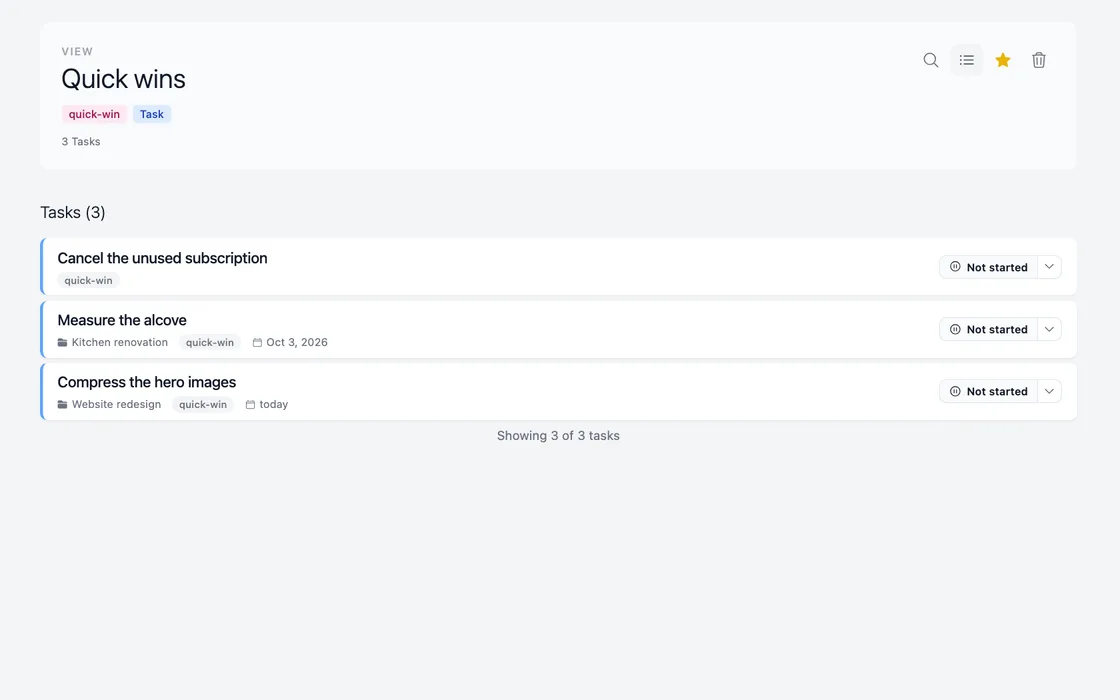
Vista previaBúsquedas guardadas inteligentes como «Hoy», «Vencidas» o «Algún día». Un clic, sin reconstruir un filtro cada vez.
Vista previaConsulta las tendencias de finalización y la carga por proyecto, para saber adónde va realmente tu tiempo.
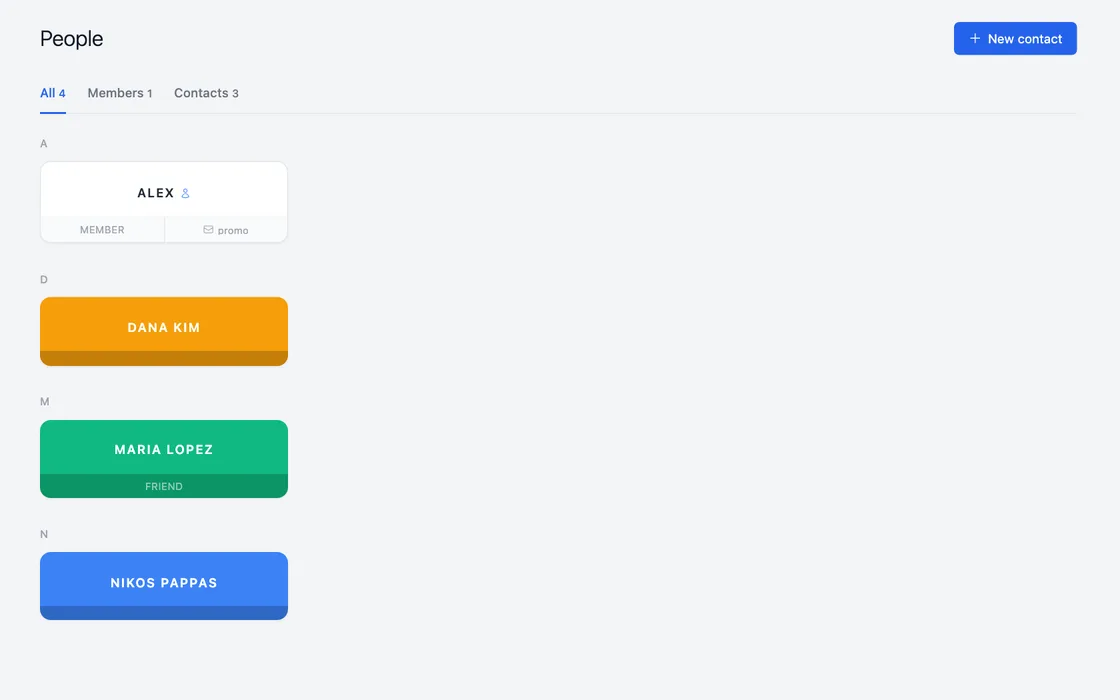
Asigna tareas a personas y comprueba de un vistazo quién participa en cada proyecto.
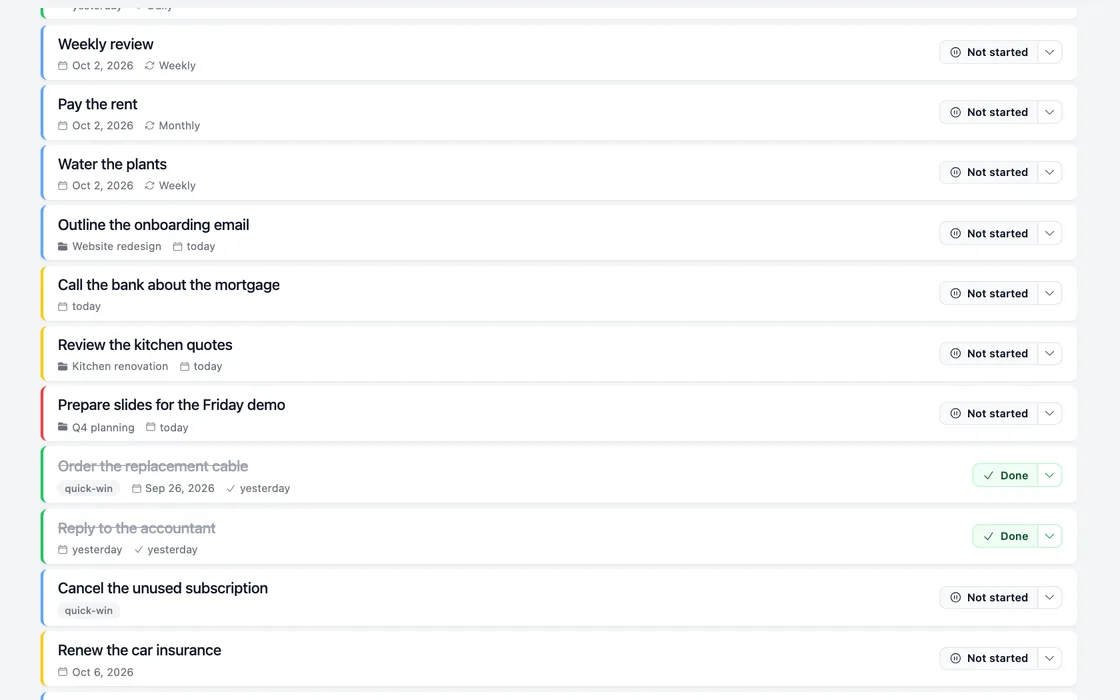
Vista previaPatrones diarios, semanales y mensuales, con recurrencia basada en la finalización y relaciones padre-hijo.
Prioridades, fechas, etiquetas y ordenación inteligente. Filtros potentes para encontrar lo que importa.
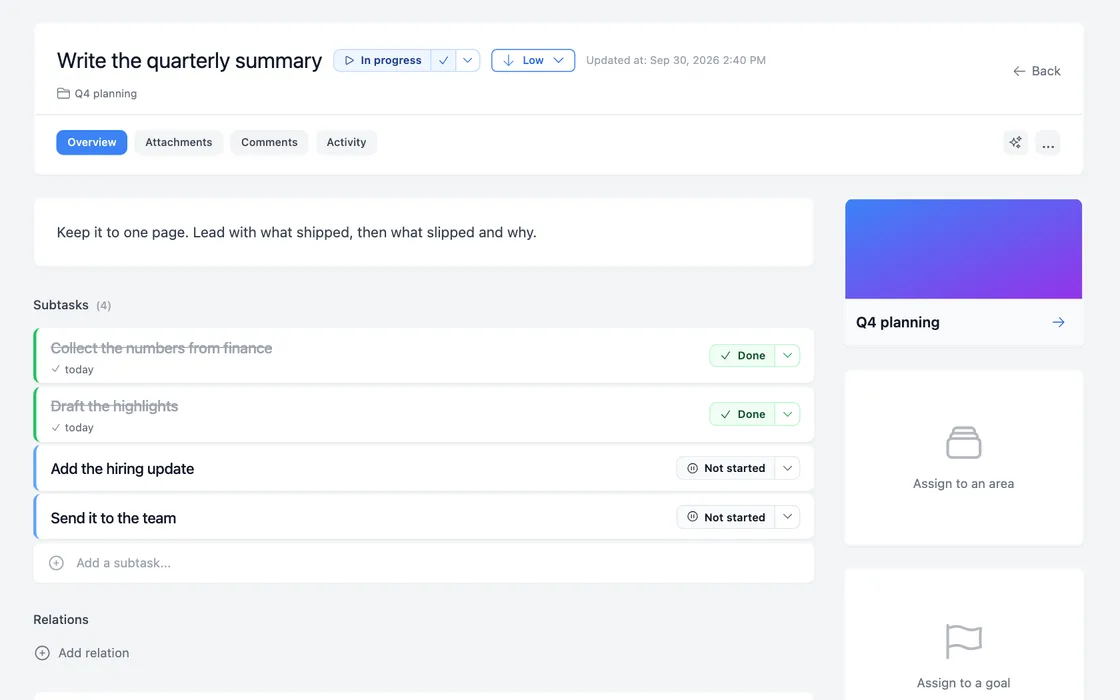
Vista previaDivide las tareas complejas en subtareas manejables, con seguimiento del progreso.
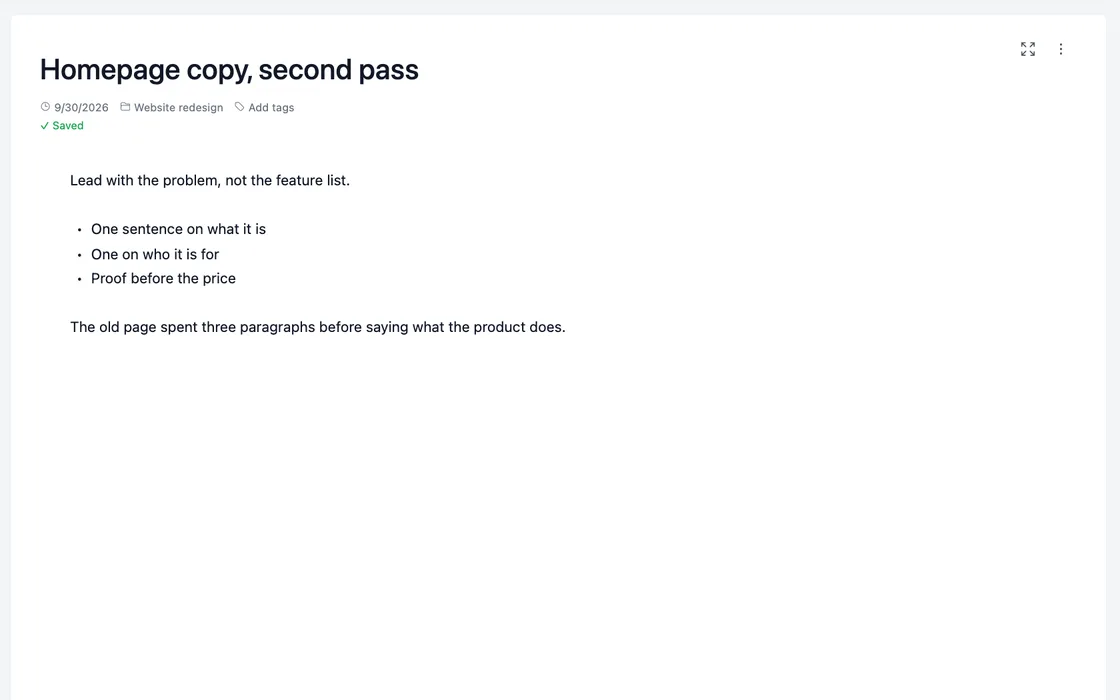
Vista previaNotas con texto enriquecido para tus proyectos, con búsqueda completa y organización.
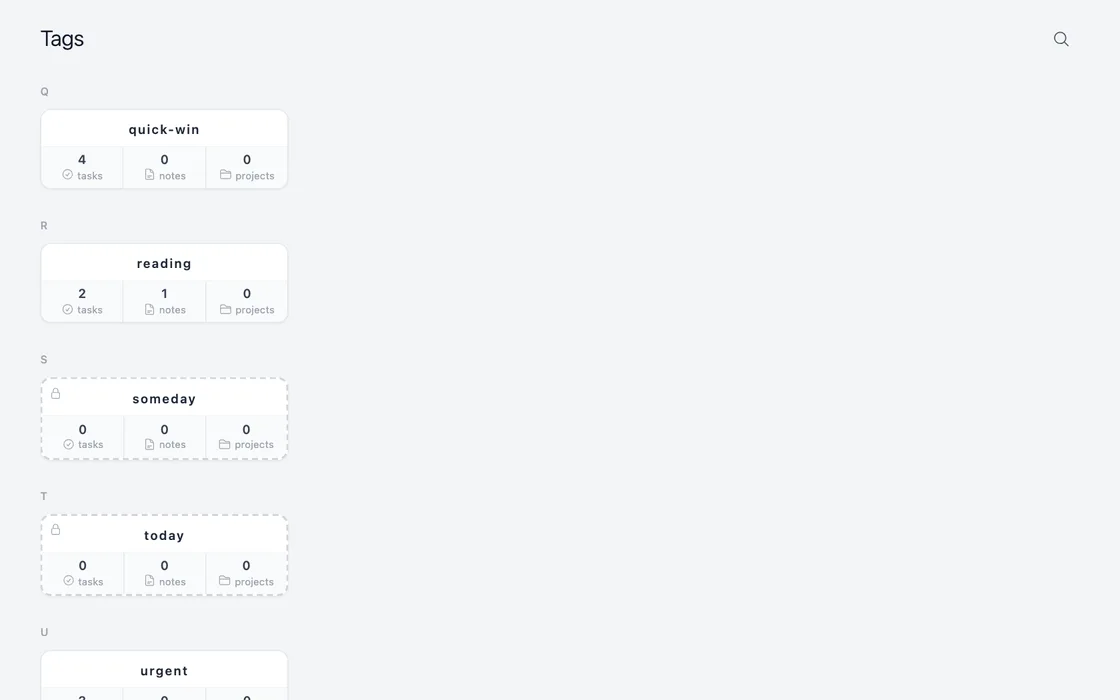
Vista previaEtiquetas personalizadas para tareas y notas, con filtrado instantáneo y organización entre proyectos.
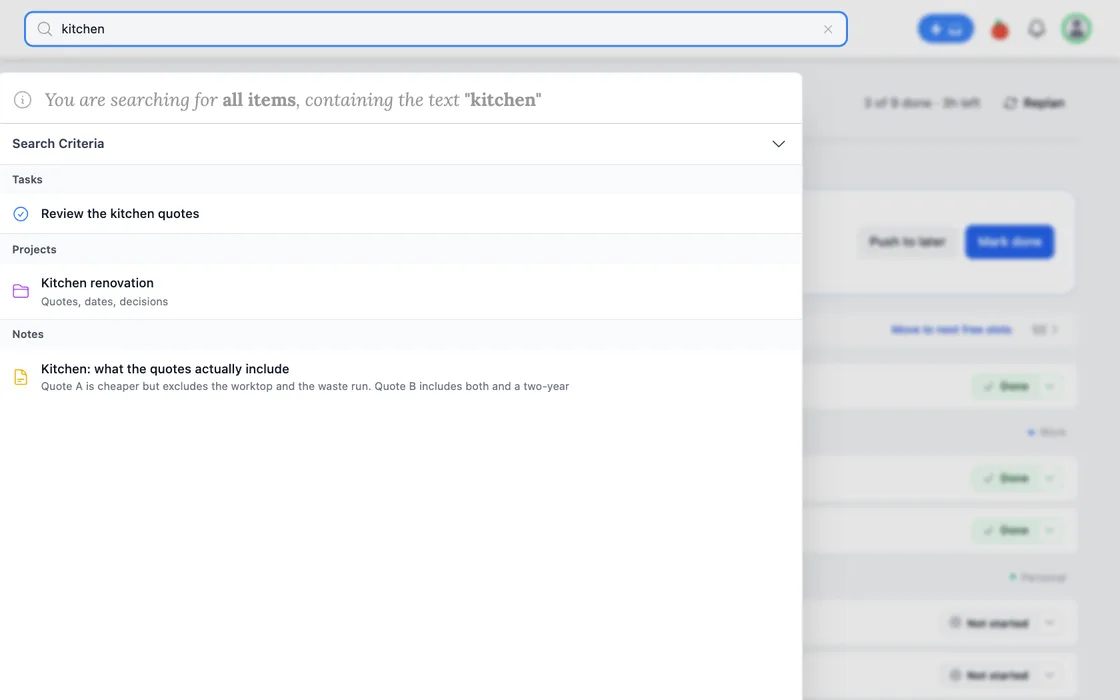
Vista previaBúsqueda de texto completo y filtros por proyecto, etiqueta, prioridad o fecha. Encuentra cualquier tarea en segundos.
Vista previaAñade tududi a tu pantalla de inicio o a tu escritorio como PWA. Funciona sin conexión y se sincroniza al volver.
Vista previaAccede con tu proveedor de identidad actual: Authentik, Keycloak, Google Workspace o cualquier proveedor compatible con OIDC.
Disponible en 26 idiomas con localización completa.
Envía un mensaje para capturar tareas al instante, recibe resúmenes diarios y gestiona tu lista sobre la marcha.
Sincronización bidireccional de tareas con Apple Recordatorios, tasks.org, Thunderbird y cualquier app compatible con CalDAV.
Documentación Swagger versionada y tokens de acceso personales para integraciones a medida.
Mantén tus datos privados. Autoaloja para tener control total, o usa una instancia Gestionada con copias de seguridad cifradas.
Comparte proyectos con permisos detallados - solo lectura o lectura y escritura.
tududi incluye un servidor MCP que expone 59 herramientas, que cubren tareas, proyectos, áreas, objetivos, hábitos, notas, personas, etiquetas, vistas, la bandeja de entrada, la búsqueda y las métricas. Conecta Claude o cualquier agente compatible con MCP directamente a tu propia instancia, ya sea tu cuenta de Cloud o un servidor que gestiones tú mismo. La conexión va a tu instancia en lugar de pasar por un intermediario, una diferencia estructural que Todoist y Notion no pueden ofrecer, prometan lo que prometan.
¿En qué debería concentrarme hoy, y hay algo que se esté retrasando?
Empieza por Publicar la migración de facturación. Vence hoy, y tres tareas de Pagos esperan detrás de ella.
Cosas a tener en cuenta
Mueve la revisión del rediseño al viernes y añade una tarea para desbloquear Pagos.
Hecho. Revisar el borrador del rediseño ahora vence el viernes, y Desbloquear la cola de Pagos está en el proyecto Pagos, y vence hoy.
Una sesión de ejemplo. Tu agente se conecta directamente a tu propia instancia por MCP.
Añade, encuentra y completa tareas sin salir de la conversación.
La conexión MCP va directamente a tu propia instancia de tududi, en Cloud o en tu propio servidor. Nada pasa por terceros.
Construido sobre el Model Context Protocol abierto. Funciona con Claude y con otros clientes MCP.
Funciona igual con Cursor, Windsurf, Cline y cualquier otro cliente MCP. Leer la documentación de MCP →
MCP viene incluido con tududi Cloud y con cada instancia autoalojada.
Una capa aparte y opcional que lee tus datos y te devuelve resúmenes en lenguaje natural. Funciona con cualquier proveedor compatible con OpenAI, incluidos los autoalojados como Ollama.
Siguientes pasos sugeridos para una tarea concreta, generados cuando los pidas.
Reparte tu día en el tiempo libre entre reuniones, con un motivo para cada bloque.
Al final del día: lo hecho, un patrón a tener en cuenta y lo que pasa a mañana.
Una valoración rápida del estado de un proyecto: qué avanza y qué está atascado.
Lo que escribieron los analistas tras usar tududi ellos mismos.
Tududi stands out as a breath of fresh air among over-engineered and often expensive productivity tools.
Tududi is an immensely useful tool, and one that is easy to integrate into day-to-day workflow.
A free, open-source application that allows you to efficiently categorize and track your work, from personal task management to large-scale project management and detailed note-taking.
Un plan alojado, o ejecútalo tú mismo si prefieres encargarte de la operación.
Cancela cuando quieras y exporta todo. Si tududi Cloud cerrara algún día, recibirás tus datos y una guía para migrar a autoalojado. Se aplica uso razonable al almacenamiento y al volumen de API. Garantía de devolución de 14 días, sin preguntas.
Cómo se compara tududi Cloud con las apps con las que más se compara, en sus planes individuales.
Todoist Pro, TickTick Premium y Notion Plus, según sus páginas de precios públicas en septiembre de 2026. Consulta sus sitios para ver precios actuales. Sus precios son los de EE. UU. en dólares.
La licencia, la IA, y qué pasa con tus datos. Si falta algo, pregunta en Discord.
La aplicación es de código abierto bajo la licencia MIT, así que puedes ejecutarla en tu propio servidor gratis, modificarla y construir sobre ella sin pagarle a nadie. No hay límites de usuarios ni funciones reservadas: la versión autoalojada es el producto completo. tududi Cloud es un servicio de pago, porque el alojamiento, las copias de seguridad y el correo cuestan dinero de mantener. Pagas por el trabajo operativo, nunca por el acceso al software.
Sí, y no necesitas comprar nada antes. La licencia MIT permite el uso comercial, incluso dentro de una empresa y en un producto comercial, sin umbral de ingresos y sin nada que declarar. Si tu departamento de finanzas necesita una factura, una suscripción a Cloud se factura a través de nuestro proveedor de pagos y genera una. Nada en esta página vende un permiso, porque ese permiso ya es tuyo.
Sí. Lo desarrolla principalmente un mantenedor, con contribuciones de la comunidad, y publica lanzamientos con frecuencia. Cada versión aparece en la página de lanzamientos de GitHub, enlazada desde el Registro de cambios en el menú de arriba, para que puedas juzgar el ritmo por ti mismo en lugar de fiarte de nuestra palabra. El desarrollo ocurre en público: incidencias, una hoja de ruta pública y un Discord donde se responden las preguntas.
La aplicación tiene licencia MIT y el código fuente es público, así que no te la pueden retirar. Cualquiera puede seguir ejecutándola, y puedes bifurcarla. En tududi Cloud tus datos viven en una base de datos tududi estándar en lugar de un formato propietario, así que si el servicio alguna vez cerrara, recibirías tus datos y una guía para moverlos a tu propio servidor.
No hay plan gratuito, pero cada cuenta nueva tiene una prueba gratuita de 14 días, sin tarjeta. La prueba incluye todo excepto el asistente de IA, los enlaces públicos de notas y añadir miembros. Si no te suscribes, la cuenta pasa a solo lectura durante 30 días para que puedas exportar tus datos, y después se elimina. Tras la prueba, Cloud cuesta €5 al mes o €50 al año por persona. La forma gratuita de usar tududi es ejecutarlo en tu propio servidor, que es la misma aplicación.
Pagas por no gestionar infraestructura. tududi Cloud te da el mismo sistema con el servidor, las actualizaciones, las copias de seguridad y el correo gestionados por nosotros, que es la mitad tediosa y poco glamurosa del autoalojamiento. Cloud es el camino que recomendamos. El autoalojamiento solo es mejor si ya gestionas Docker y un proxy inverso y quieres operar activamente la infraestructura.
Depende de a cuál de las dos capas te refieras, y la diferencia importa. El servidor MCP se ejecuta dentro de tu propia instancia: un agente como Claude Desktop se conecta directamente a esa instancia, así que la conversación es entre tu agente y tu propio tududi, no un intermediario. El Asistente de IA es diferente. Llama a un proveedor compatible con OpenAI, así que si lo apuntas a uno alojado, el contenido de esas solicitudes va a ese proveedor. Apúntalo en su lugar a un modelo local, como Ollama o LM Studio, y nada sale de tu máquina. Permanece desactivado hasta que proporciones una clave, así que siempre es tu elección, no algo predeterminado.
MCP es el Model Context Protocol, un estándar abierto para conectar agentes de IA a sistemas reales. tududi incluye un servidor MCP que expone 59 herramientas que abarcan tareas, proyectos, áreas, objetivos, hábitos, notas, personas, etiquetas, vistas, la bandeja de entrada, la búsqueda y las métricas, para que un agente pueda capturar, encontrar, actualizar y terminar trabajo en lugar de solo hablar de él. Es opcional, viene con Cloud y con cada instancia autoalojada, y funciona con Claude Desktop, Cursor, Windsurf, Cline o cualquier otro cliente MCP.
Nosotros gestionamos el servidor, las actualizaciones y las copias de seguridad. Pruébalo gratis durante 14 días, sin tarjeta.
Noticias y novedades del producto de vez en cuando. Sin spam, date de baja cuando quieras.
Guardamos tu dirección y la fecha en que nos la diste solo para enviarte noticias y novedades. Nunca la compartimos.
Disponible en 26 idiomas en todo el mundo
Habla con otros usuarios de tududi, consigue ayuda y mantente al día