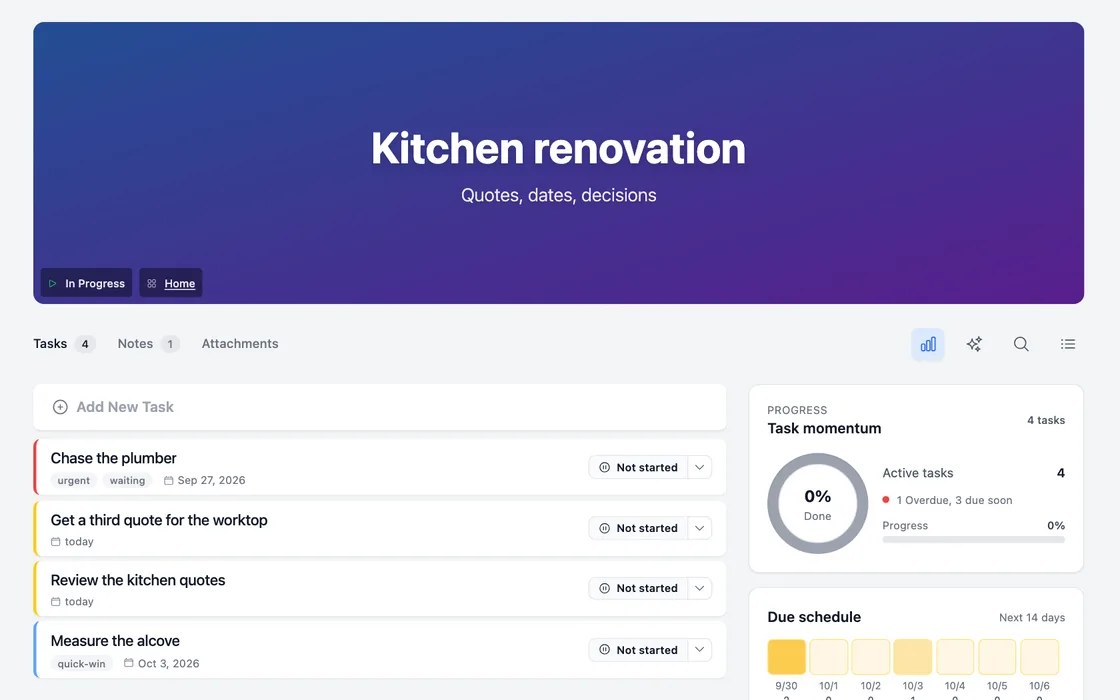
Annota tutto, pianifica la giornata con l’IA attorno al calendario e tieni aree, obiettivi, progetti, note e abitudini in un unico sistema. Crea un account Cloud in un minuto.
Gratis per 14 giorni, senza carta. Poi mensile o annuale, disdici quando vuoi.
Annota le cose appena arrivano, pianifica la giornata attorno alle riunioni con l’IA, poi procedi un blocco alla volta.
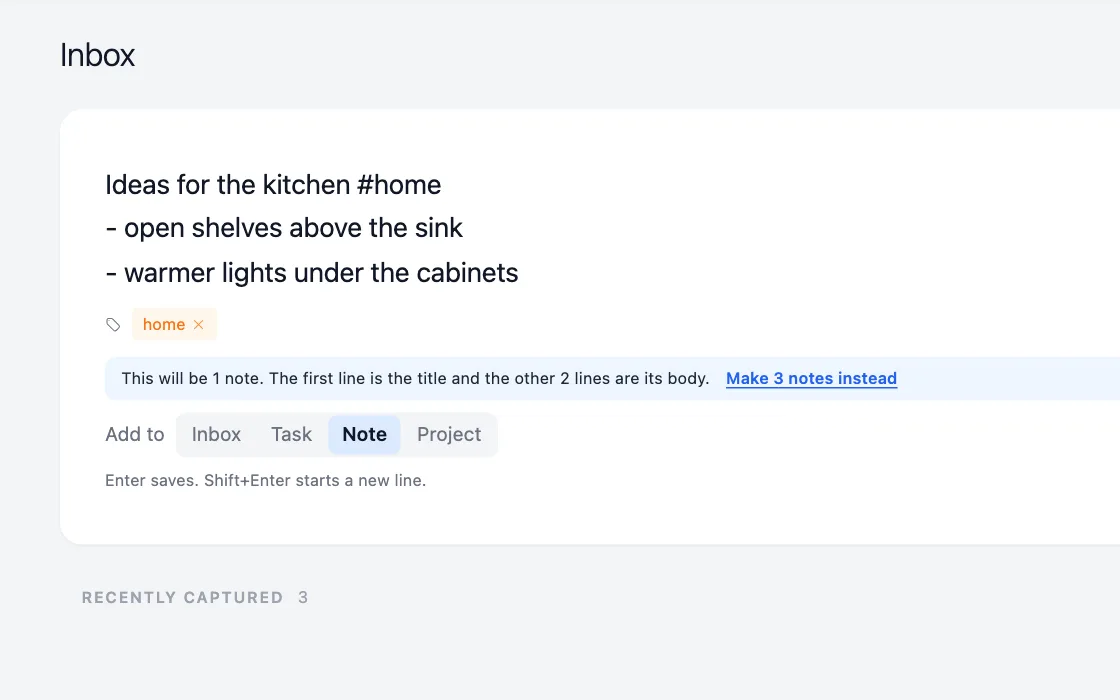
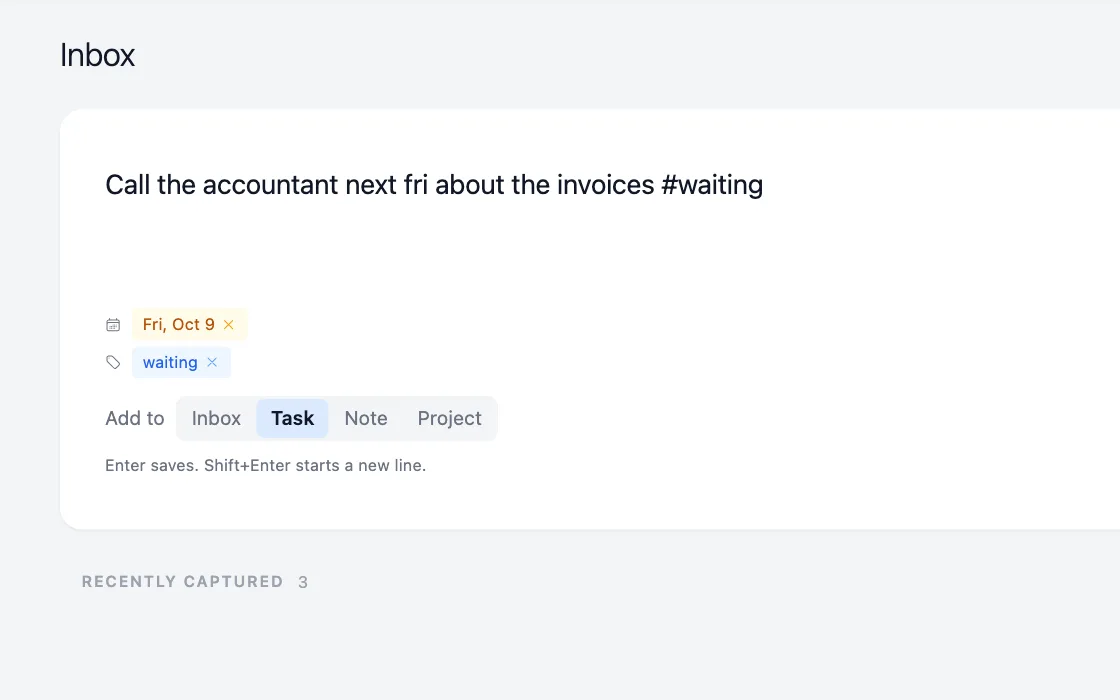
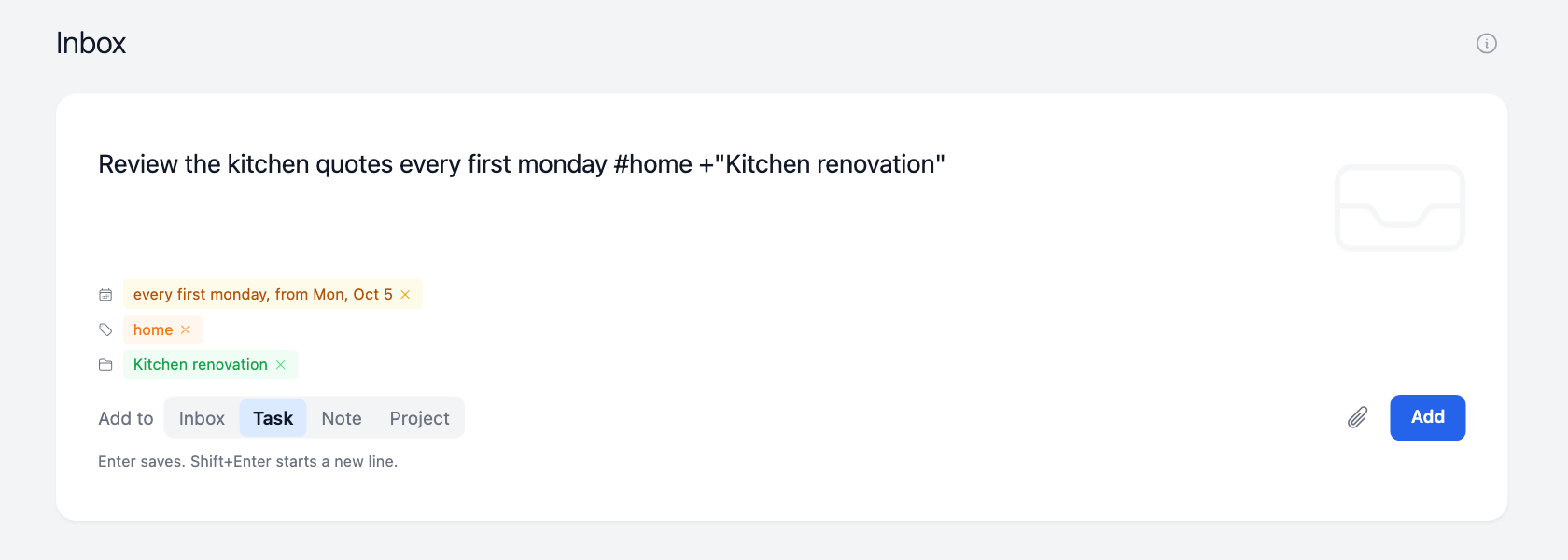
Un solo riquadro per posta in arrivo, attività, note e progetti, ovunque nell’app. Scrivi come pensi e tududi completa il resto.
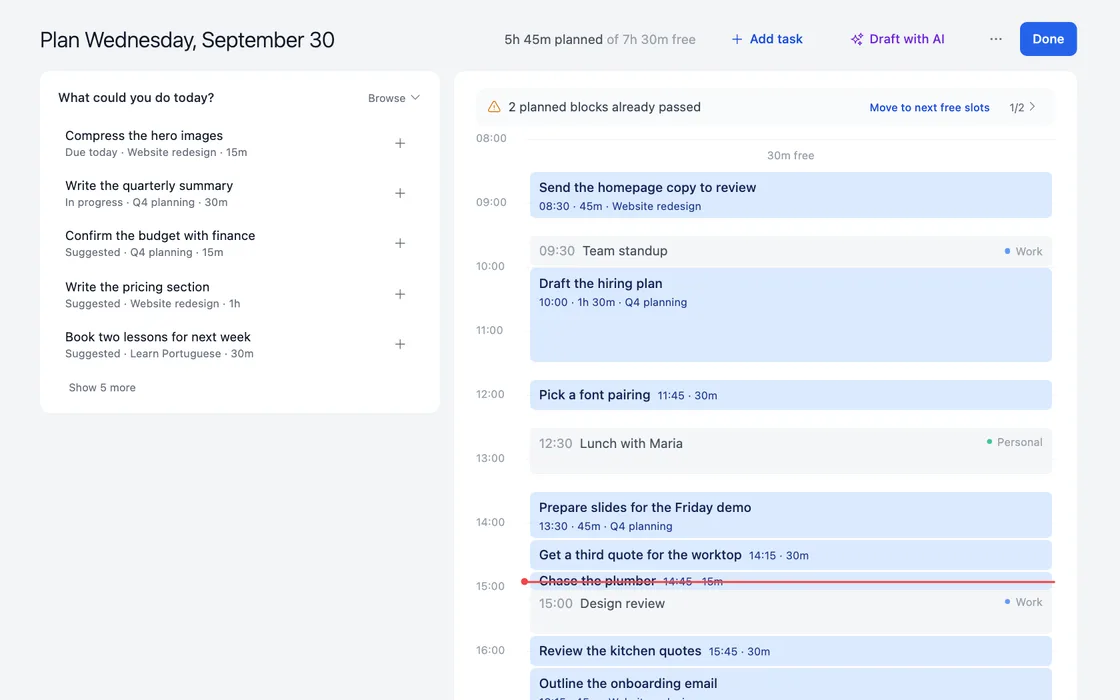
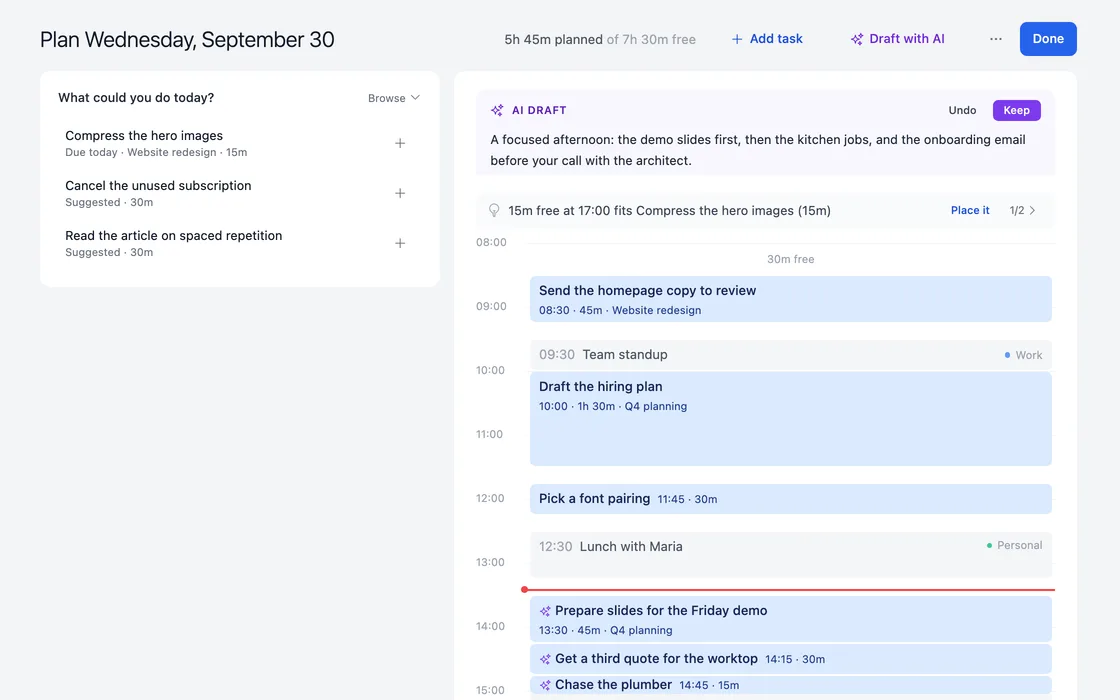
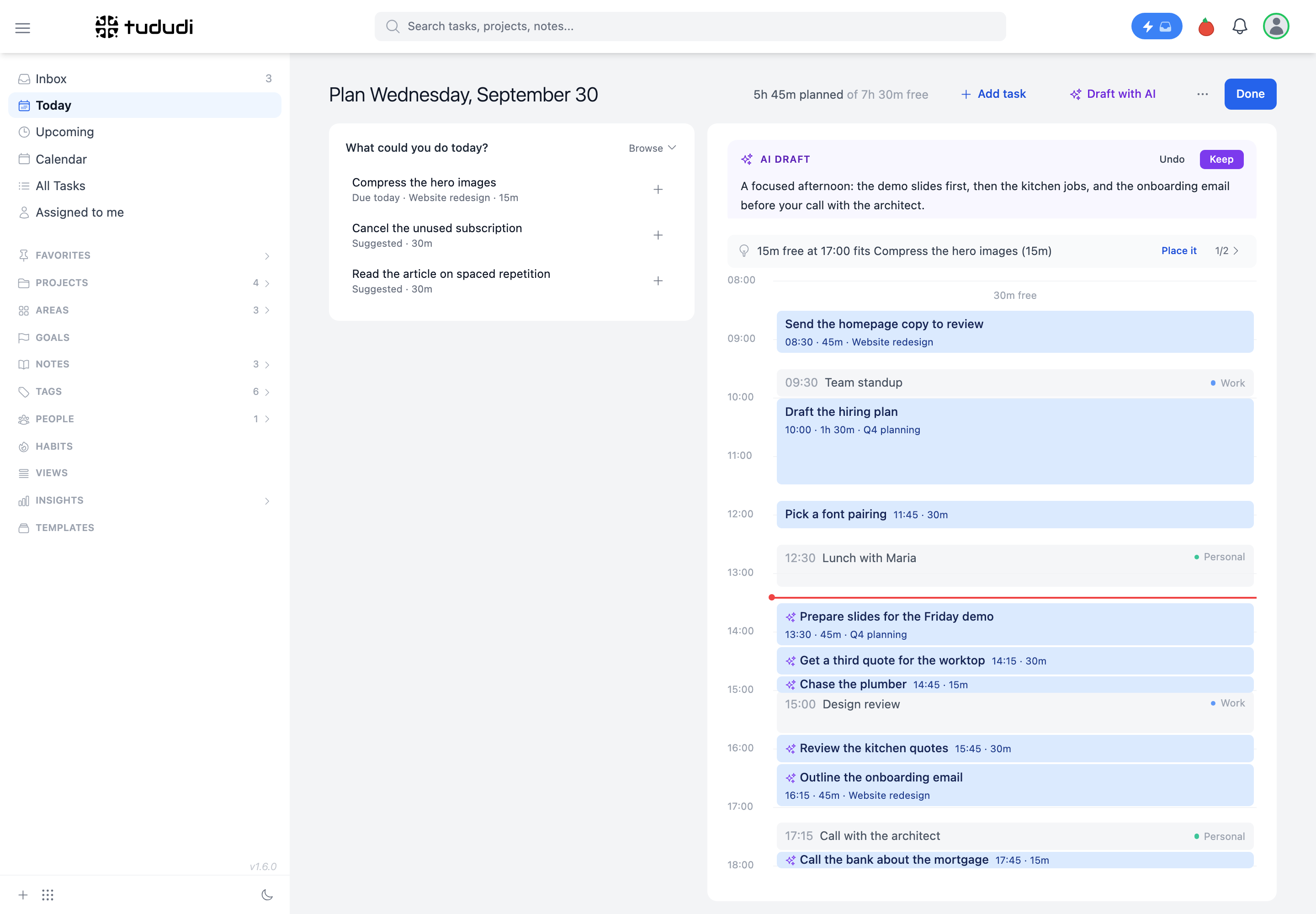
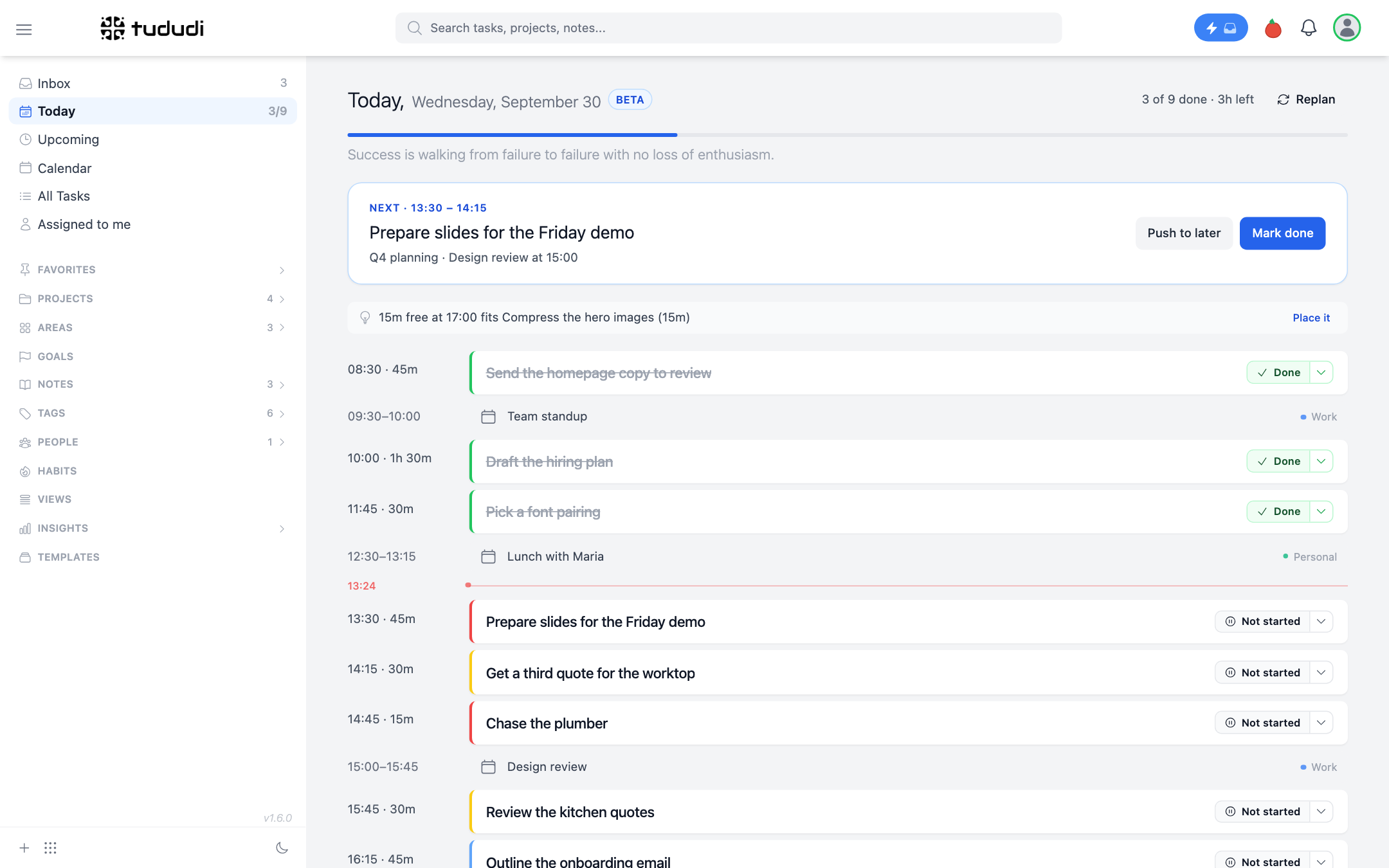
Il pianificatore mostra cosa può stare oggi, nell’ordine che scegli. Dai una durata a ogni attività e mettila nel tempo libero tra le riunioni, o lascia che l’IA prepari l’intera giornata.
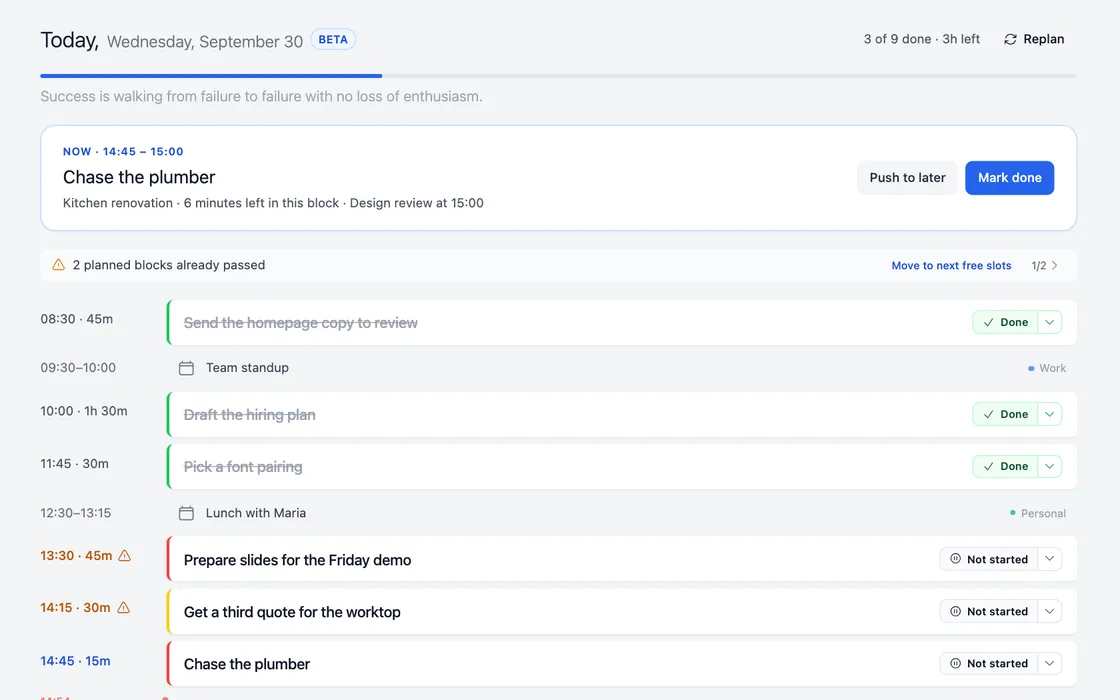
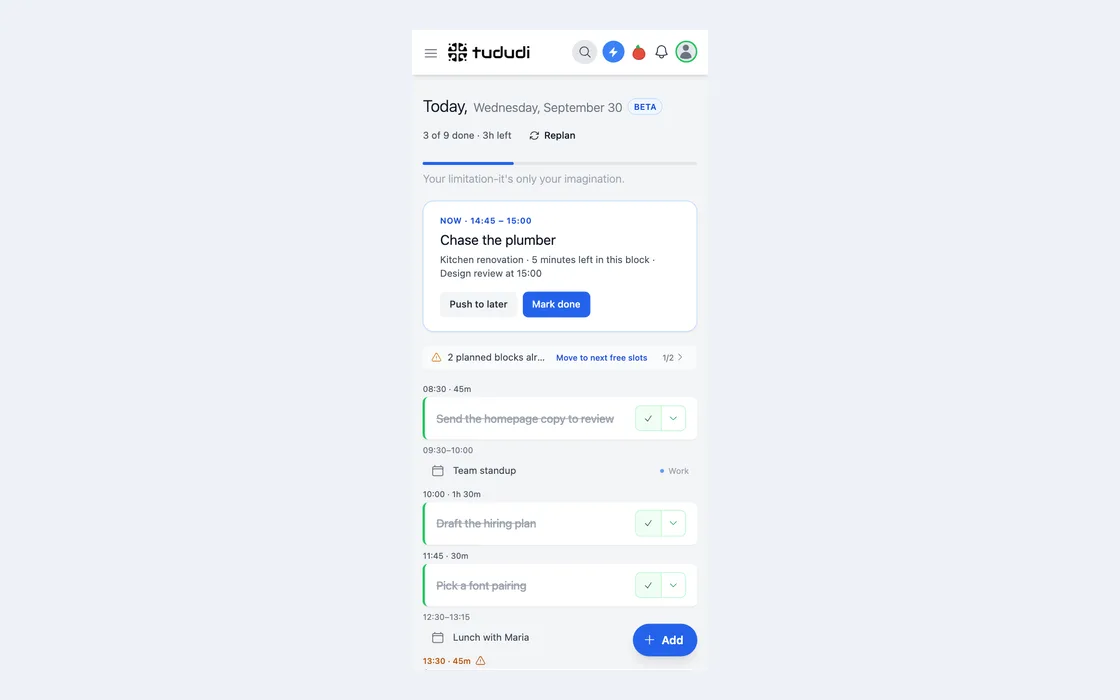
Avvia la giornata e Oggi mostra solo ciò che hai deciso: il blocco attuale, poi l’agenda, con le riunioni di Google, Apple o Outlook in mezzo.
tududi combina obiettivi, progetti, attività, note e viste smart in un unico sistema calmo e concentrato. Lascia che lo gestiamo noi, o gestiscilo tu se preferisci.
Aggiungi elementi in arrivo, attività, note o progetti da ovunque, con file. Uno screenshot incollato diventa l’elemento.
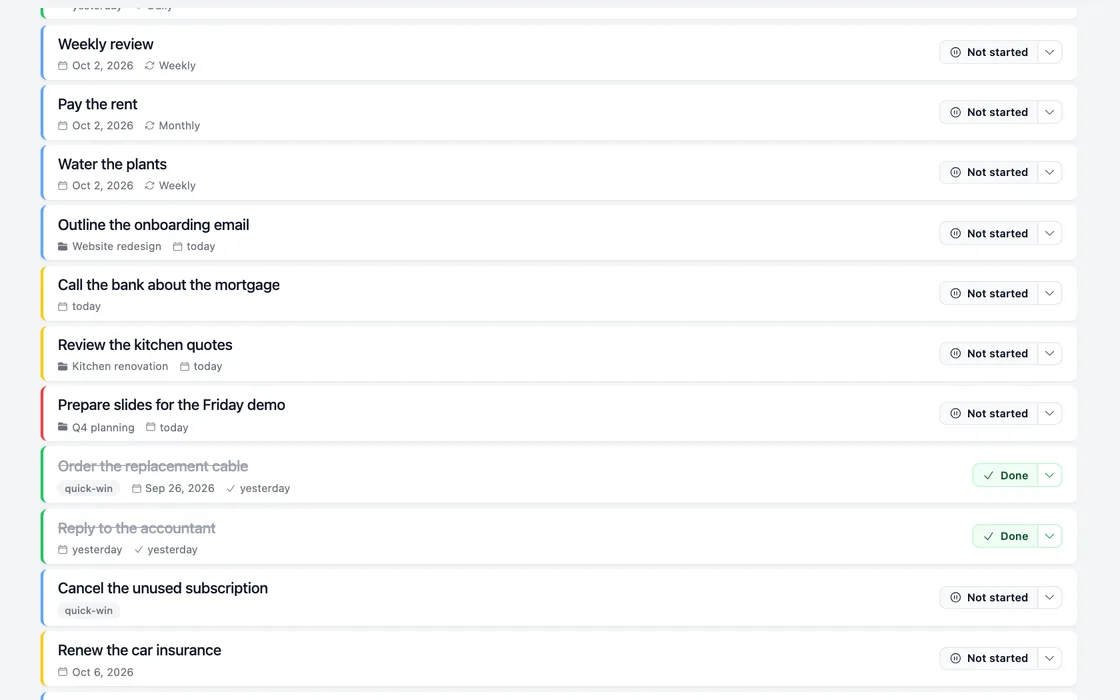
Anteprima“tomorrow”, “next fri”, “every weekday”: date e ripetizioni vengono lette mentre scrivi, insieme a #tag, +Progetto e @persona.
AnteprimaUn pianificatore che mette le attività nel tempo libero attorno alle riunioni, con durate, suggerimenti ordinati e consigli.
AnteprimaCollega calendari Google, Apple o Outlook e vedi le riunioni accanto alle attività, con il blocco attuale in cima.
AnteprimaPrepara la giornata con l’IA, ottieni durate stimate e un riepilogo serale che riporta ciò che resta.
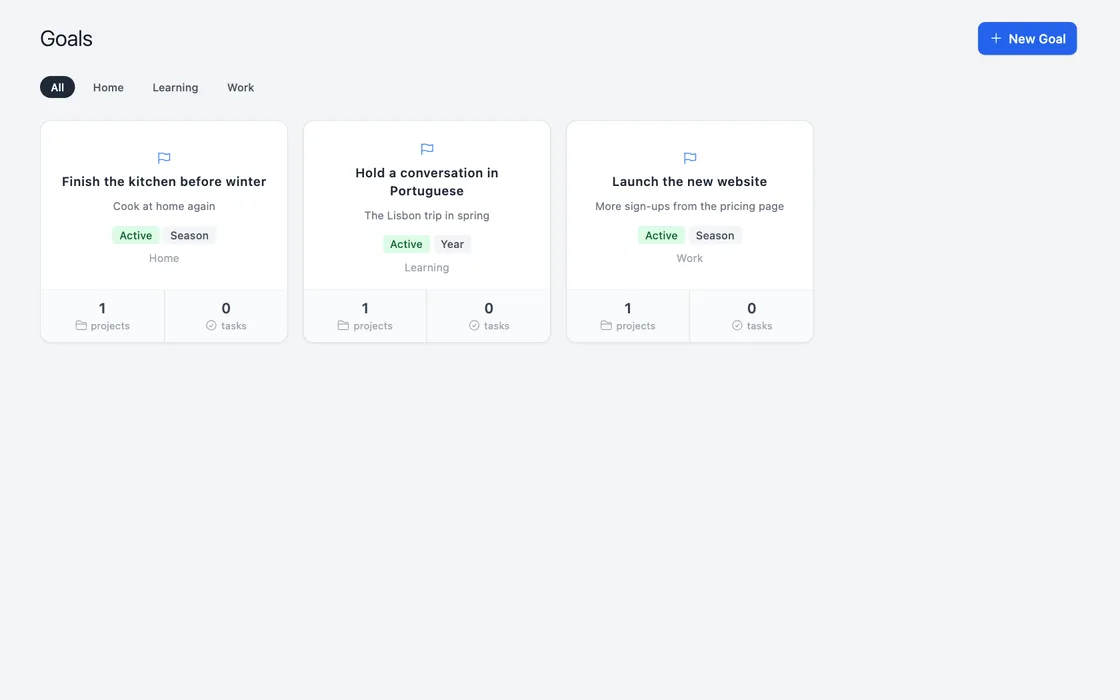
AnteprimaDefinisci i risultati per una stagione o per un anno, e scopri quali Aree e Progetti li stanno davvero facendo avanzare.
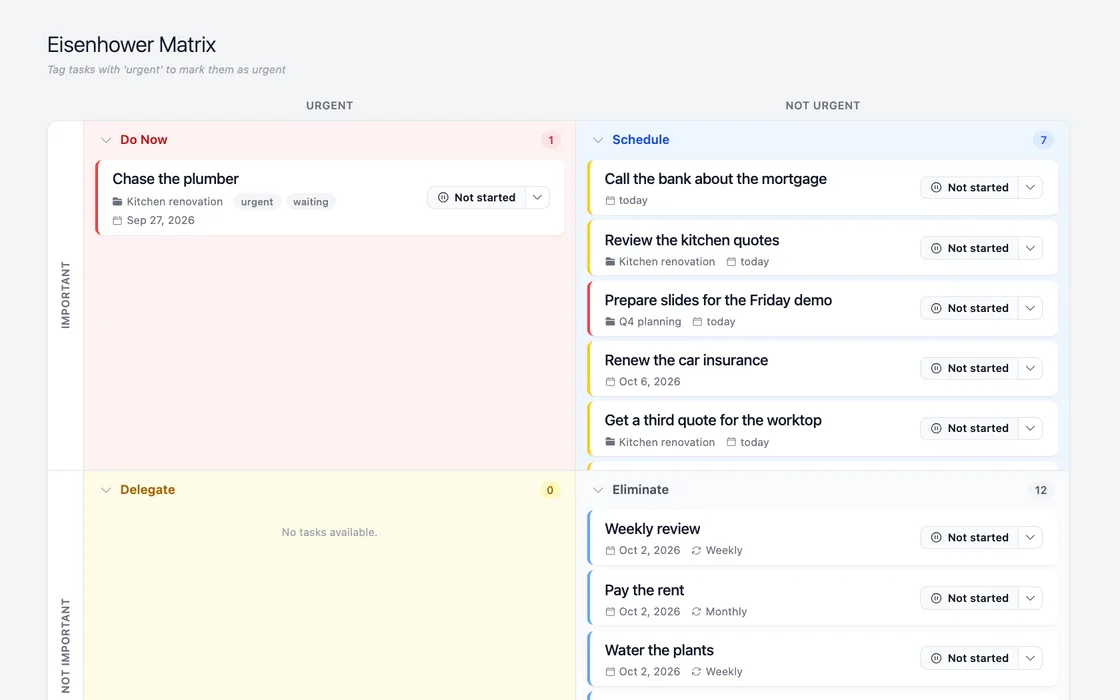
AnteprimaPassa a una matrice di Eisenhower o a una bacheca Kanban quando la domanda è semplicemente: cosa faccio adesso.
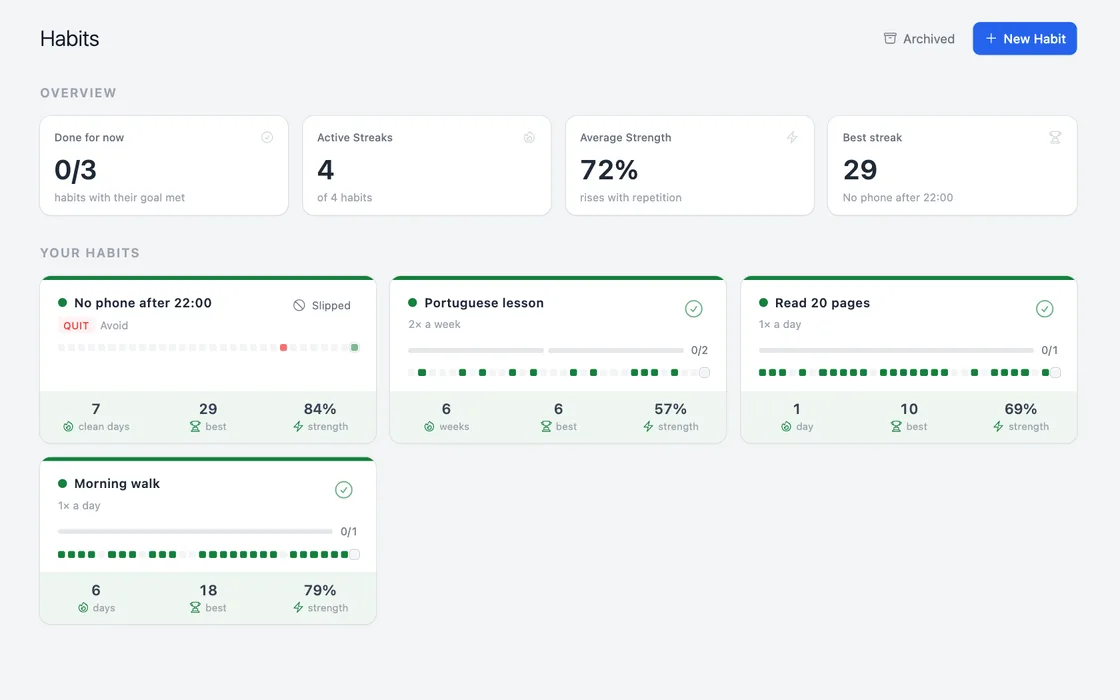
AnteprimaSegui le abitudini ricorrenti insieme ad attività e progetti, con serie e cronologia essenziali.
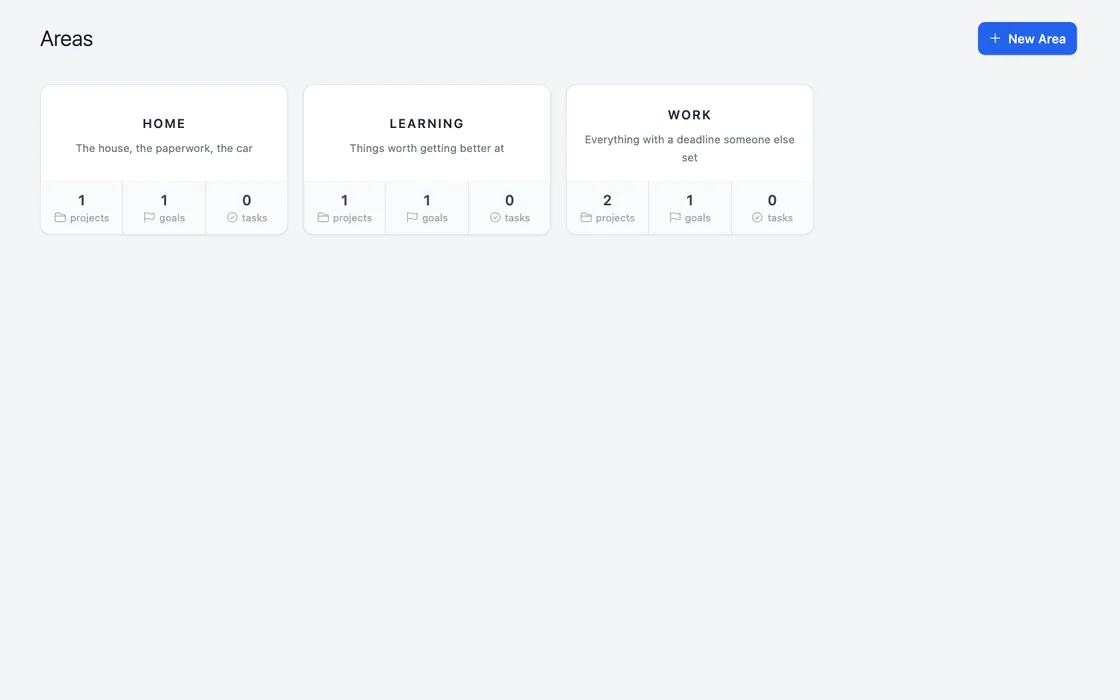
AnteprimaObiettivi e Aree stanno affiancati in cima: i risultati di lungo periodo e gli ambiti costanti della vita. Entrambi contengono Progetti, che contengono Attività.
AnteprimaOrganizza i progetti per area di vita - Lavoro, Personale, Salute, Formazione.
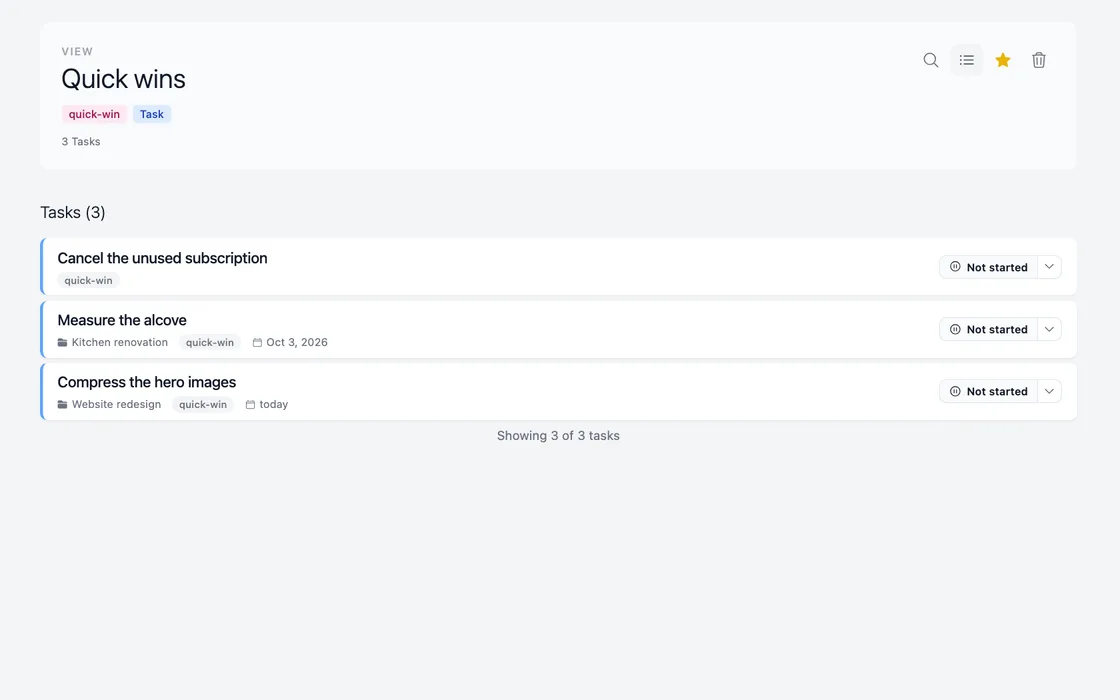
AnteprimaRicerche salvate intelligenti come «Oggi», «In ritardo» o «Prima o poi». Un clic, senza ricostruire un filtro ogni volta.
AnteprimaOsserva l'andamento dei completamenti e il carico sui progetti, per sapere dove finisce davvero il tuo tempo.
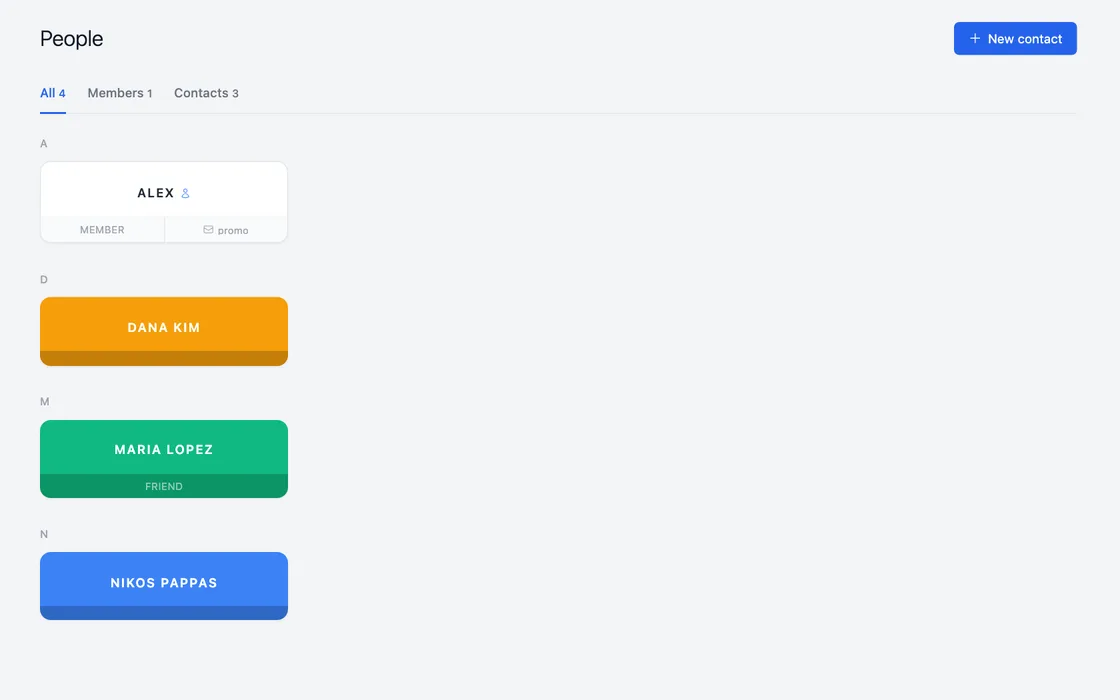
Assegna le attività alle persone e vedi a colpo d'occhio chi è coinvolto in un progetto.
AnteprimaSchemi giornalieri, settimanali e mensili, con ricorrenza basata sul completamento e relazioni padre-figlio.
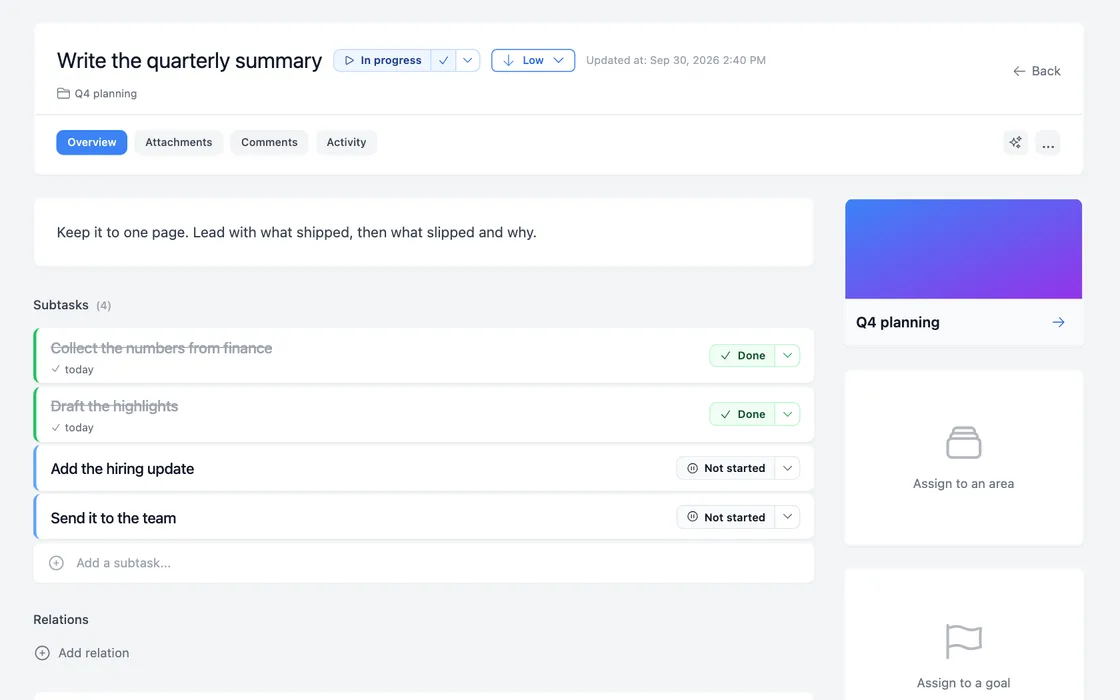
Priorità, scadenze, tag e ordinamento intelligente. Filtri potenti per trovare ciò che conta.
AnteprimaScomponi le attività complesse in sottoattività gestibili, con monitoraggio dell'avanzamento.
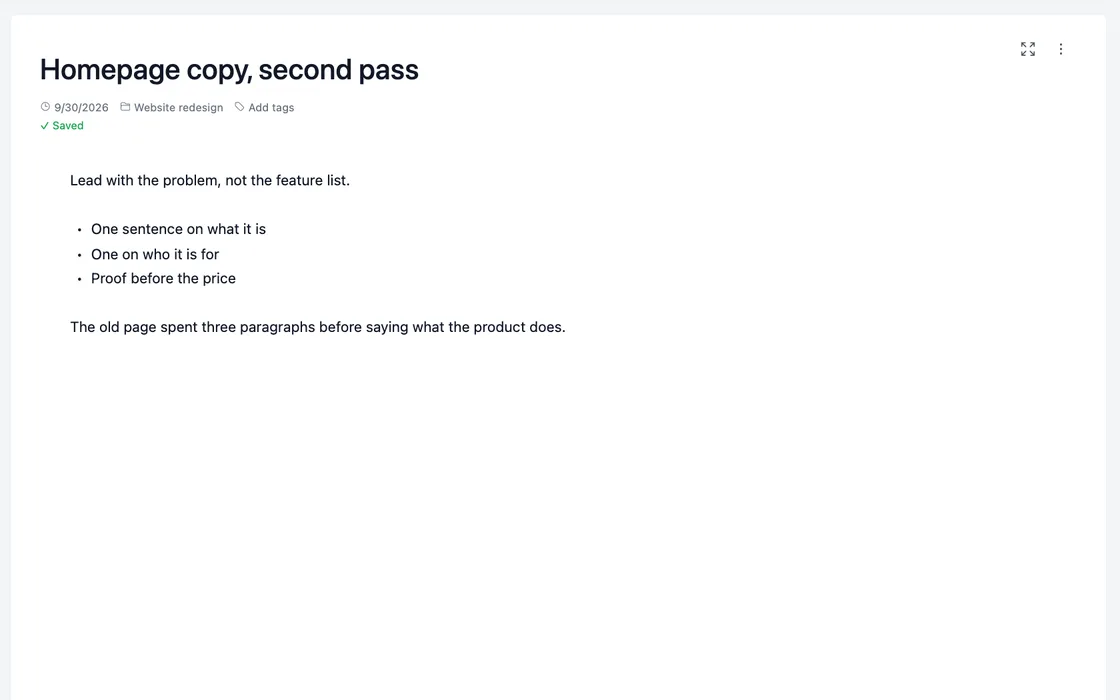
AnteprimaNote in testo formattato per i progetti, con ricerca completa e organizzazione.
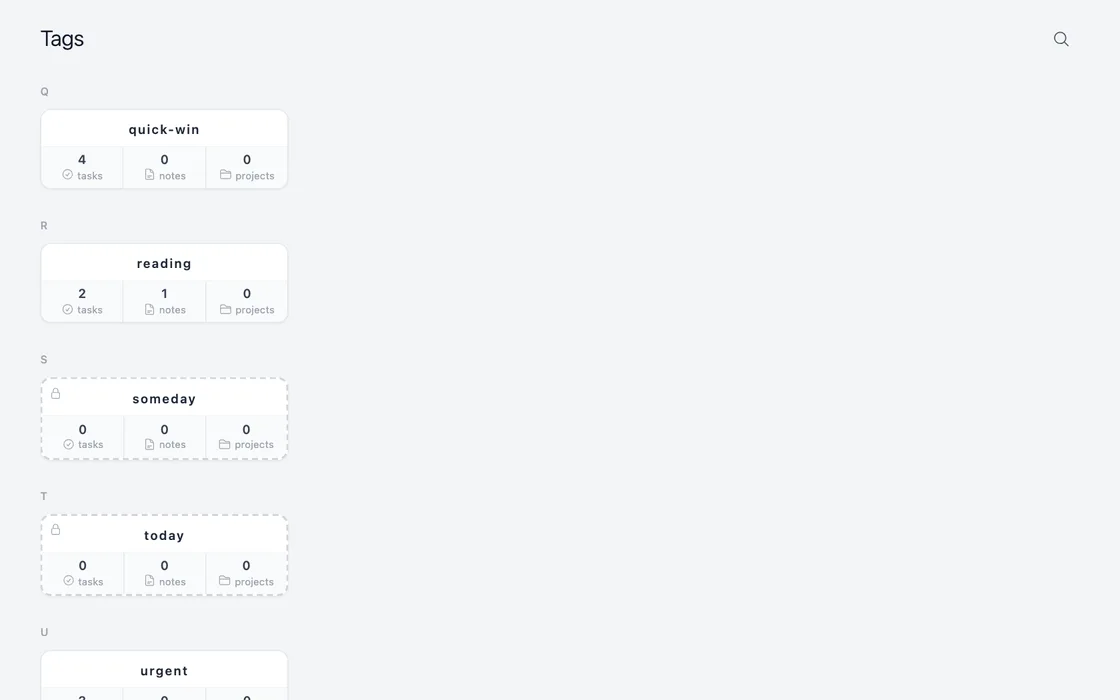
AnteprimaTag personalizzati per attività e note, con filtri immediati e organizzazione trasversale ai progetti.
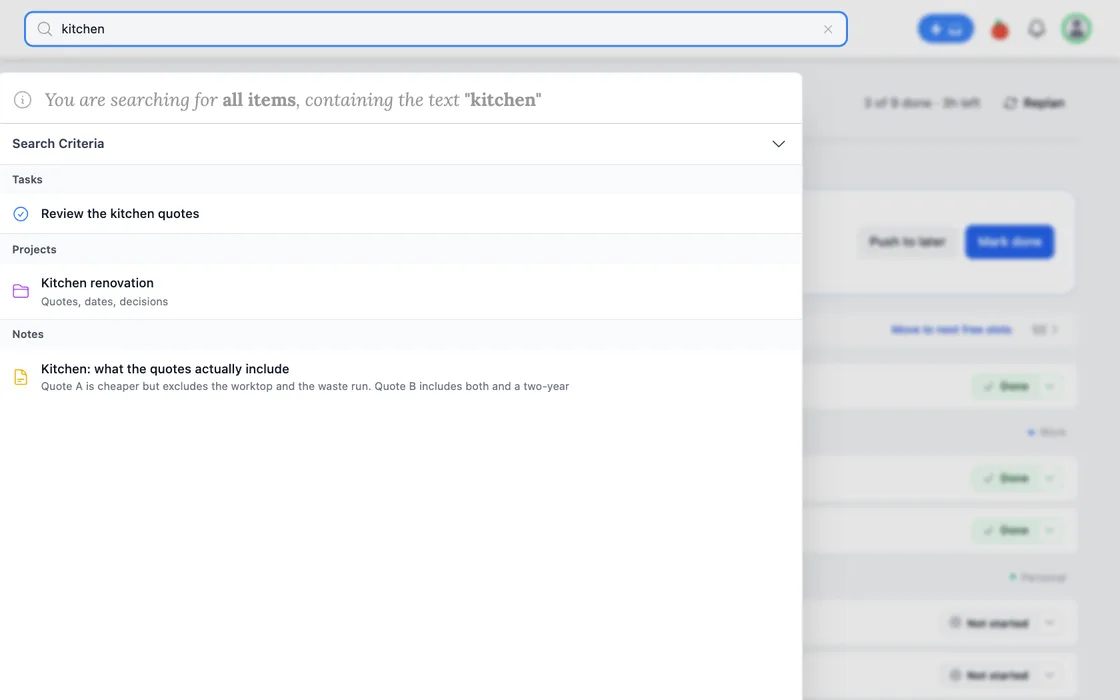
AnteprimaRicerca full-text più filtri per progetto, tag, priorità o scadenza. Trova qualsiasi attività in pochi secondi.
AnteprimaAggiungi tududi alla schermata home o al desktop come PWA. Funziona offline e si sincronizza appena torni online.
AnteprimaAccedi con il tuo provider di identità: Authentik, Keycloak, Google Workspace o qualsiasi provider compatibile con OIDC.
Disponibile in 26 lingue con localizzazione completa.
Manda un messaggio per registrare subito un'attività, ricevi riepiloghi giornalieri e gestisci la lista ovunque tu sia.
Sincronizzazione bidirezionale delle attività con Apple Promemoria, tasks.org, Thunderbird e qualsiasi app compatibile con CalDAV.
Documentazione Swagger versionata e token di accesso personali per integrazioni su misura.
Tieni privati i tuoi dati. Fai self-hosting per il controllo totale, oppure scegli un'istanza Gestita con backup cifrati.
Condividi i progetti con permessi granulari - sola lettura oppure lettura e scrittura.
tududi include un server MCP che espone 59 strumenti, che coprono attività, progetti, aree, obiettivi, abitudini, note, persone, tag, viste, la posta in arrivo, la ricerca e le metriche. Collega Claude o qualsiasi agente compatibile con MCP direttamente alla tua istanza, sia il tuo account Cloud o un server che gestisci tu. La connessione va alla tua istanza invece che passare da un relay intermedio, una differenza strutturale che Todoist e Notion non possono offrire, a prescindere da cosa promettano.
Su cosa dovrei concentrarmi oggi, e c'è qualcosa in ritardo?
Inizia con Pubblicare la migrazione di fatturazione. Scade oggi, e tre attività in Pagamenti aspettano dietro di essa.
Da sapere
Sposta la revisione del redesign a venerdì e aggiungi un'attività per sbloccare Pagamenti.
Fatto. Rivedere la bozza del redesign ora scade venerdì, e Sbloccare la coda Pagamenti è nel progetto Pagamenti, scade oggi.
Una sessione di esempio. Il tuo agente si collega direttamente alla tua istanza via MCP.
Aggiungi, trova e completa le attività senza uscire dalla conversazione.
La connessione MCP va direttamente alla tua istanza tududi, su Cloud o sul tuo server. Niente passa da terzi.
Costruito sul Model Context Protocol aperto. Funziona con Claude e con gli altri client MCP.
Funziona allo stesso modo con Cursor, Windsurf, Cline e qualsiasi altro client MCP. Leggi la documentazione MCP →
MCP è incluso con tududi Cloud e con ogni istanza self-hosted.
Uno strato separato e facoltativo che legge i tuoi dati e ti restituisce riepiloghi in linguaggio naturale. Funziona con qualsiasi provider compatibile con OpenAI, anche self-hosted come Ollama.
Prossimi passi suggeriti per una specifica attività, generati su richiesta.
Distribuisce la giornata nel tempo libero attorno alle riunioni, con un motivo per ogni blocco.
A fine giornata: cosa è fatto, un andamento da notare e cosa portare a domani.
Una valutazione rapida dello stato di un progetto: cosa avanza e cosa è fermo.
Cosa hanno scritto i recensori dopo aver provato tududi di persona.
Tududi stands out as a breath of fresh air among over-engineered and often expensive productivity tools.
Tududi is an immensely useful tool, and one that is easy to integrate into day-to-day workflow.
A free, open-source application that allows you to efficiently categorize and track your work, from personal task management to large-scale project management and detailed note-taking.
Un piano ospitato, oppure gestiscilo tu se preferisci occuparti dell'operatività.
Annulla quando vuoi ed esporta tutto. Se tududi Cloud dovesse mai chiudere, ricevi i tuoi dati e una guida alla migrazione self-hosted. Per spazio e volume API vale il fair use. Garanzia soddisfatti o rimborsati di 14 giorni, senza domande.
Come si confronta tududi Cloud con le app con cui viene più spesso paragonato, sui piani individuali.
Todoist Pro, TickTick Premium e Notion Plus, dalle loro pagine prezzi pubbliche a settembre 2026. Controlla i loro siti per i prezzi attuali. I loro prezzi sono i listini USA in dollari.
La licenza, l'IA, e cosa succede ai tuoi dati. Se manca qualcosa, chiedi su Discord.
L'applicazione è open source con licenza MIT, quindi puoi farla funzionare sul tuo server gratis, modificarla e costruirci sopra senza pagare nessuno. Non ci sono limiti di posti né funzioni tenute indietro: la versione self-hosted è il prodotto completo. tududi Cloud è un servizio a pagamento, perché hosting, backup ed email costano soldi da gestire. Paghi il lavoro operativo, mai l'accesso al software.
Sì, e non devi comprare nulla prima. La licenza MIT permette l'uso commerciale, anche all'interno di un'azienda e in un prodotto commerciale, senza soglia di fatturato e senza nulla da dichiarare. Se il tuo ufficio contabilità ha bisogno di una fattura, un abbonamento Cloud viene fatturato tramite il nostro fornitore di pagamenti e ne produce una. Niente in questa pagina vende un permesso, perché quel permesso è già tuo.
Sì. È sviluppato principalmente da un maintainer, con contributi dalla community, ed esce spesso. Ogni versione è elencata nella pagina delle release su GitHub, collegata dal Changelog nel menu qui sopra, così puoi giudicare il ritmo da solo invece di fidarti sulla parola. Lo sviluppo avviene in pubblico: issue, una roadmap pubblica e un Discord dove le domande trovano risposta.
L'app ha licenza MIT e il codice sorgente è pubblico, quindi non può esserti tolta. Chiunque può continuare a farla funzionare, e puoi forkarla. Su tududi Cloud i tuoi dati vivono in un database tududi standard invece di un formato proprietario, quindi se il servizio dovesse mai chiudere, otterresti i tuoi dati e una guida per trasferirli sul tuo server.
Non esiste un piano gratuito, ma ogni nuovo account riceve una prova gratuita di 14 giorni, senza carta. La prova include tutto tranne l'assistente IA, i link pubblici alle note e l'aggiunta di membri. Se non ti abboni, l'account passa in sola lettura per 30 giorni così puoi esportare i tuoi dati, poi viene eliminato. Dopo la prova, Cloud costa €5 al mese o €50 all'anno a persona. Il modo gratuito per usare tududi è installarlo sul tuo server, ed è la stessa applicazione.
Paghi per non gestire l'infrastruttura. tududi Cloud ti dà lo stesso sistema con server, aggiornamenti, backup ed email gestiti per te, che è la metà noiosa e poco affascinante del self-hosting. Cloud è la strada che raccomandiamo. Il self-hosting è la scelta migliore solo se già gestisci Docker e un reverse proxy e vuoi davvero occuparti dello stack.
Dipende da quale dei due livelli intendi, e la differenza conta. Il server MCP funziona all'interno della tua istanza: un agente come Claude Desktop si collega direttamente a quella istanza, quindi la conversazione è tra il tuo agente e il tuo tududi, non un intermediario. L'Assistente IA è diverso. Chiama un provider compatibile con OpenAI, quindi se lo punti su uno ospitato, il contenuto di quelle richieste va a quel provider. Puntalo invece su un modello locale, come Ollama o LM Studio, e nulla lascia la tua macchina. Resta spento finché non fornisci una chiave, quindi è sempre una tua scelta, non un default.
MCP è il Model Context Protocol, uno standard aperto per collegare agenti IA a sistemi reali. tududi include un server MCP che espone 59 strumenti su attività, progetti, aree, obiettivi, abitudini, note, persone, tag, viste, posta in arrivo, ricerca e metriche, così un agente può catturare, trovare, aggiornare e completare lavoro invece di parlarne soltanto. È opzionale, è incluso con Cloud e con ogni istanza self-hosted, e funziona con Claude Desktop, Cursor, Windsurf, Cline o qualsiasi altro client MCP.
Gestiamo noi il server, gli aggiornamenti e i backup. Provalo gratis per 14 giorni, senza carta.
Novità e aggiornamenti sul prodotto, di tanto in tanto. Niente spam, disiscriviti quando vuoi.
Conserviamo il tuo indirizzo e la data in cui ce l’hai dato solo per inviarti novità e aggiornamenti. Non lo condividiamo mai.
L'app tududi è disponibile in 26 lingue in tutto il mondo
Confrontati con altri utenti di tududi, ricevi supporto e resta aggiornato