Anote tudo, planeje o dia com IA em torno do seu calendário e mantenha áreas, metas, projetos, notas e hábitos num só sistema. Crie uma conta Cloud em um minuto.
Grátis por 14 dias, sem cartão. Depois, mensal ou anual, cancele quando quiser.
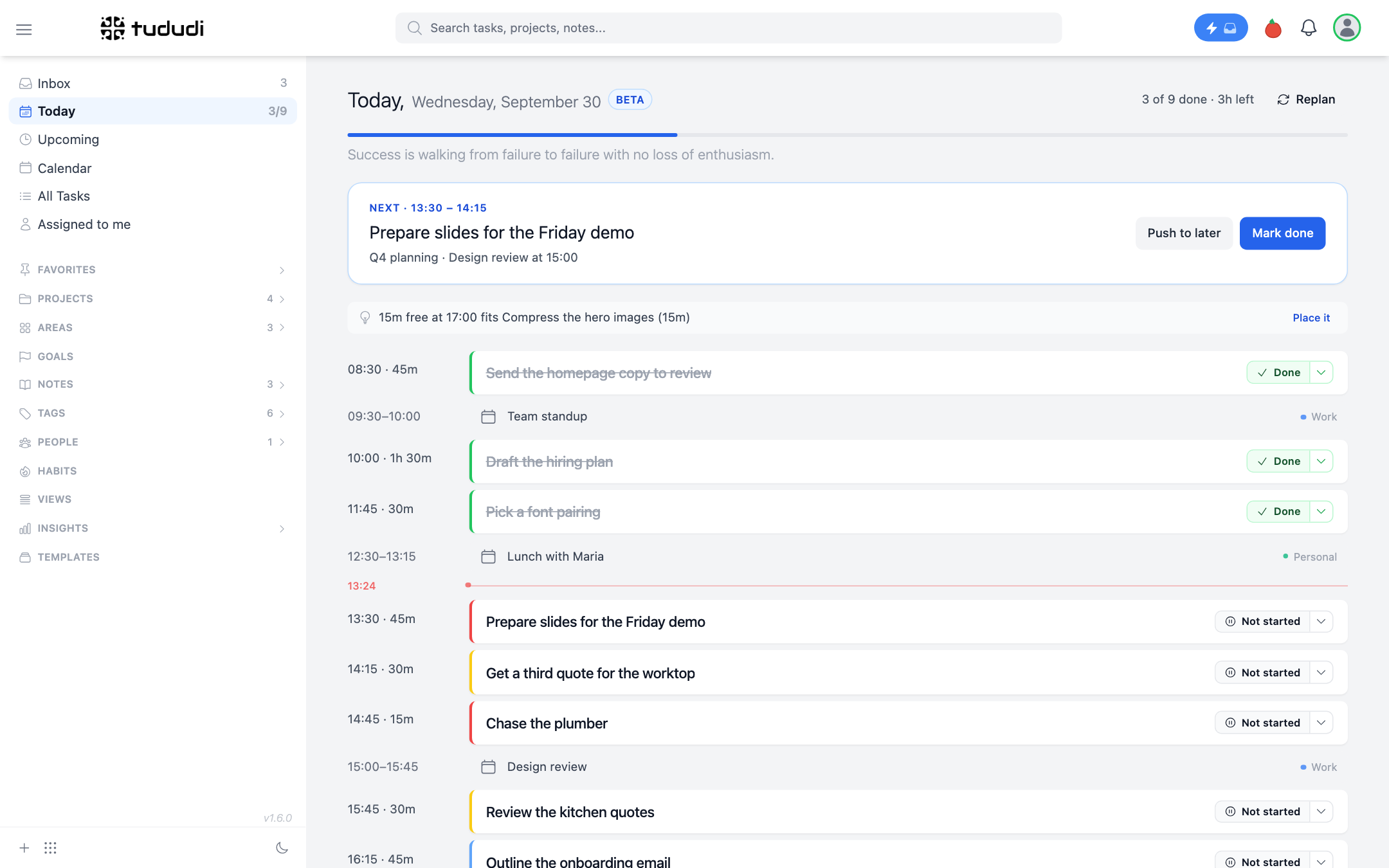
Anote as coisas assim que surgem, planeje o dia em torno das reuniões com IA e avance bloco a bloco.
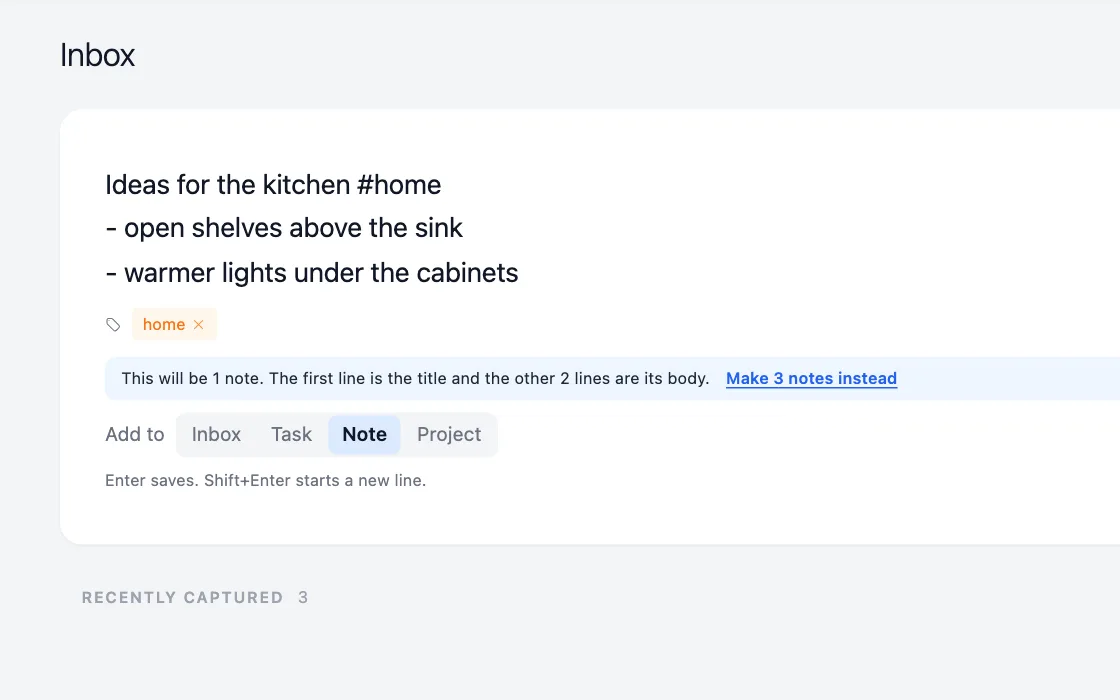
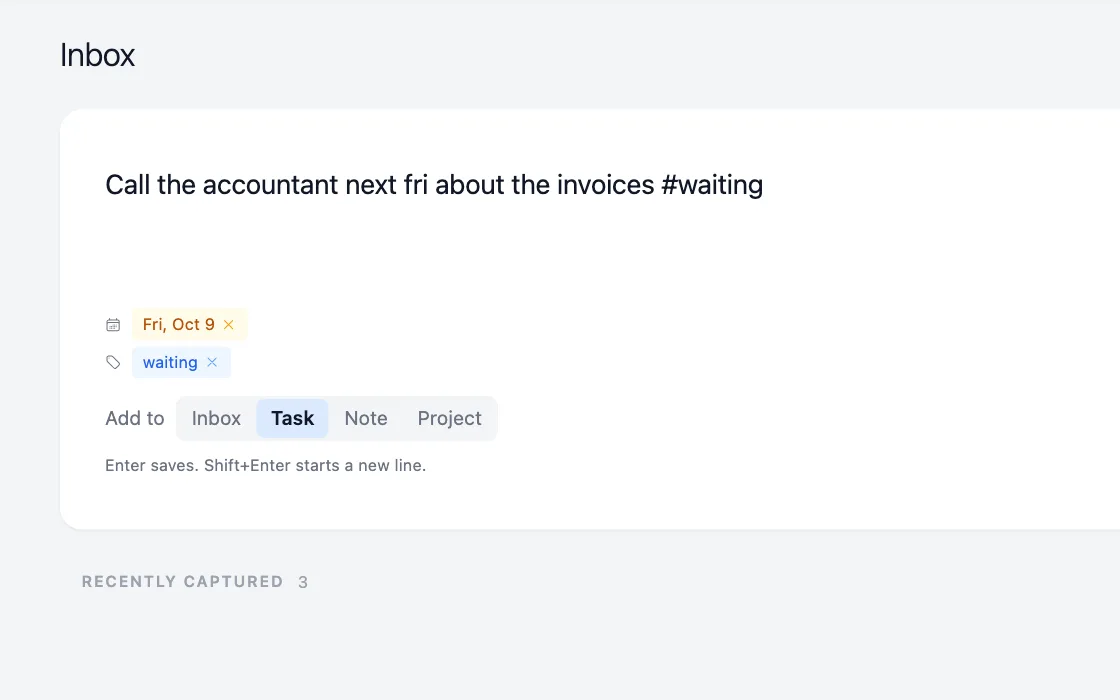
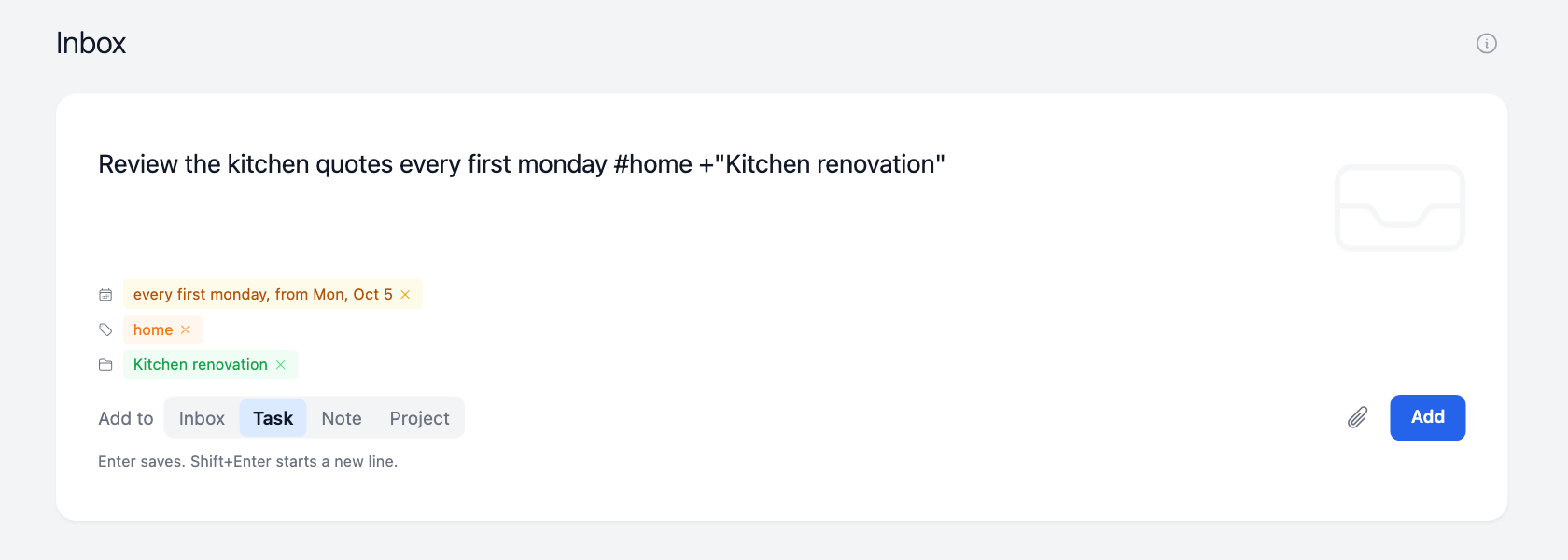
Uma caixa só para caixa de entrada, tarefas, notas e projetos, em todo o app. Escreva como pensa e o tududi completa o resto.
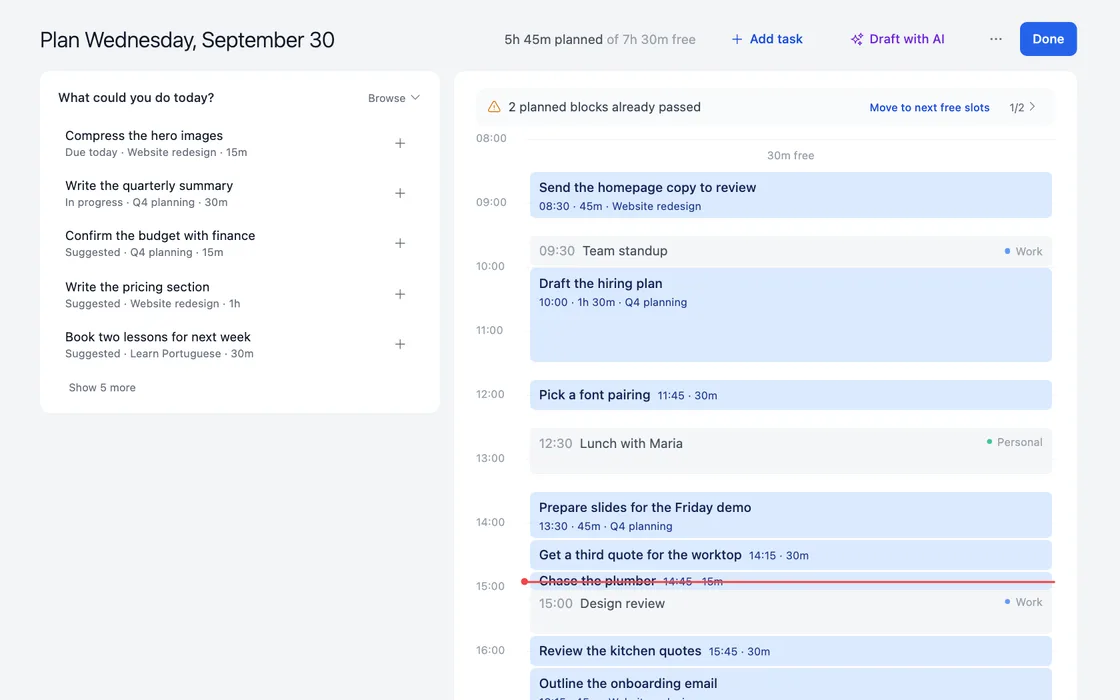
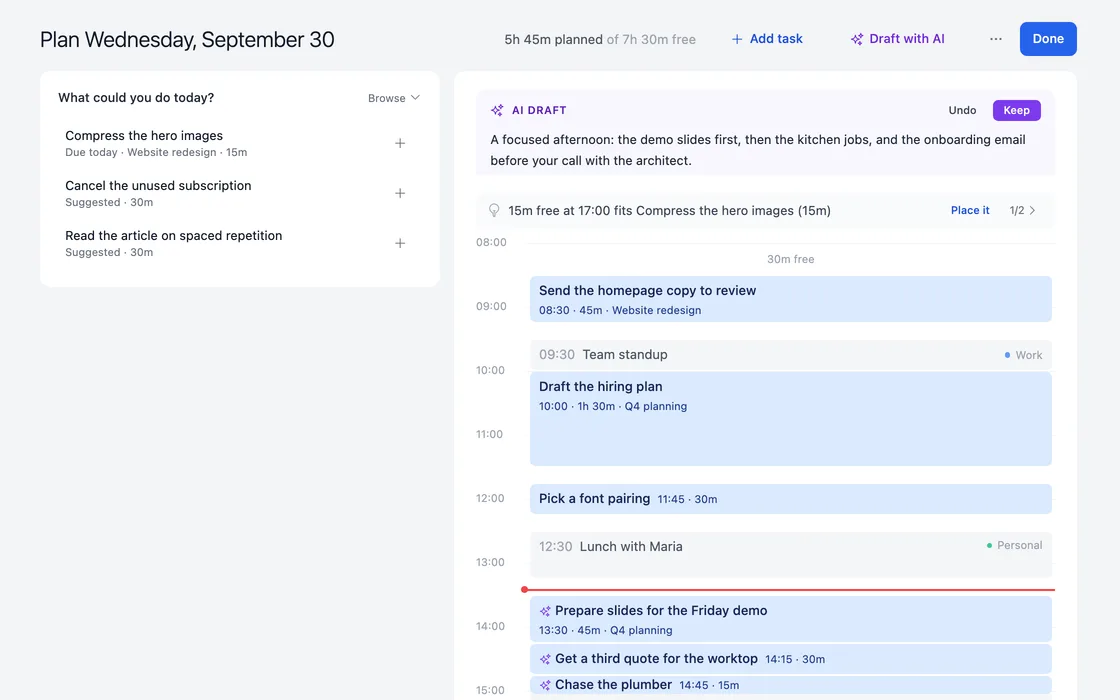
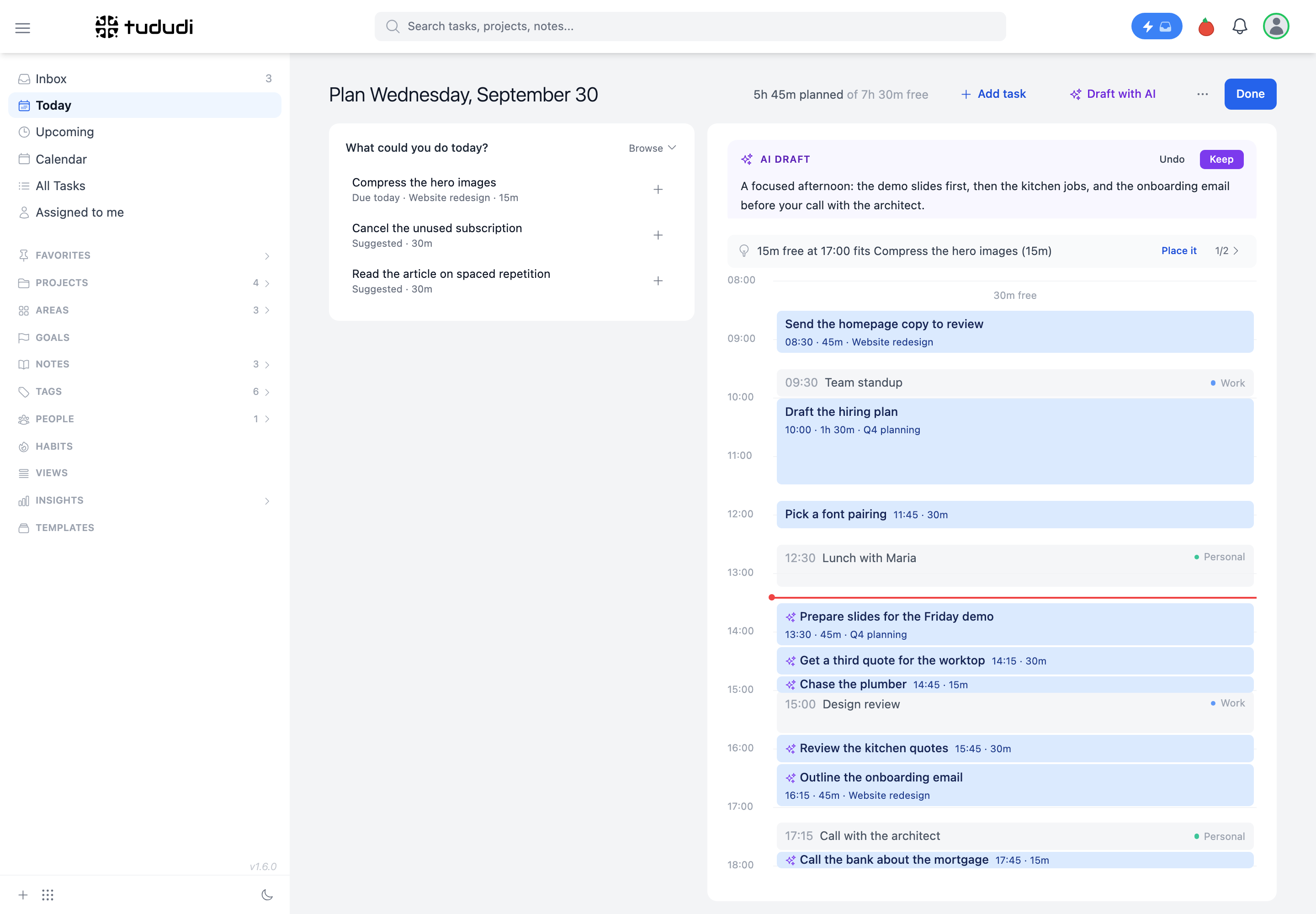
O planejador mostra o que cabe hoje, na ordem que você escolher. Dê uma duração a cada tarefa e encaixe entre as reuniões, ou deixe a IA montar o dia inteiro.
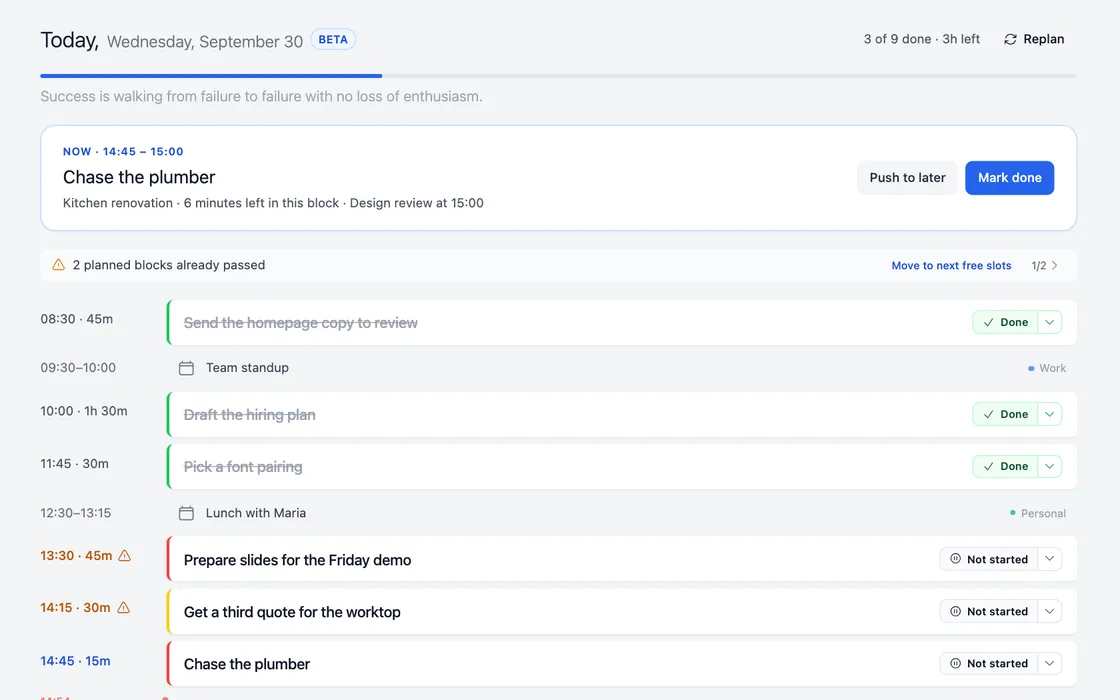
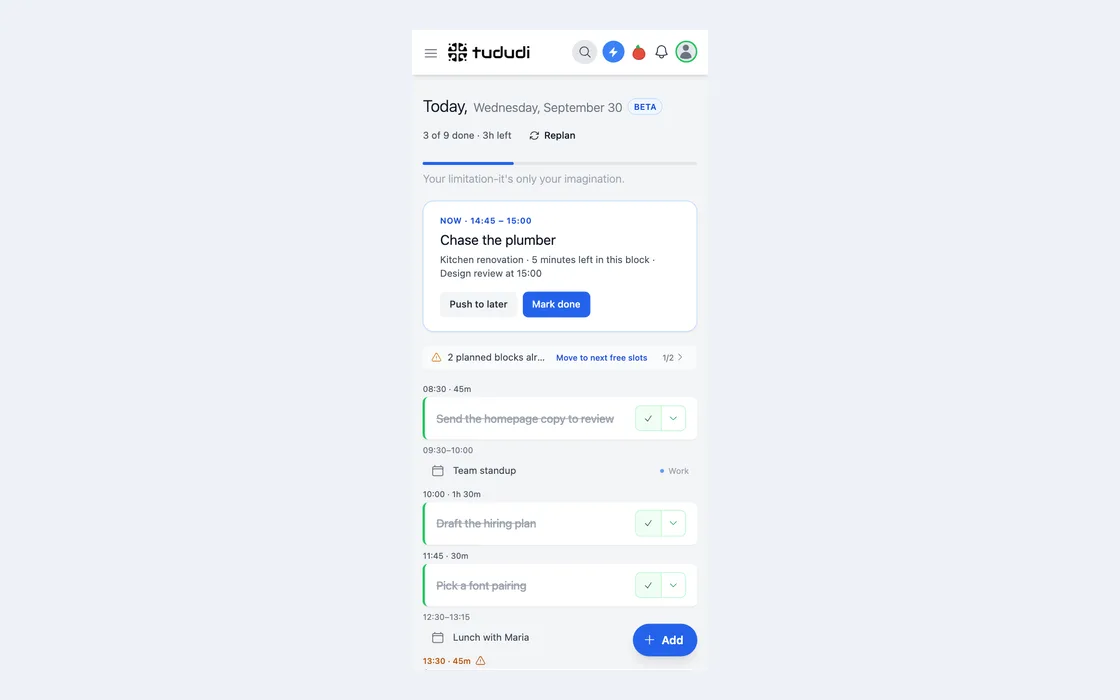
Comece o dia e Hoje mostra só o que você assumiu: o bloco atual, depois a agenda, com reuniões do Google, Apple ou Outlook no meio.
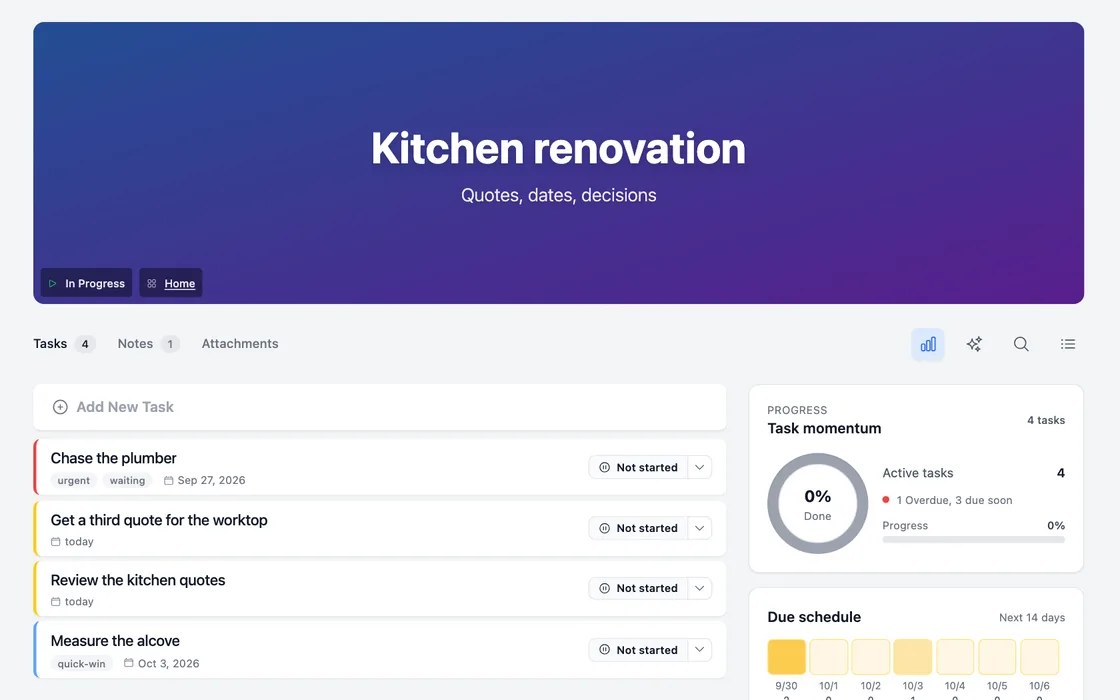
O tududi combina metas, projetos, tarefas, notas e visualizações inteligentes em um sistema calmo e focado. Deixe a gente administrar para você, ou administre você mesmo se preferir.
Adicione itens à caixa de entrada, tarefas, notas ou projetos de qualquer lugar, com arquivos. Uma captura colada vira o item.
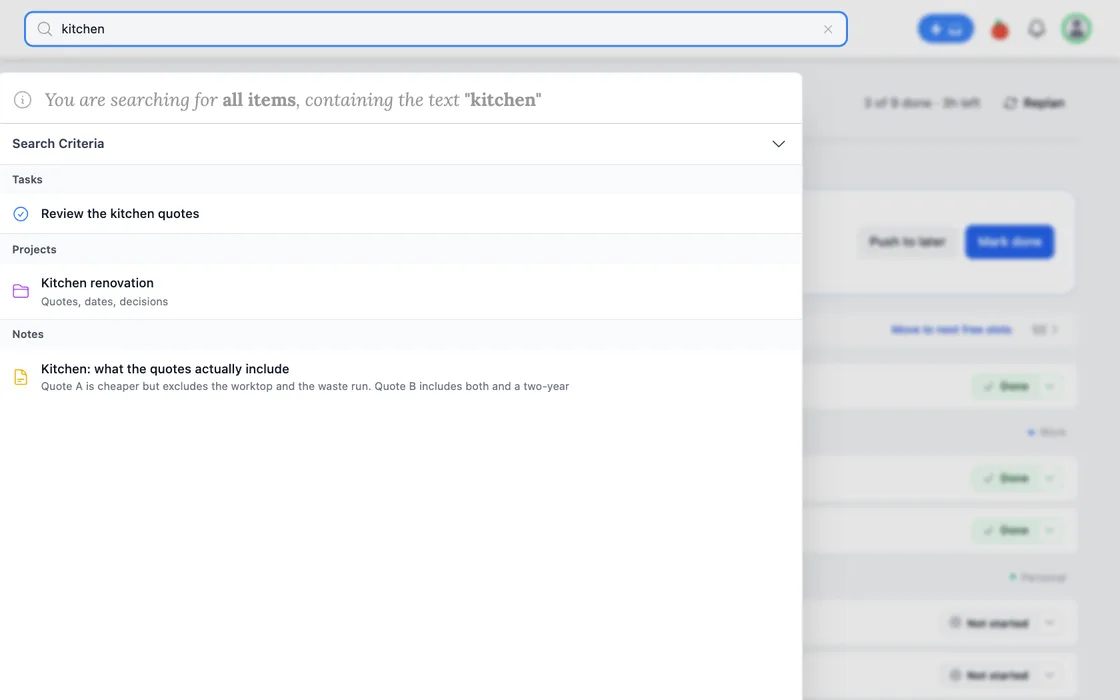
Pré-visualizar“tomorrow”, “next fri”, “every weekday”: datas e repetições são lidas enquanto você digita, junto com #tags, +Projeto e @pessoa.
Pré-visualizarUm planejador que encaixa tarefas no tempo livre entre reuniões, com durações, sugestões ordenadas e dicas.
Pré-visualizarConecte calendários Google, Apple ou Outlook e veja reuniões ao lado das tarefas, com o bloco atual no topo.
Pré-visualizarMonte o dia com IA, receba estimativas de duração e um resumo no fim do dia que leva o que ficou.
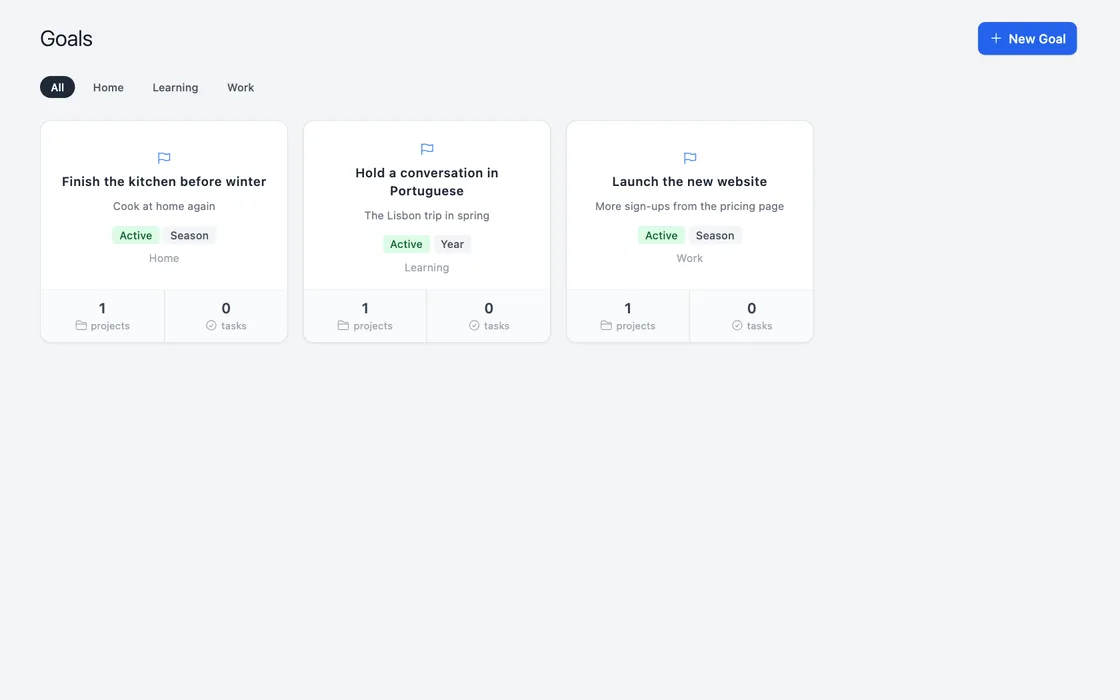
Pré-visualizarDefina resultados para uma estação ou para um ano, e veja que Áreas e Projetos os fazem mesmo avançar.
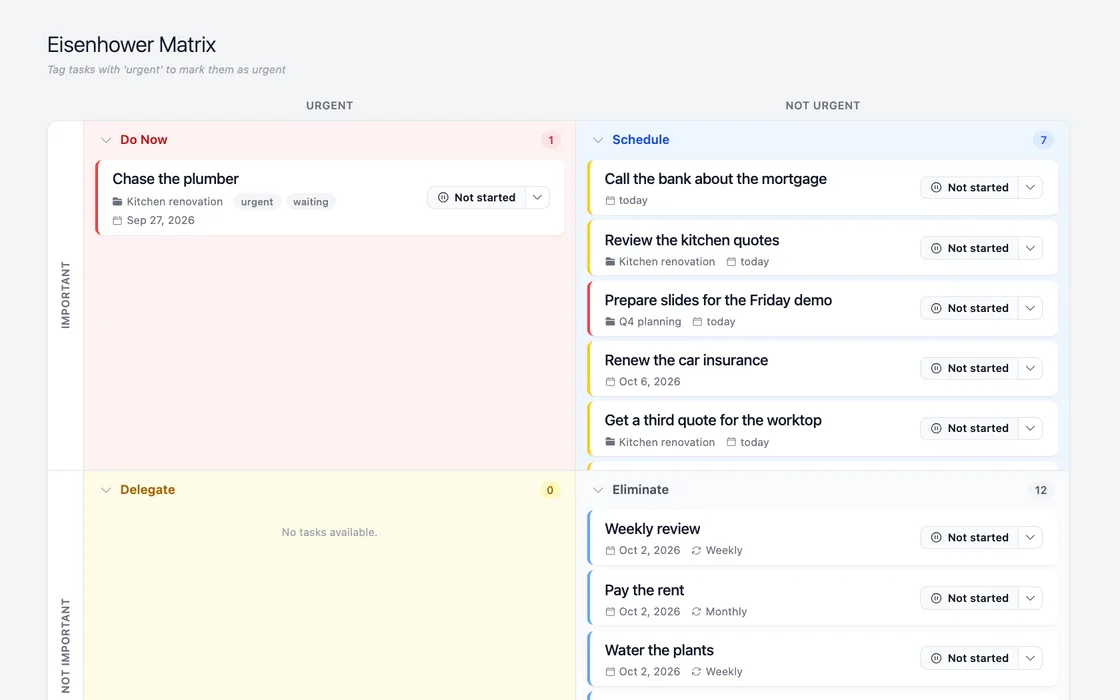
Pré-visualizarMude para uma matriz de Eisenhower ou um quadro Kanban quando a pergunta é apenas: o que faço agora.
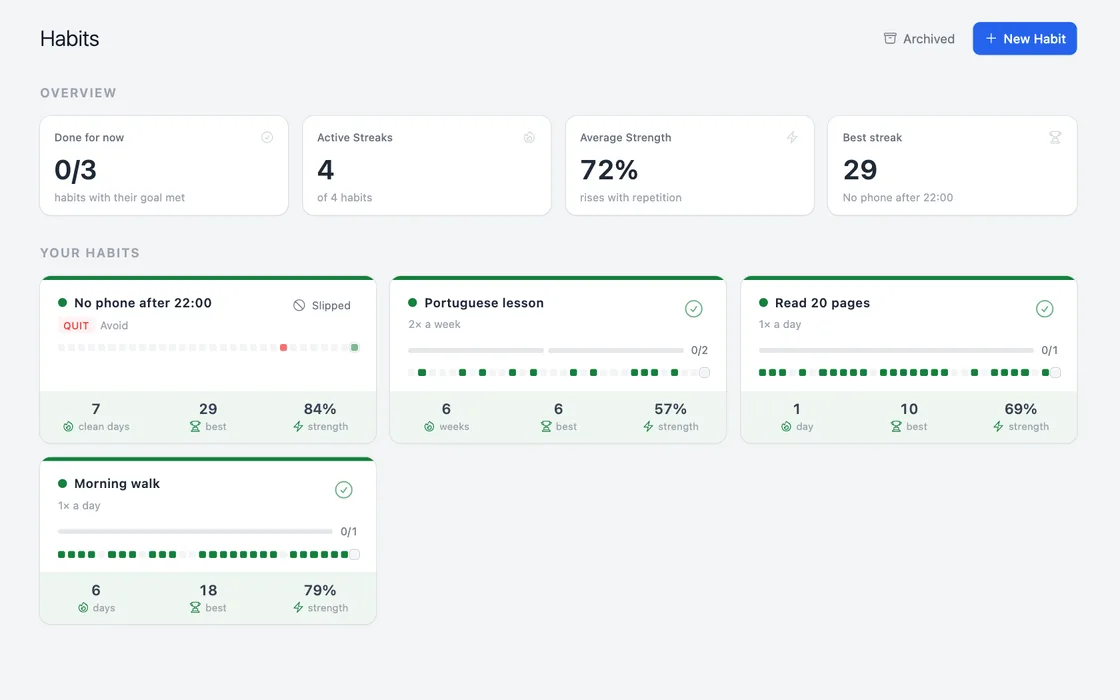
Pré-visualizarAcompanhe hábitos recorrentes ao lado de tarefas e projetos, com séries e histórico simples.
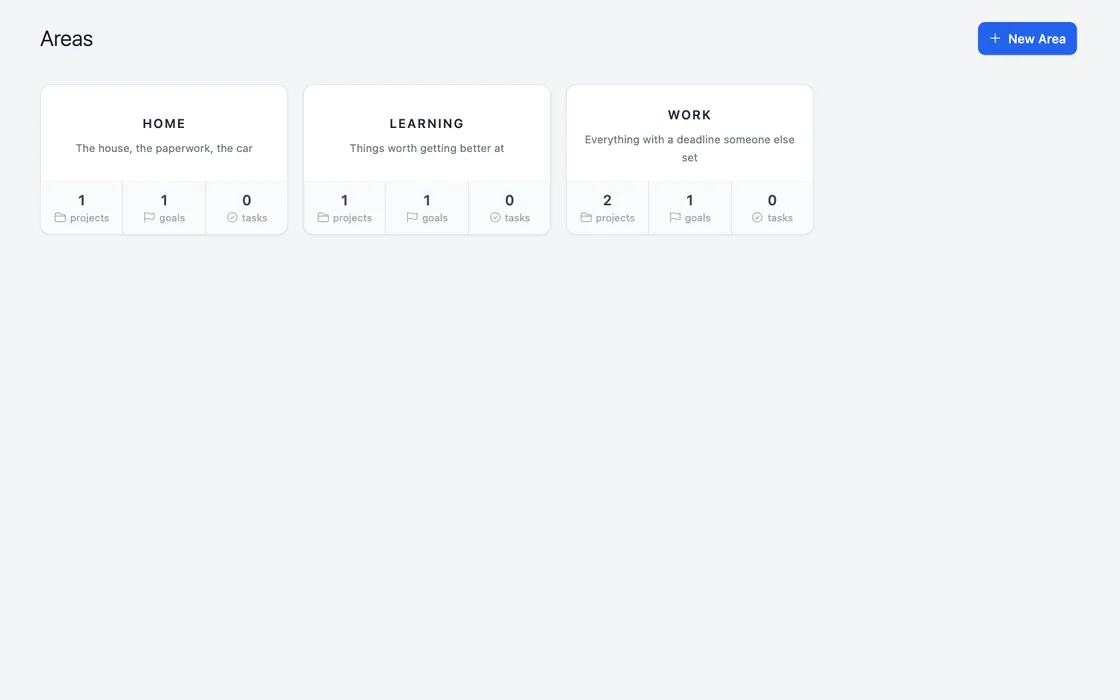
Pré-visualizarObjetivos e Áreas ficam lado a lado no topo: resultados de longo prazo e domínios permanentes da vida. Ambos contêm Projetos, que contêm Tarefas.
Pré-visualizarOrganize os projetos por área de vida - Trabalho, Pessoal, Saúde, Aprendizagem.
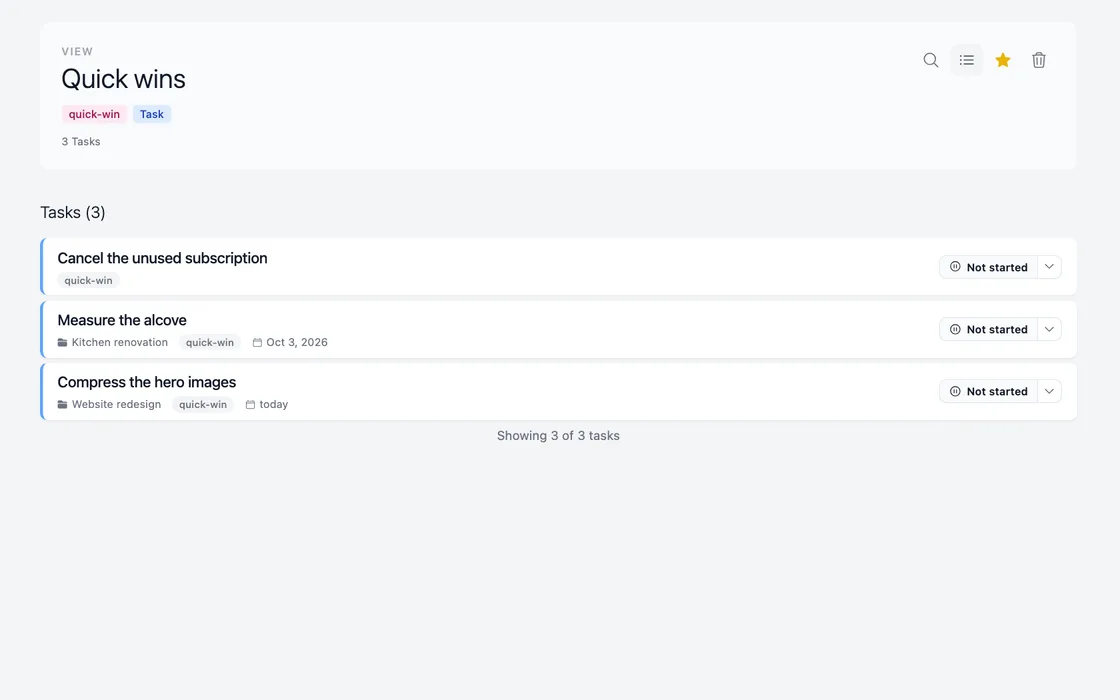
Pré-visualizarPesquisas guardadas inteligentes como «Hoje», «Em atraso» ou «Um dia». Um clique, sem reconstruir um filtro de cada vez.
Pré-visualizarVeja tendências de conclusão e carga por projeto, para saber para onde vai realmente o seu tempo.
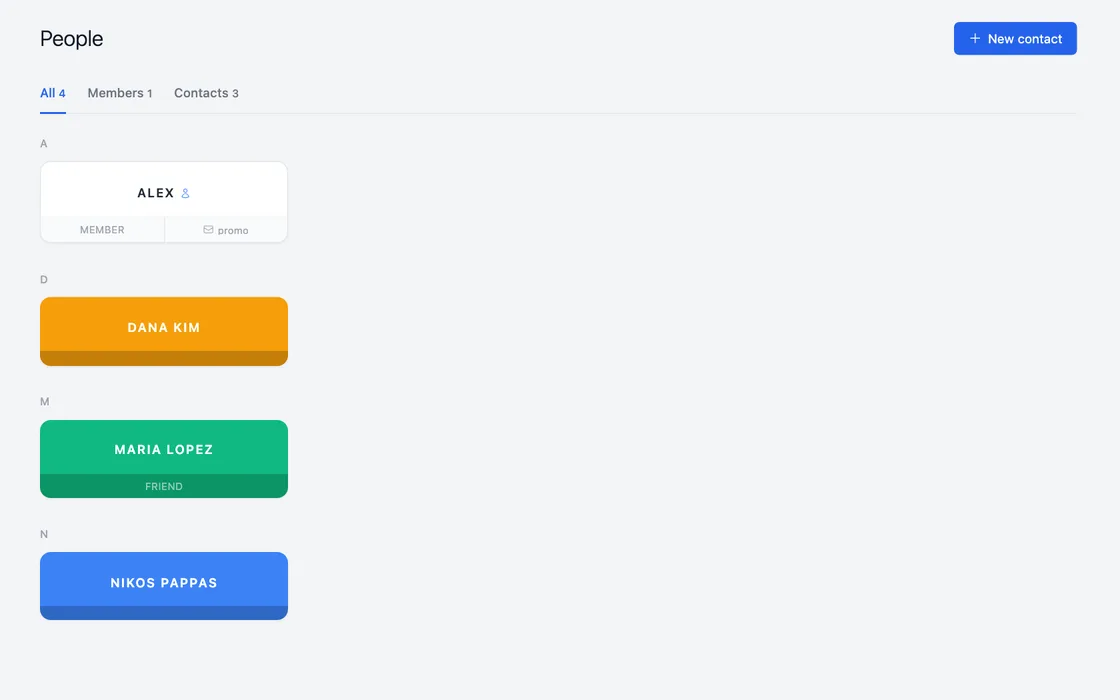
Atribua tarefas a pessoas e veja num relance quem está envolvido em cada projeto.
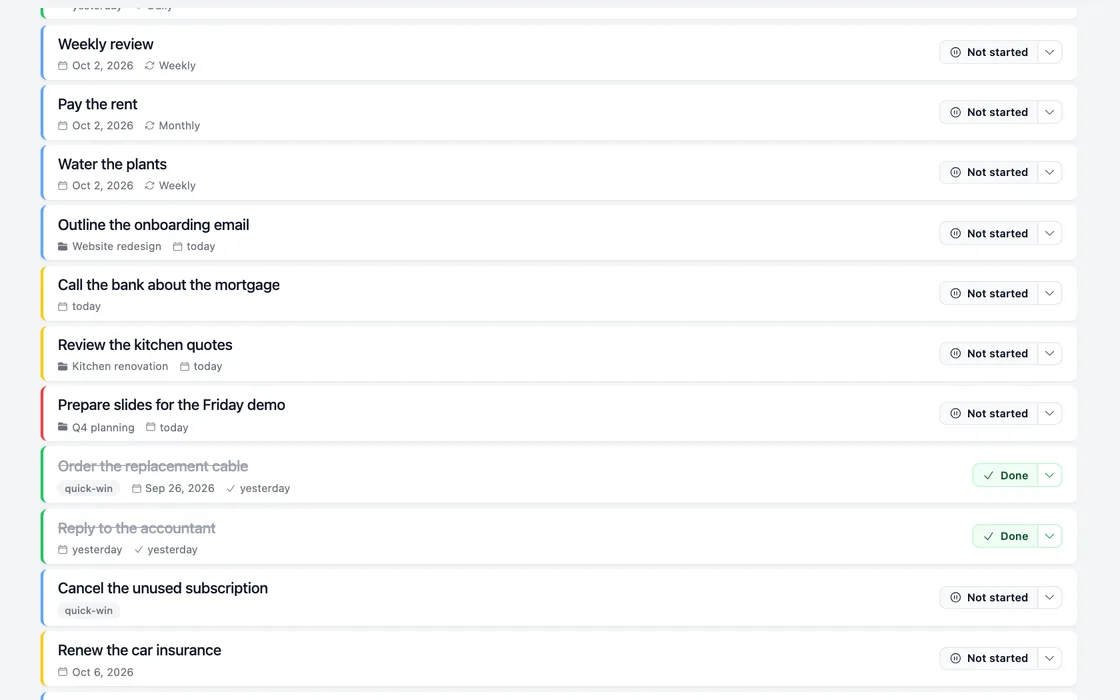
Pré-visualizarPadrões diários, semanais e mensais, com recorrência baseada na conclusão e relações pai-filho.
Prioridades, prazos, etiquetas e ordenação inteligente. Filtros poderosos para encontrar o que interessa.
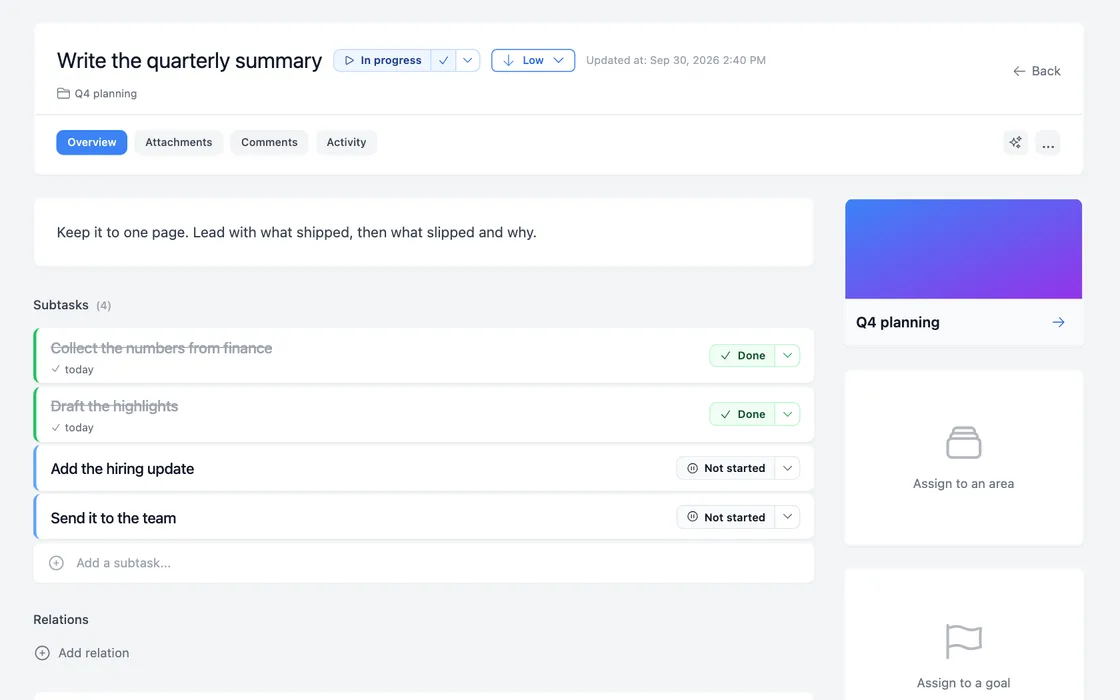
Pré-visualizarDivida tarefas complexas em subtarefas geríveis, com acompanhamento do progresso.
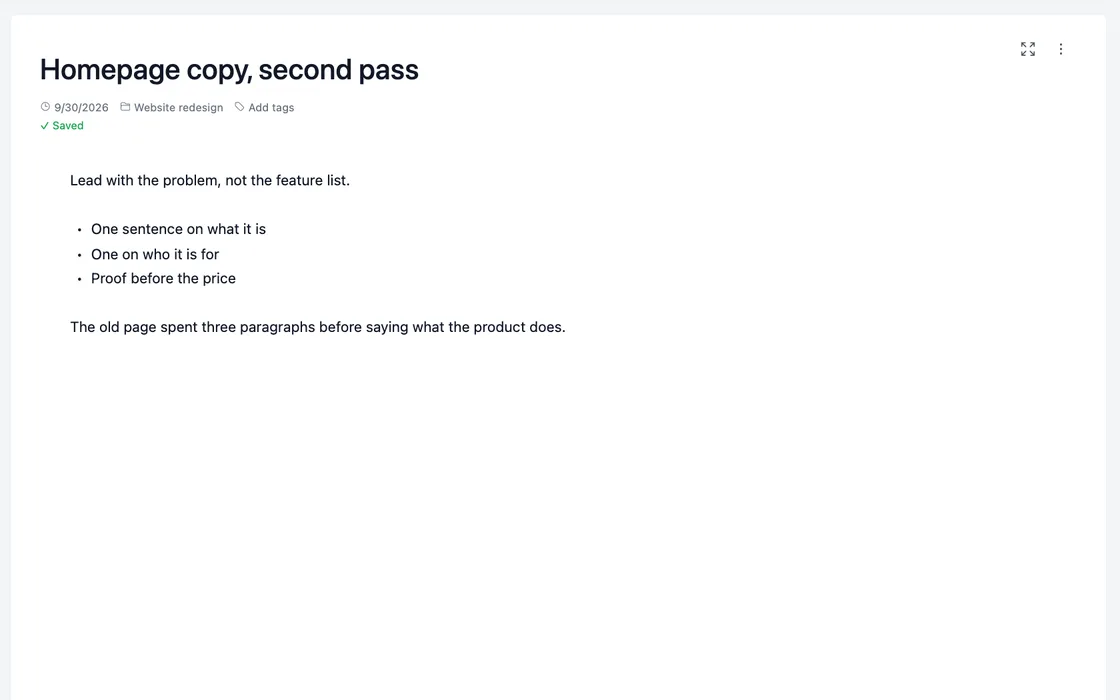
Pré-visualizarNotas com texto formatado para os seus projetos, com pesquisa completa e organização.
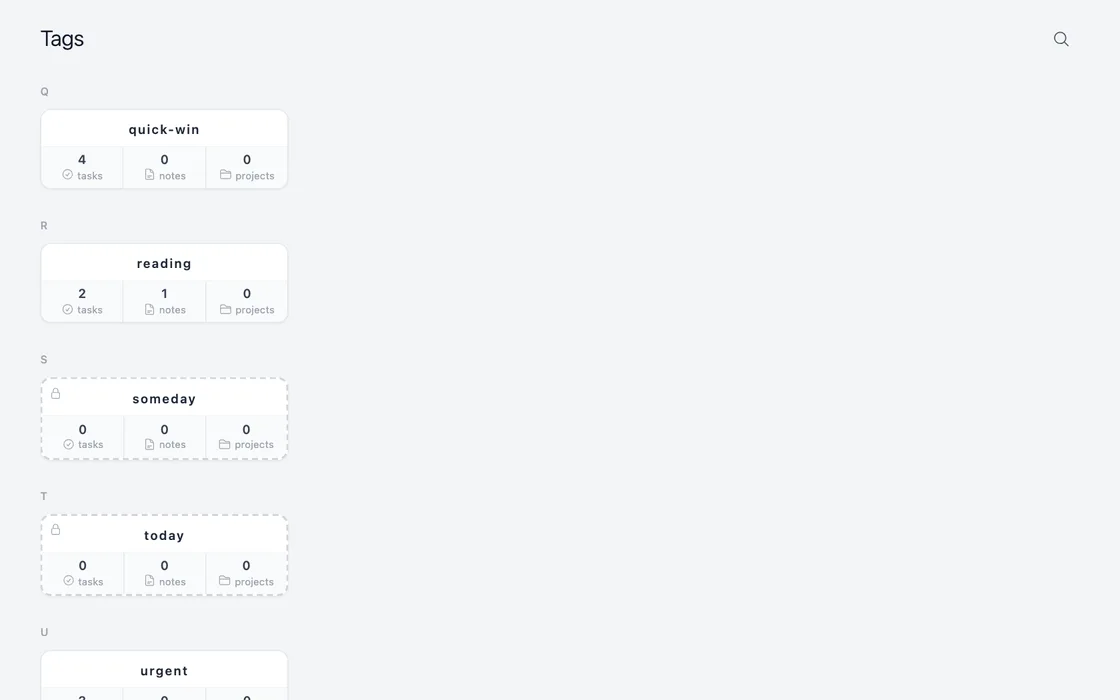
Pré-visualizarEtiquetas personalizadas para tarefas e notas, com filtragem imediata e organização entre projetos.
Pré-visualizarPesquisa de texto integral e filtros por projeto, etiqueta, prioridade ou prazo. Encontre qualquer tarefa em segundos.
Pré-visualizarAdicione o tududi ao ecrã principal ou ao ambiente de trabalho como PWA. Funciona offline e sincroniza quando voltar a estar online.
Pré-visualizarEntre com o seu fornecedor de identidade atual: Authentik, Keycloak, Google Workspace ou qualquer fornecedor compatível com OIDC.
Disponível em 26 idiomas com localização completa.
Envie uma mensagem para registar tarefas de imediato, receba resumos diários e trate da sua lista onde quer que esteja.
Sincronização bidirecional de tarefas com o Apple Lembretes, tasks.org, Thunderbird e qualquer aplicação compatível com CalDAV.
Documentação Swagger com versões e tokens de acesso pessoais para integrações à medida.
Mantenha os seus dados privados. Aloje por si para ter controlo total, ou use uma instância Gerida com cópias de segurança cifradas.
Partilhe projetos com permissões detalhadas - apenas leitura ou leitura e escrita.
O tududi traz um servidor MCP que expõe 59 ferramentas, cobrindo tarefas, projetos, áreas, metas, hábitos, notas, pessoas, tags, visualizações, a caixa de entrada, a busca e as métricas. Conecte o Claude ou qualquer agente compatível com MCP direto à sua própria instância, seja sua conta Cloud ou um servidor que você mesmo administra. A conexão vai para a sua instância em vez de passar por um intermediário, uma diferença estrutural que o Todoist e o Notion não conseguem oferecer, prometam o que prometerem.
No que devo me concentrar hoje, e algo está atrasando?
Comece com Publicar a migração de faturamento. Vence hoje, e três tarefas em Pagamentos esperam atrás dela.
Vale saber
Mova a revisão do redesign para sexta e adicione uma tarefa para desbloquear Pagamentos.
Feito. Revisar rascunho do redesign agora vence na sexta, e Desbloquear fila de Pagamentos está no projeto Pagamentos, vence hoje.
Uma sessão de exemplo. Seu agente se conecta direto à sua própria instância via MCP.
Adicione, encontre e conclua tarefas sem sair da conversa.
A conexão MCP vai direto para a sua própria instância do tududi, na Cloud ou no seu próprio servidor. Nada passa por terceiros.
Construído sobre o Model Context Protocol aberto. Funciona com o Claude e com outros clientes MCP.
Funciona da mesma forma com o Cursor, o Windsurf, o Cline e qualquer outro cliente MCP. Ler a documentação do MCP →
O MCP vem incluído no tududi Cloud e em cada instância autoalojada.
Uma camada separada e opcional que lê os seus dados e devolve resumos em linguagem simples. Funciona com qualquer fornecedor compatível com OpenAI, incluindo alojados por si como o Ollama.
Próximos passos sugeridos para uma tarefa concreta, gerados quando os pedir.
Distribui seu dia no tempo livre entre as reuniões, com um motivo para cada bloco.
No fim do dia: o que foi feito, um padrão a notar e o que levar para amanhã.
Uma avaliação rápida do estado de um projeto: o que avança e o que está parado.
O que os analistas escreveram depois de usarem o tududi.
Tududi stands out as a breath of fresh air among over-engineered and often expensive productivity tools.
Tududi is an immensely useful tool, and one that is easy to integrate into day-to-day workflow.
A free, open-source application that allows you to efficiently categorize and track your work, from personal task management to large-scale project management and detailed note-taking.
Um plano hospedado, ou rode você mesmo se preferir cuidar da operação.
Cancele a qualquer momento e exporte tudo. Se o tududi Cloud alguma vez encerrar, recebe os seus dados e um guia de migração para auto-alojamento. Aplica-se uso razoável ao armazenamento e ao volume de API. Garantia de reembolso de 14 dias, sem perguntas.
Como o tududi Cloud se compara aos apps com que costuma ser comparado, nos planos individuais.
Todoist Pro, TickTick Premium e Notion Plus, segundo suas páginas públicas de preços em setembro de 2026. Confira os sites para preços atuais. Os preços deles são os de tabela dos EUA, em dólares.
A licença, a IA, e o que acontece com os seus dados. Se faltar algo, pergunte no Discord.
A aplicação é open source sob a licença MIT, então você pode rodá-la no seu próprio servidor de graça, modificá-la e construir sobre ela sem pagar ninguém. Não há limite de assentos nem recursos retidos: a versão autoalojada é o produto completo. O tududi Cloud é um serviço pago, porque hospedagem, backups e e-mail custam dinheiro para operar. Você paga pelo trabalho operacional, nunca pelo acesso ao software.
Sim, e você não precisa comprar nada antes. A licença MIT permite uso comercial, incluindo dentro de uma empresa e em um produto comercial, sem limite de receita e sem nada a declarar. Se o seu financeiro precisar de uma nota fiscal, uma assinatura Cloud é cobrada pelo nosso provedor de pagamentos e gera uma. Nada nesta página vende uma permissão, porque essa permissão já é sua.
Sim. É desenvolvido principalmente por um mantenedor, com contribuições da comunidade, e lança versões com frequência. Cada versão está listada na página de releases do GitHub, ligada ao Changelog no menu acima, para que você possa julgar o ritmo por conta própria em vez de confiar na nossa palavra. O desenvolvimento acontece em público: issues, um roteiro público, e um Discord onde as perguntas são respondidas.
O app tem licença MIT e o código-fonte é público, então ele não pode ser retirado de você. Qualquer pessoa pode continuar rodando-o, e você pode fazer um fork. No tududi Cloud seus dados vivem em um banco tududi padrão em vez de um formato proprietário, então se o serviço algum dia encerrar, você recebe seus dados e um guia para migrá-los para o seu próprio servidor.
Não há plano gratuito, mas toda conta nova ganha um teste grátis de 14 dias, sem cartão. O teste inclui tudo, exceto o assistente de IA, links públicos de notas e adicionar membros. Se você não assinar, a conta fica somente leitura por 30 dias para você exportar seus dados e depois é excluída. Após o teste, o Cloud custa €5 por mês ou €50 por ano por pessoa. A forma gratuita de usar o tududi é rodá-lo no seu próprio servidor, que é a mesma aplicação.
Você paga para não administrar infraestrutura. O tududi Cloud dá a você o mesmo sistema com o servidor, atualizações, backups e e-mail cuidados para você, que é a metade chata e sem graça do autoalojamento. Cloud é o caminho que recomendamos. Autoalojar só é a melhor escolha se você já administra Docker e um proxy reverso e realmente quer operar a stack.
Depende de qual das duas camadas você quer dizer, e a diferença importa. O servidor MCP roda dentro da sua própria instância: um agente como o Claude Desktop se conecta direto a essa instância, então a conversa é entre o seu agente e o seu próprio tududi, e não um intermediário. O Assistente de IA é diferente. Ele chama um provedor compatível com OpenAI, então se você apontá-lo para um provedor hospedado, o conteúdo dessas requisições vai para esse provedor. Aponte-o para um modelo local, como Ollama ou LM Studio, e nada sai da sua máquina. Ele fica desligado até você fornecer uma chave, então é sempre uma escolha sua, não um padrão.
MCP é o Model Context Protocol, um padrão aberto para conectar agentes de IA a sistemas reais. O tududi traz um servidor MCP que expõe 59 ferramentas cobrindo tarefas, projetos, áreas, metas, hábitos, notas, pessoas, tags, visualizações, a caixa de entrada, a busca e as métricas, para que um agente possa capturar, encontrar, atualizar e concluir trabalho em vez de só falar sobre ele. É opcional, vem incluído no Cloud e em cada instância autoalojada, e funciona com Claude Desktop, Cursor, Windsurf, Cline ou qualquer outro cliente MCP.
Nós cuidamos do servidor, das atualizações e dos backups. Experimente grátis por 14 dias, sem cartão.
Novidades e atualizações do produto de vez em quando. Sem spam, cancele quando quiser.
Guardamos seu endereço e a data em que você o informou apenas para enviar novidades e atualizações. Nunca o compartilhamos.
Disponível em 26 idiomas em todo o mundo
Fale com outros utilizadores do tududi, obtenha apoio e fique a par das novidades