Leg alles vast, plan je dag met AI rond je agenda en houd gebieden, doelen, projecten, notities en gewoonten in één systeem. Maak in een minuut een Cloud-account.
14 dagen gratis, geen creditcard nodig. Daarna per maand of per jaar, altijd opzegbaar.
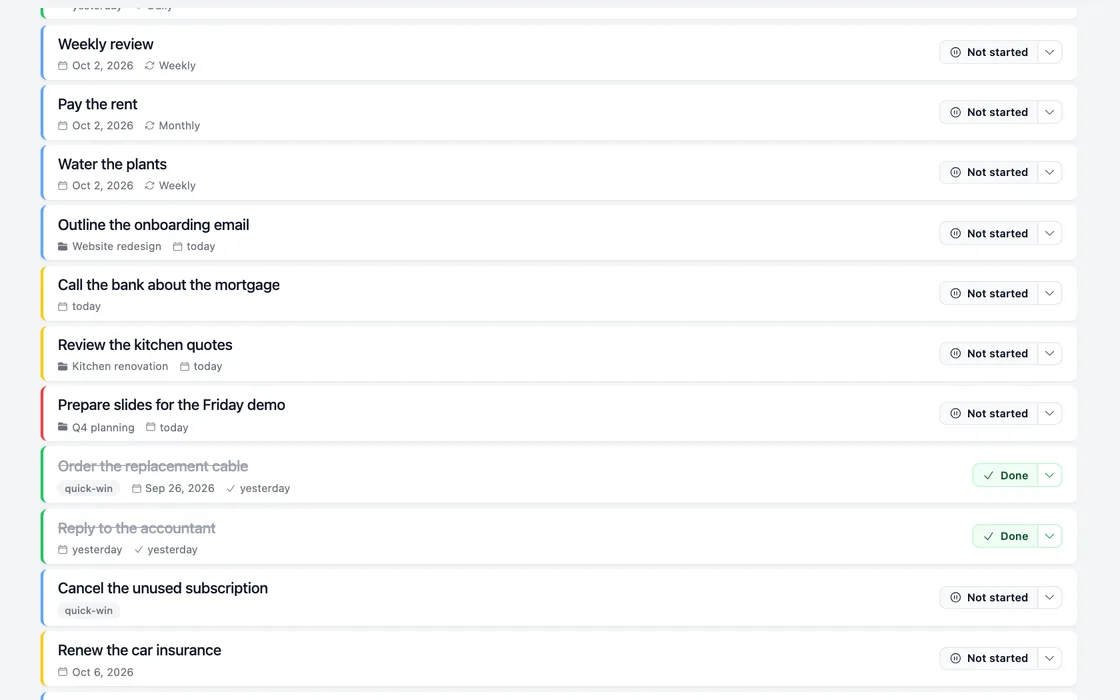
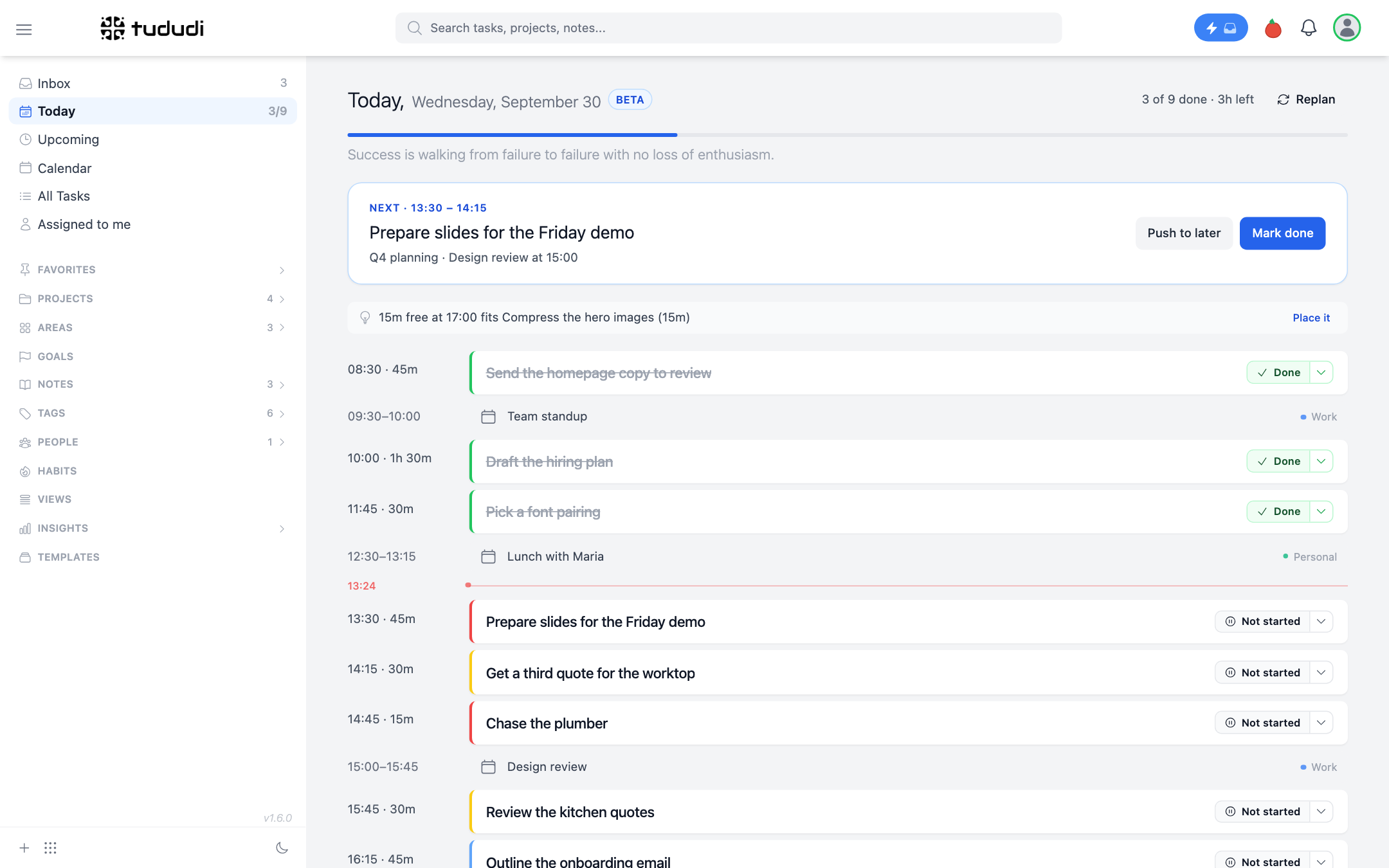
Leg dingen vast zodra ze opkomen, plan de dag met AI rond je afspraken en werk hem blok voor blok af.
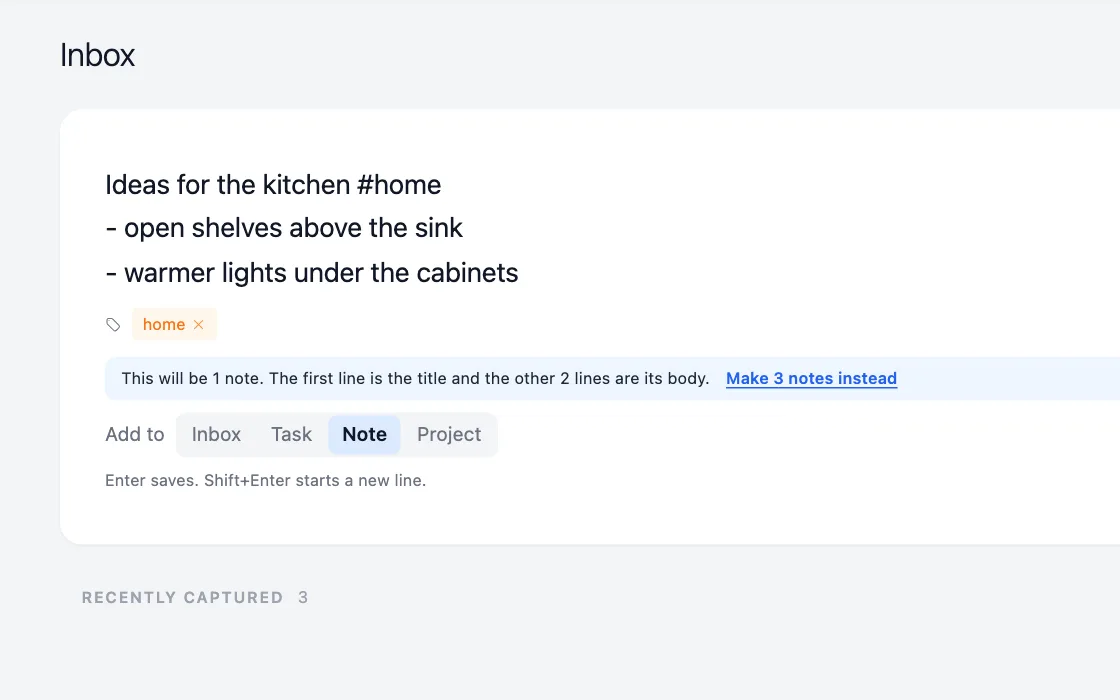
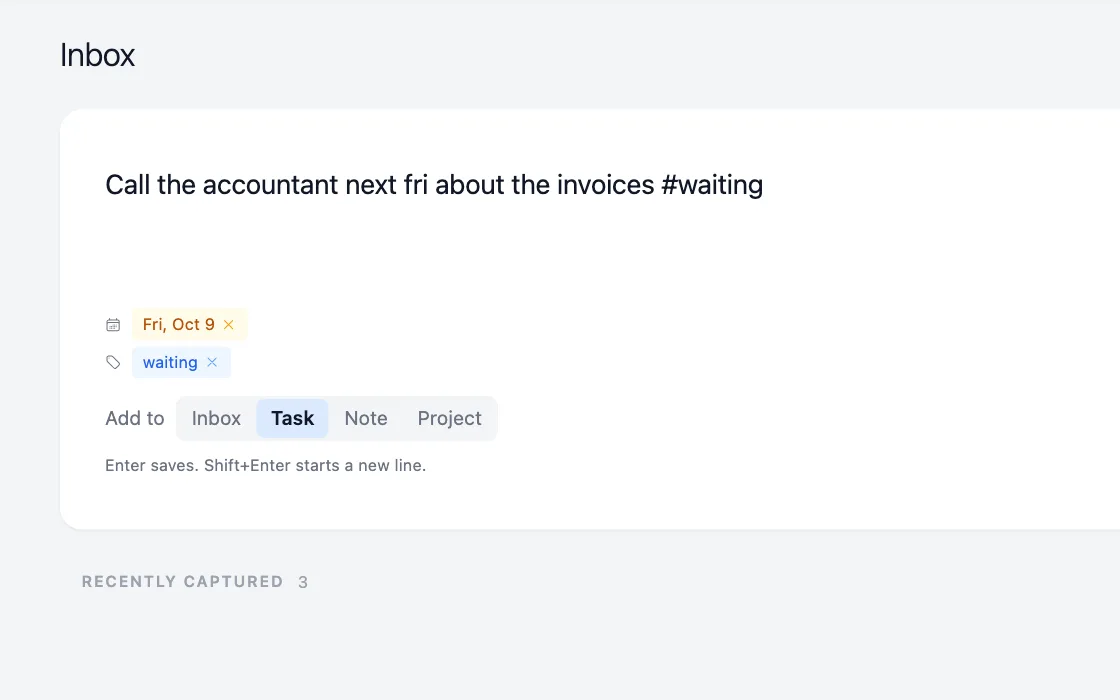
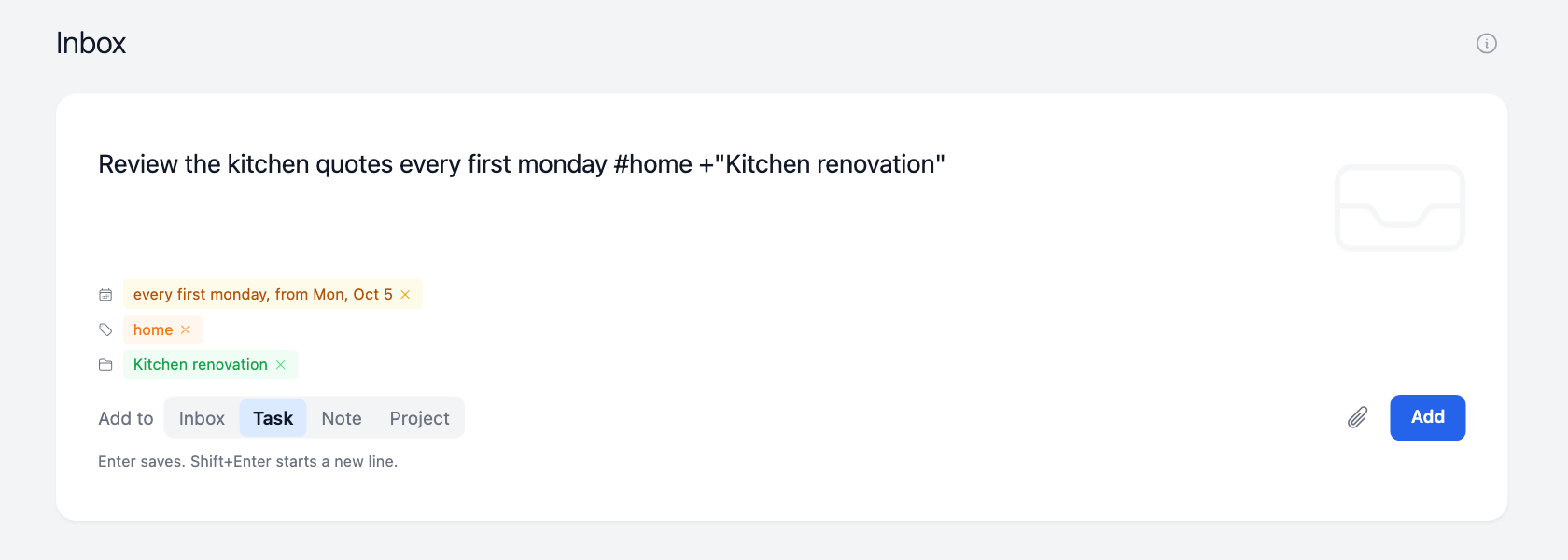
Eén invoervak voor inbox, taken, notities en projecten, overal in de app. Schrijf zoals je denkt, tududi vult de rest in.
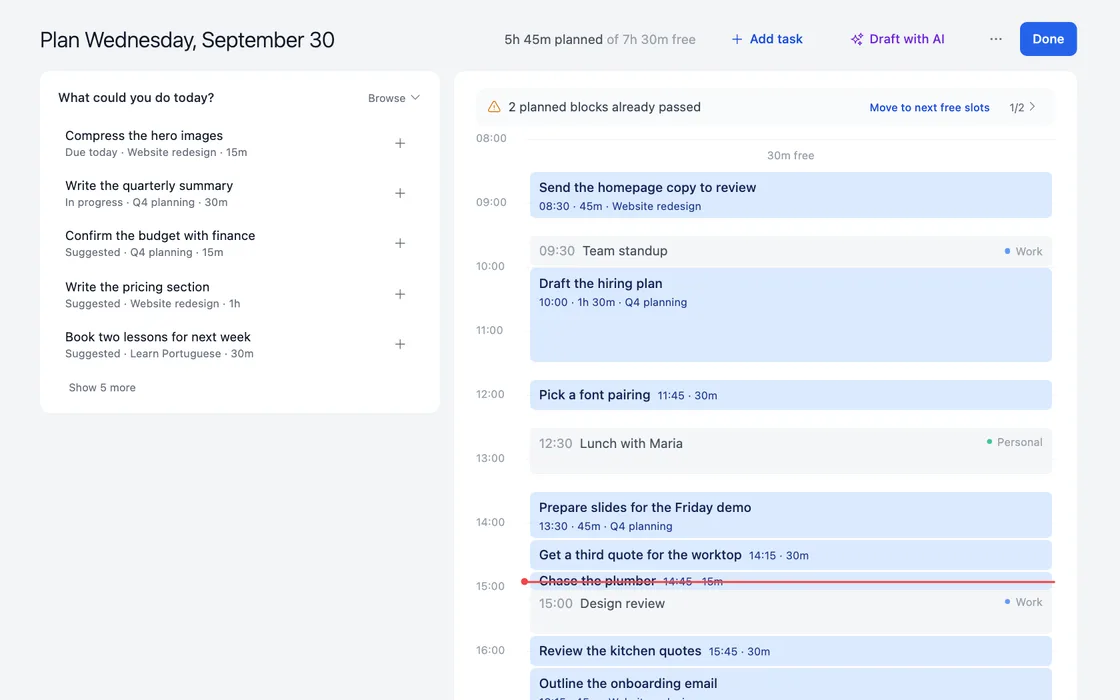
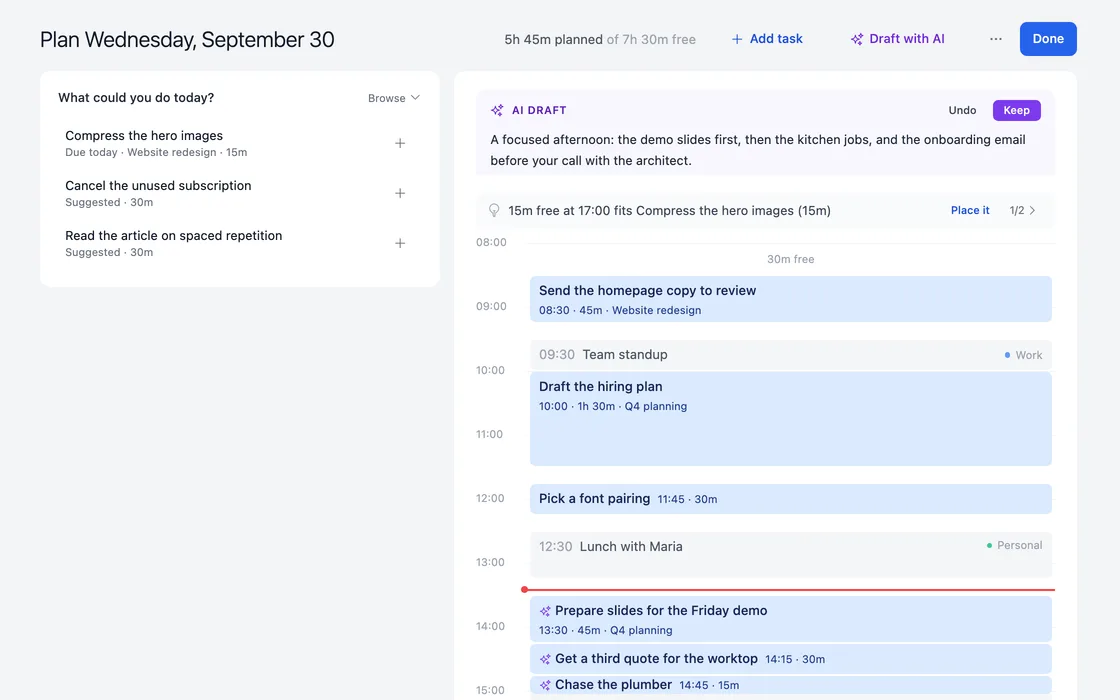
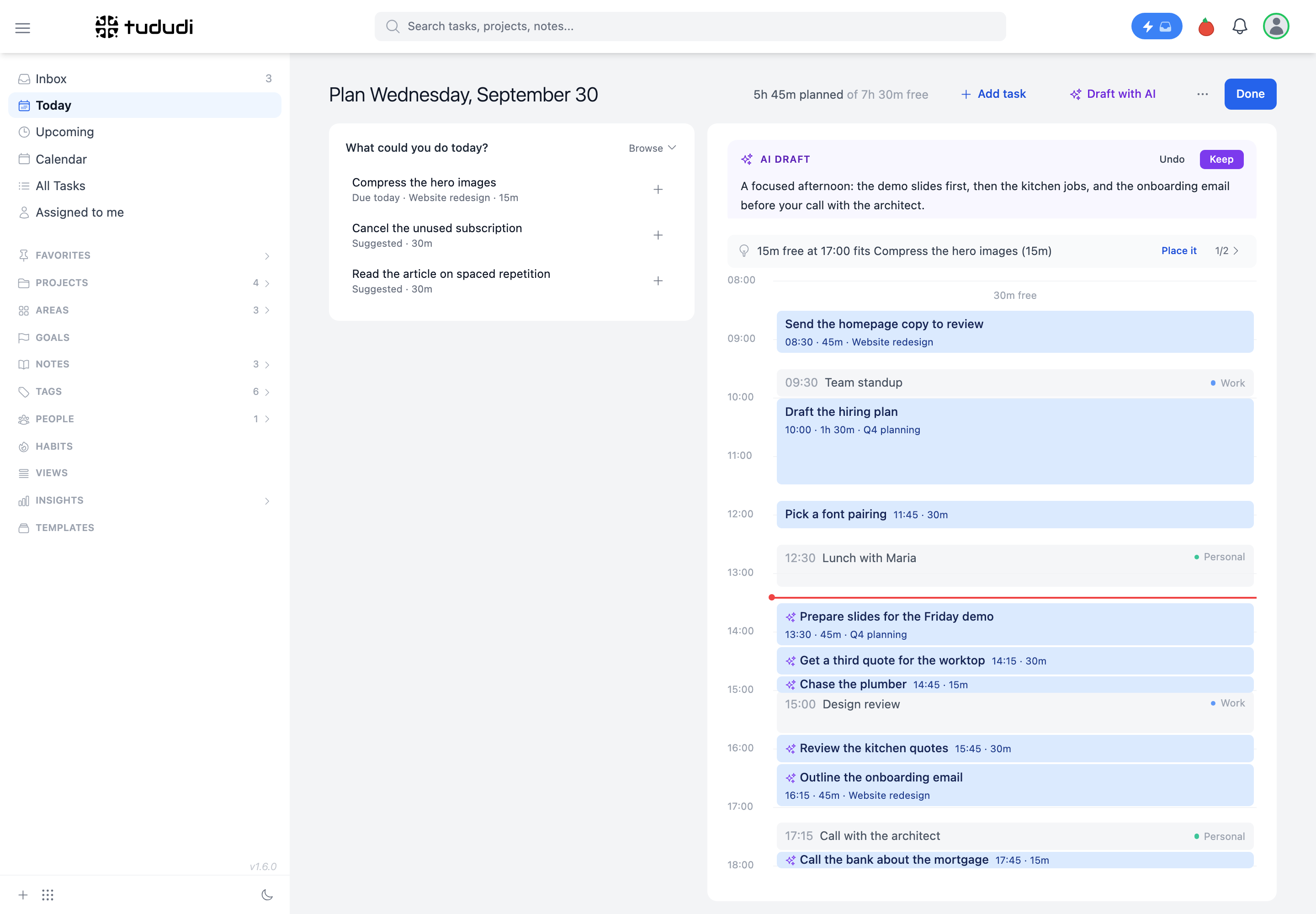
De planner laat zien wat vandaag past, in de volgorde die jij kiest. Geef elke taak een duur en zet hem in de vrije tijd tussen afspraken, of laat AI de hele dag opzetten.
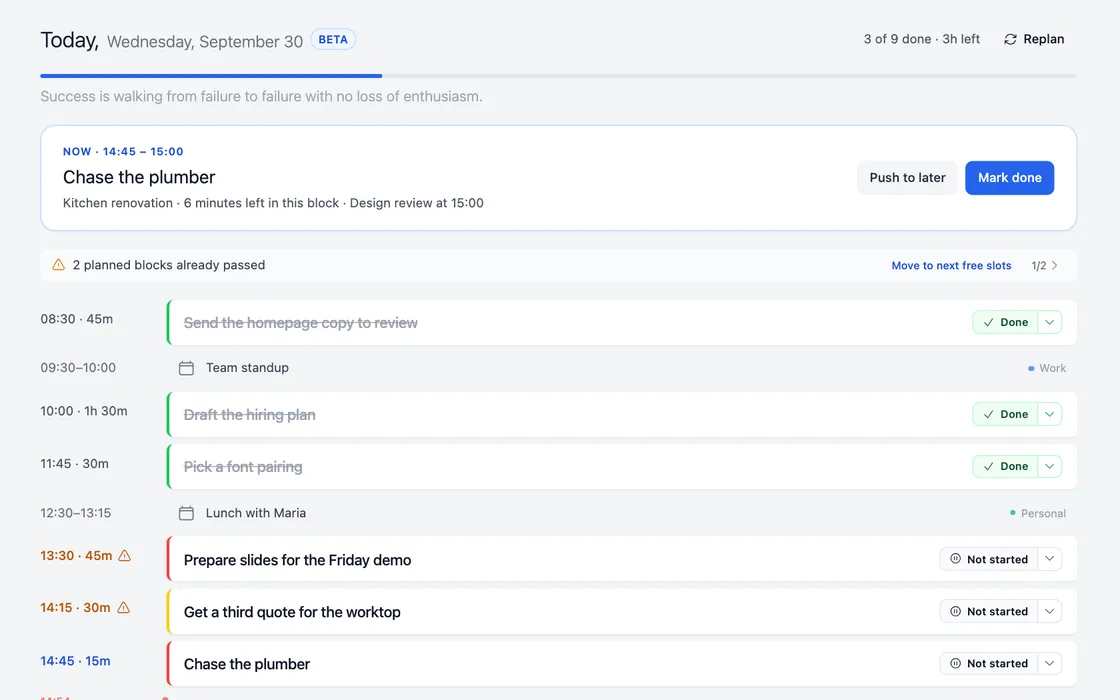
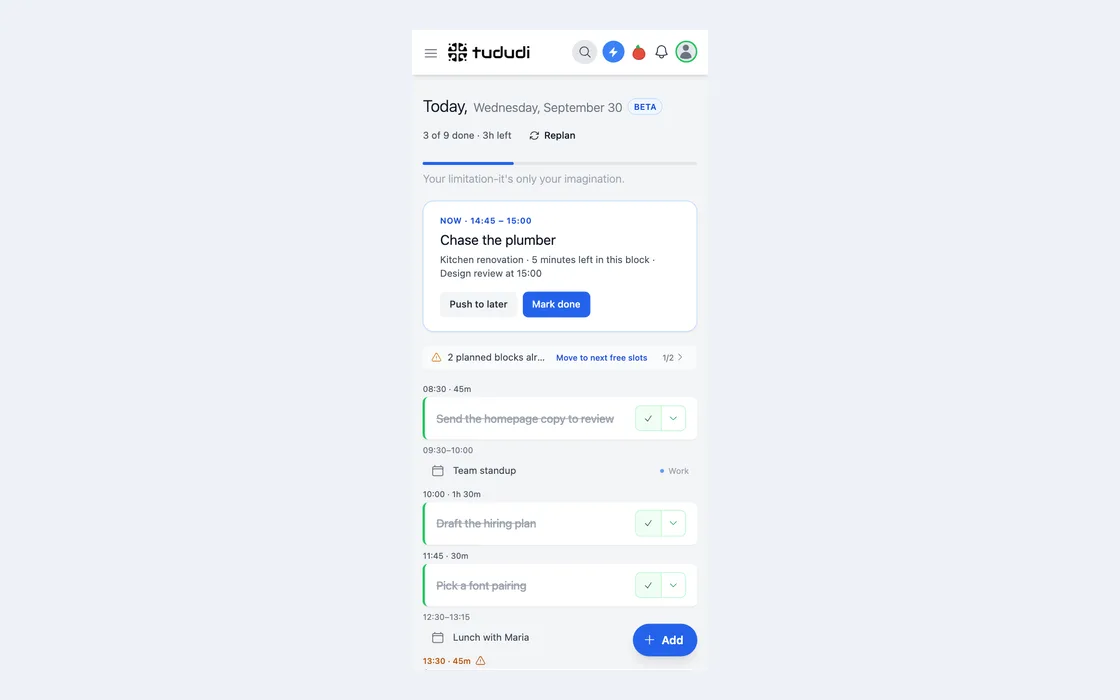
Start de dag en Vandaag toont alleen wat je je voornam: het huidige blok, dan de agenda, met je Google-, Apple- of Outlook-afspraken ertussen.
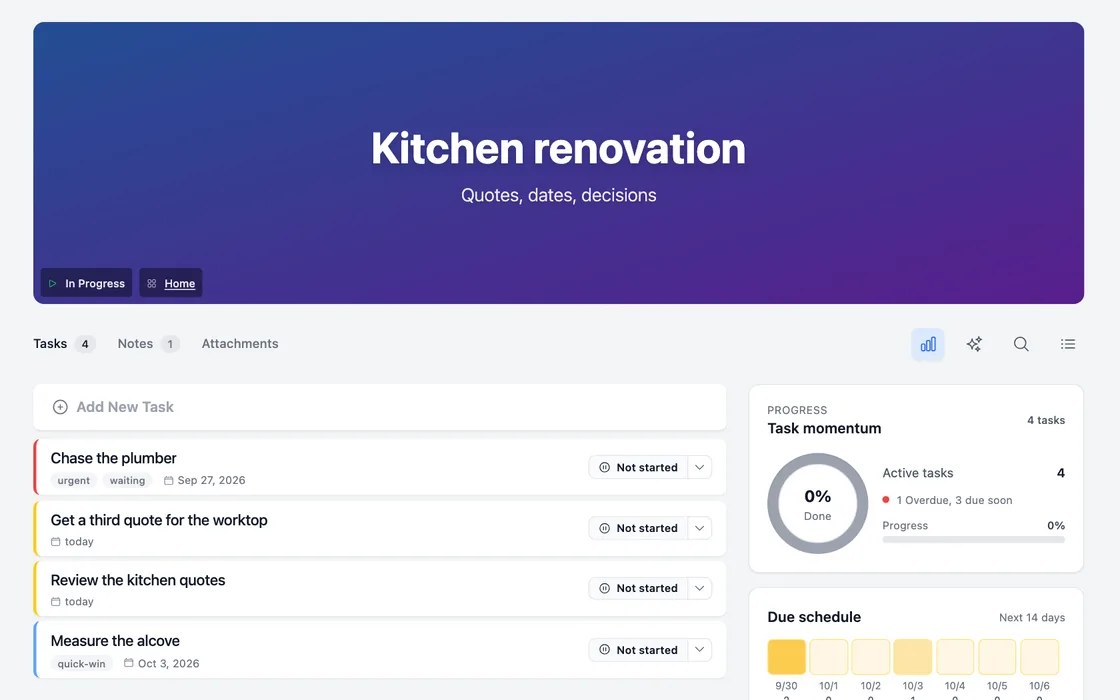
tududi combineert doelen, projecten, taken, notities en slimme weergaven in één rustig, gefocust systeem. Laat ons het voor je draaien, of draai het zelf als je dat liever hebt.
Voeg inbox-items, taken, notities of projecten toe van overal, met bestanden. Een geplakte screenshot wordt het item.
Voorbeeld“tomorrow”, “next fri”, “every weekday”: datums en herhalingen worden gelezen terwijl je typt, samen met #tags, +Project en @persoon.
VoorbeeldEen planner die taken in de vrije tijd rond je afspraken zet, met duur, gerangschikte suggesties en tips.
VoorbeeldKoppel Google-, Apple- of Outlook-agenda’s en zie afspraken naast je taken, met het huidige blok bovenaan.
VoorbeeldZet de dag op met AI, krijg geschatte duur voor taken en een dagafsluiting die onafgemaakt werk meeneemt.
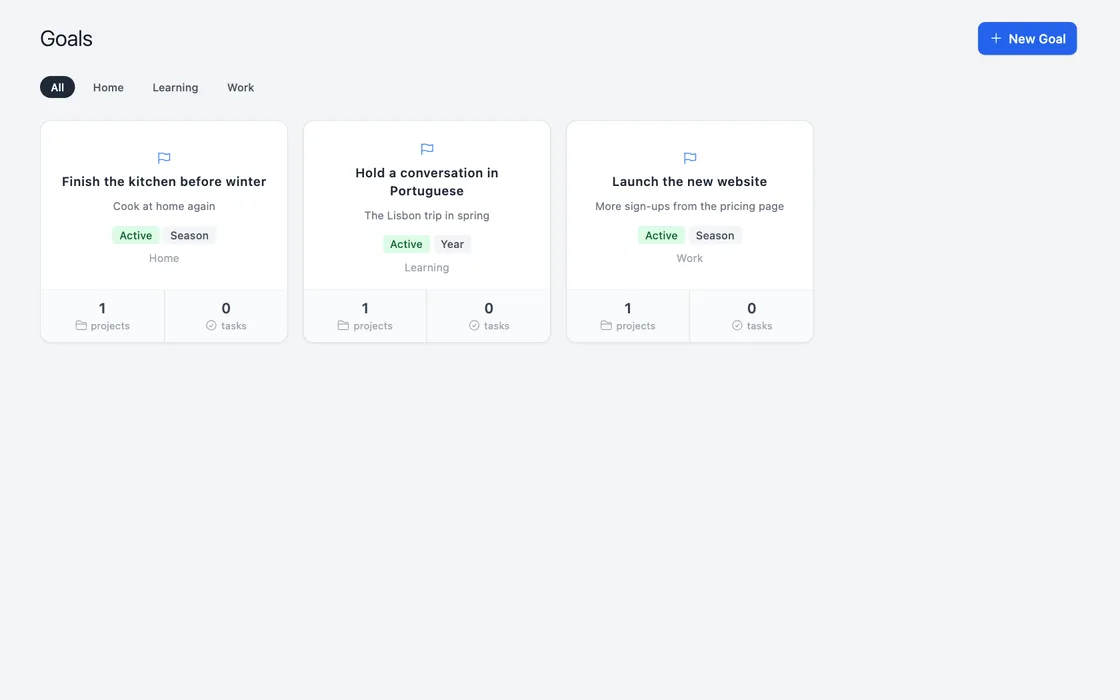
VoorbeeldLeg resultaten vast voor een seizoen of een jaar, en zie welke Gebieden en Projecten ze werkelijk vooruithelpen.
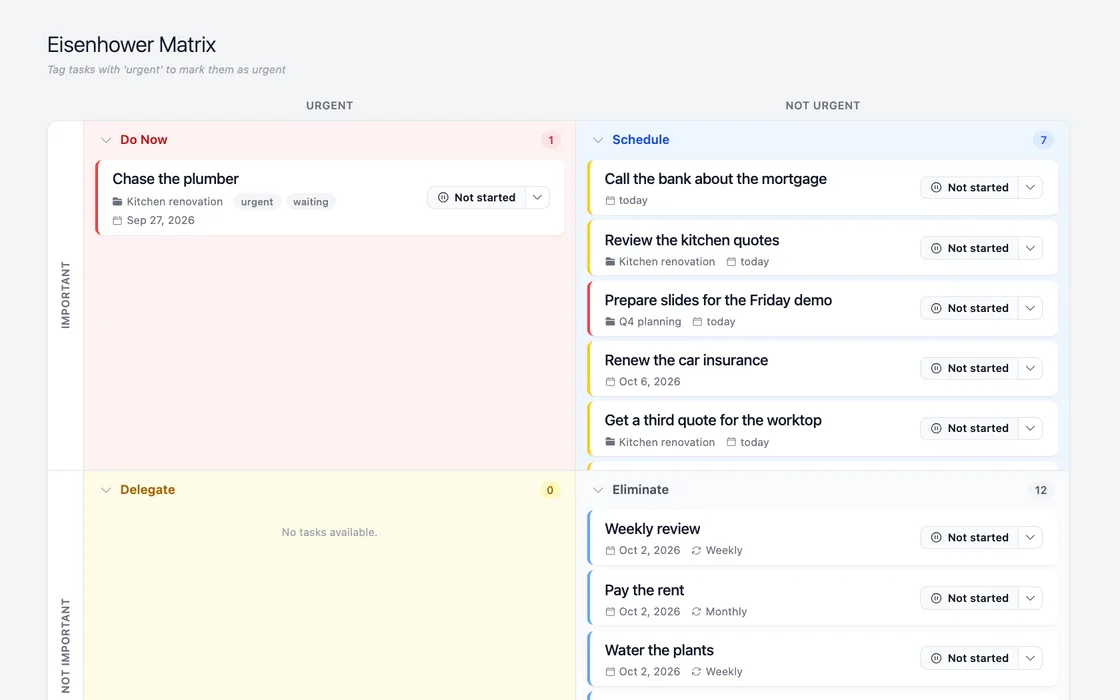
VoorbeeldSchakel over naar een Eisenhower-matrix of een Kanban-bord wanneer de vraag simpelweg is: wat doe ik nu.
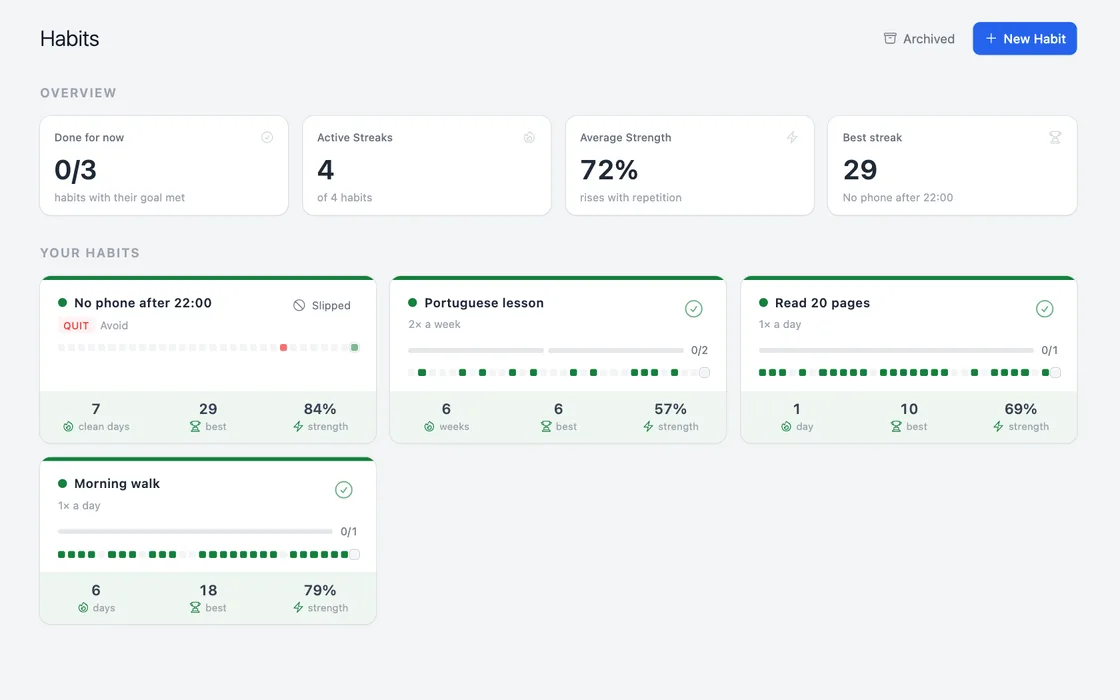
VoorbeeldVolg terugkerende gewoontes naast taken en projecten, met eenvoudige reeksen en geschiedenis.
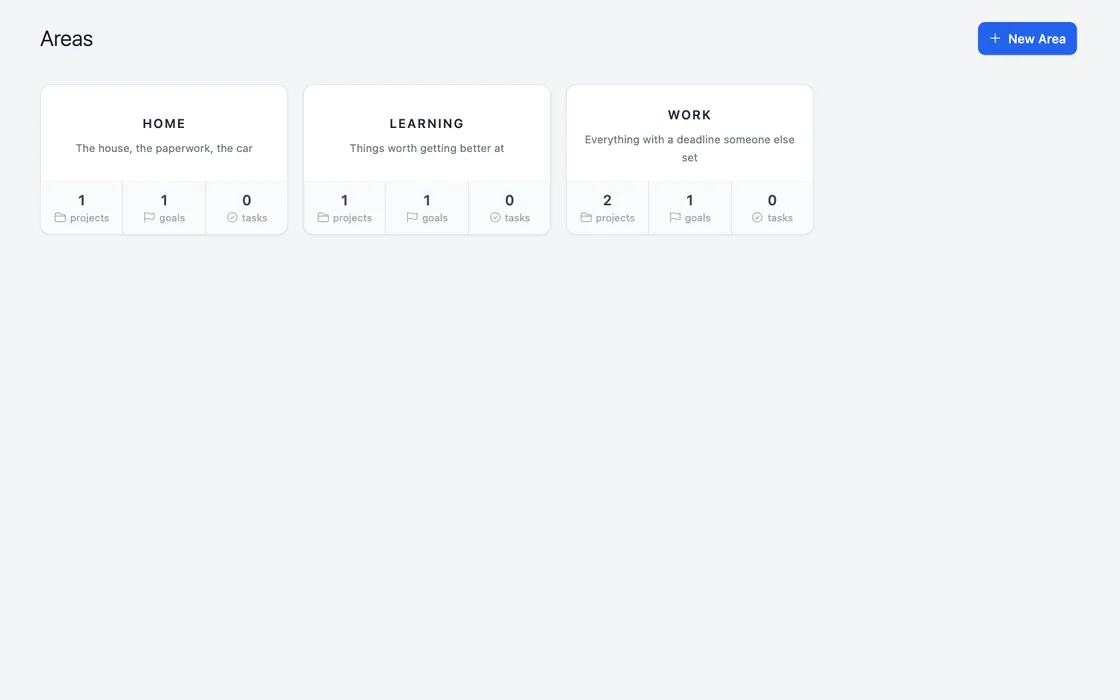
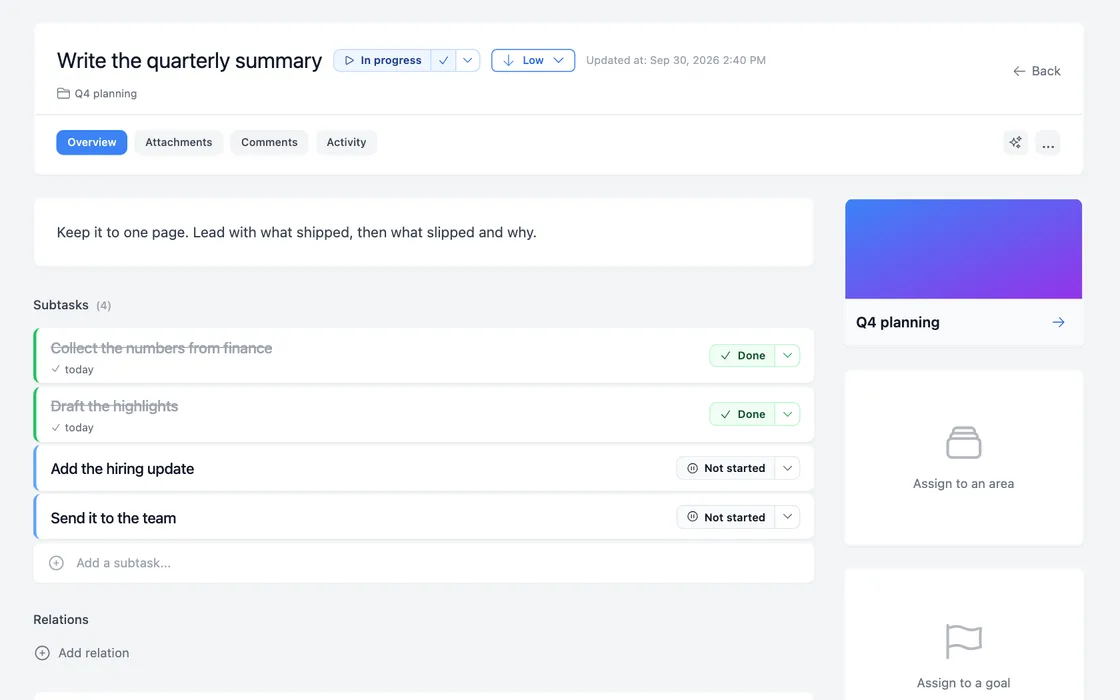
VoorbeeldDoelen en Gebieden staan naast elkaar bovenaan: langetermijnresultaten en doorlopende delen van je leven. Beide bevatten Projecten, en die bevatten Taken.
VoorbeeldOrden projecten per levensgebied - Werk, Persoonlijk, Gezondheid, Leren.
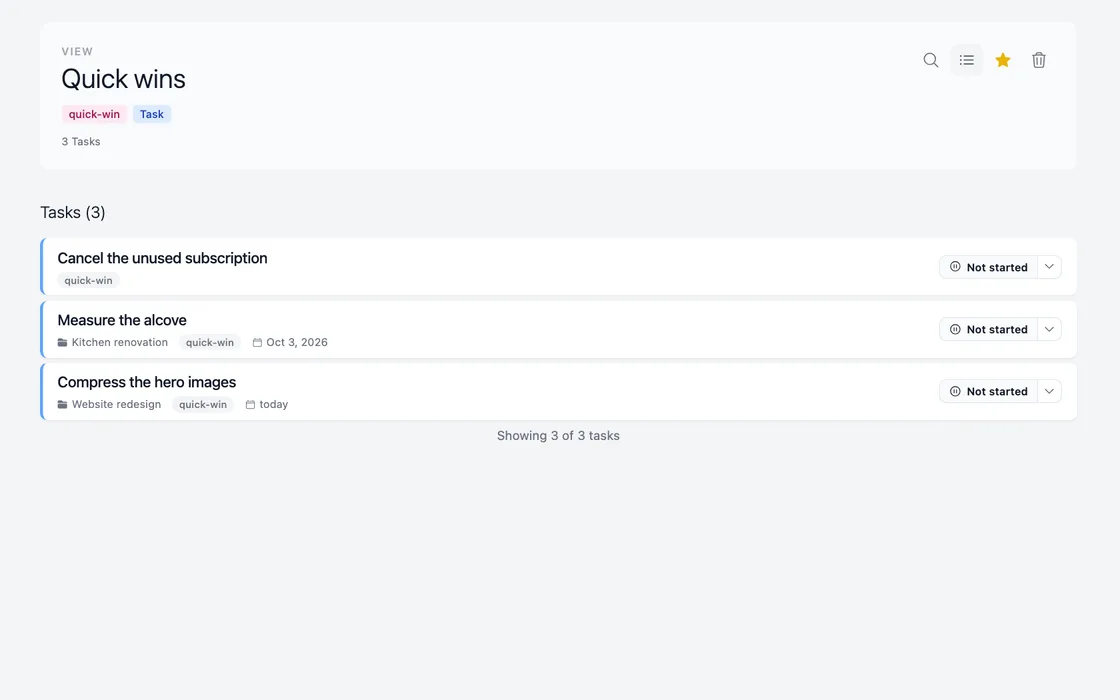
VoorbeeldSlimme opgeslagen zoekopdrachten zoals „Vandaag”, „Te laat” of „Ooit”. Eén klik, zonder elke keer een filter opnieuw te bouwen.
VoorbeeldBekijk voltooiingstrends en werkdruk per project, zodat je weet waar je tijd echt heen gaat.
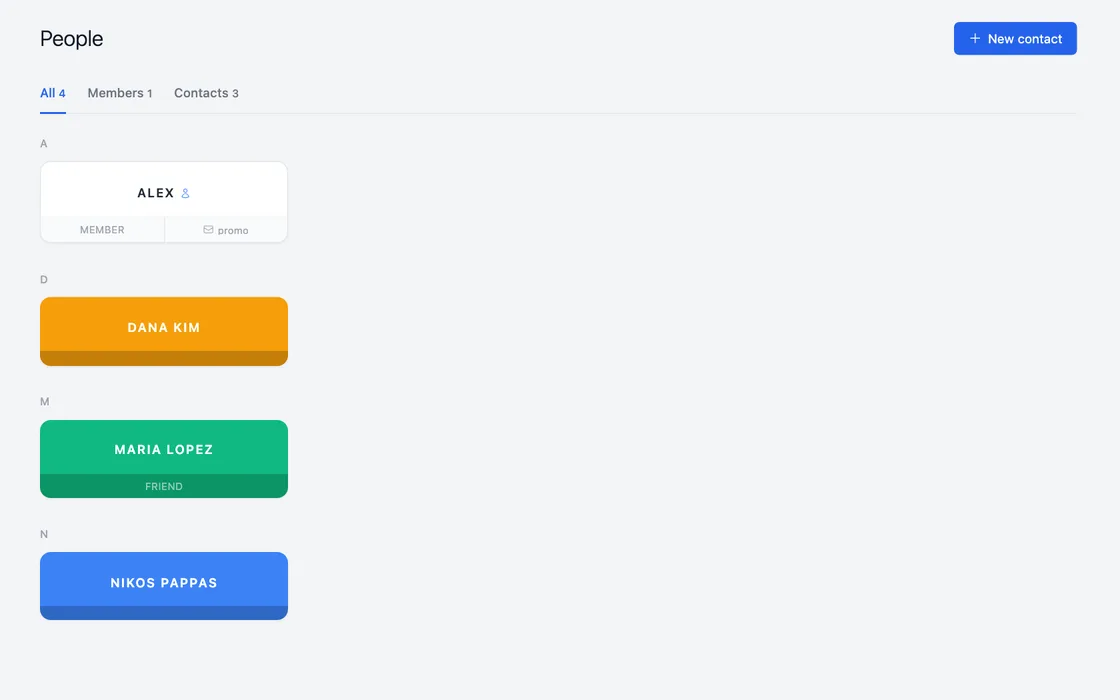
Wijs taken toe aan personen en zie in één oogopslag wie bij een project betrokken is.
VoorbeeldDagelijkse, wekelijkse en maandelijkse patronen, met herhaling op basis van voltooiing en ouder-kindrelaties.
Prioriteiten, deadlines, tags en slim sorteren. Krachtige filters om te vinden wat ertoe doet.
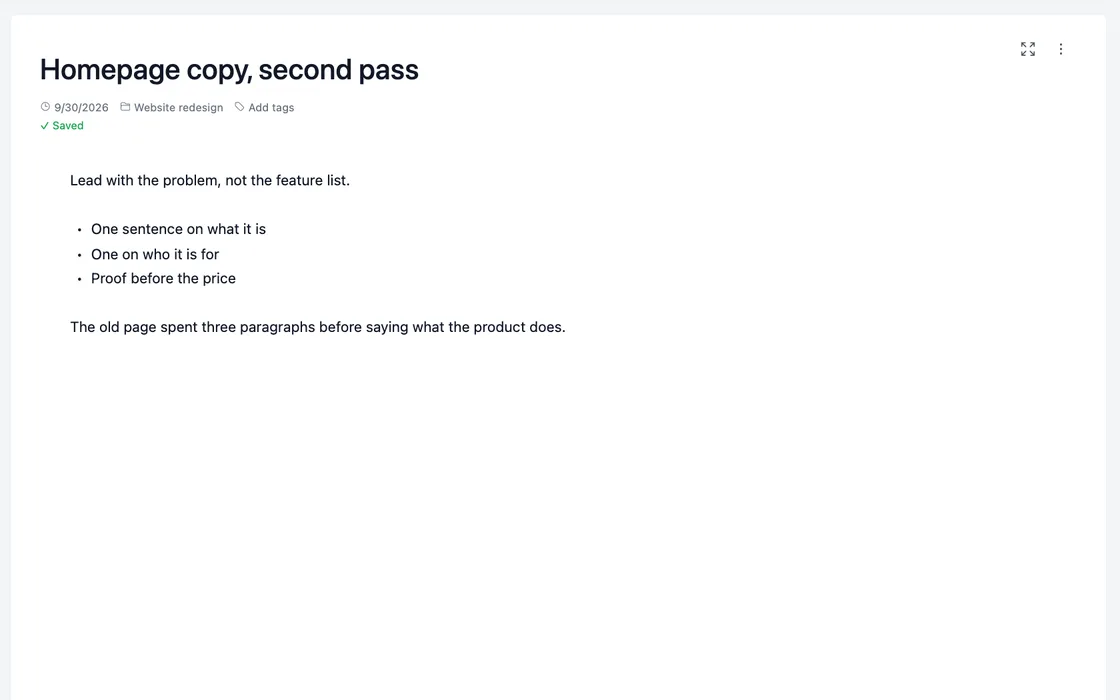
VoorbeeldOpgemaakte notities bij projecten, met volledige zoekfunctie en ordening.
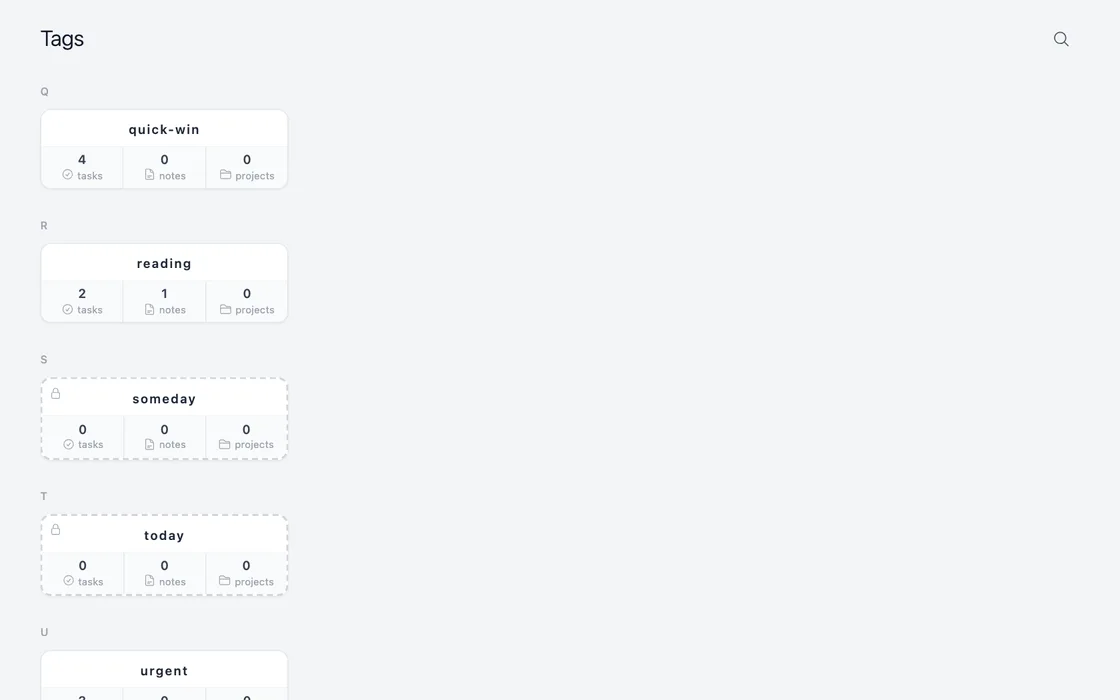
VoorbeeldEigen tags voor taken en notities, met direct filteren en ordening over projecten heen.
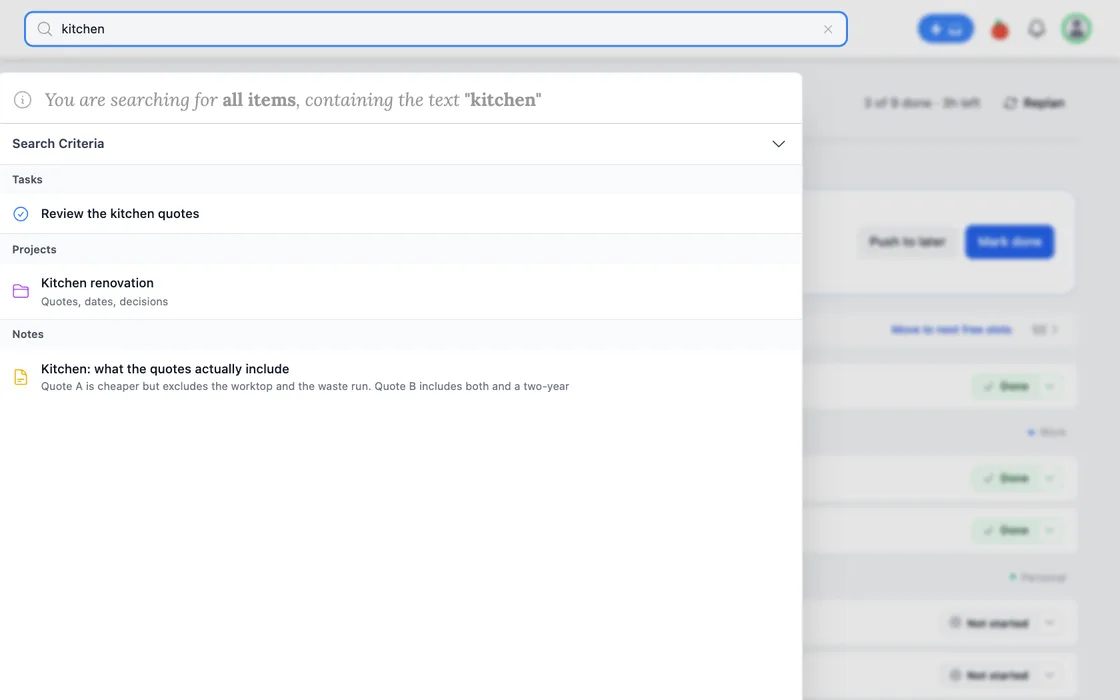
VoorbeeldVolledige tekstzoekopdracht plus filters op project, tag, prioriteit of deadline. Vind elke taak binnen enkele seconden.
VoorbeeldZet tududi als PWA op je beginscherm of bureaublad. Werkt offline en synchroniseert zodra je weer online bent.
VoorbeeldLog in met je bestaande identityprovider: Authentik, Keycloak, Google Workspace of elke OIDC-compatibele provider.
Beschikbaar in 26 talen met volledige lokalisatie.
Stuur een bericht om taken direct vast te leggen, ontvang dagelijkse overzichten en beheer je lijst onderweg.
Tweerichtingssynchronisatie van taken met Apple Herinneringen, tasks.org, Thunderbird en elke CalDAV-compatibele app.
Swagger-documentatie met versies en persoonlijke toegangstokens voor eigen integraties.
Houd je data privé. Zelf hosten voor volledige controle, of een Managed instantie met versleutelde back-ups.
Deel projecten met fijnmazige rechten - alleen lezen of lezen en schrijven.
tududi levert een MCP-server met 59 tools, die taken, projecten, gebieden, doelen, gewoontes, notities, personen, tags, weergaven, de inbox, zoeken en statistieken dekken. Verbind Claude of elke MCP-compatibele agent rechtstreeks met je eigen instantie, of dat nu je Cloud-account is of een server die je zelf beheert. De verbinding gaat naar jouw instantie in plaats van via een tussenliggende relay, een structureel verschil dat Todoist en Notion niet kunnen bieden, wat ze ook beloven.
Waar moet ik me vandaag op richten, en loopt er iets achter?
Begin met Factureringsmigratie uitbrengen. Die is vandaag verschuldigd, en drie taken in Betalingen wachten erachter.
Goed om te weten
Verplaats de herontwerpbeoordeling naar vrijdag en voeg een taak toe om Betalingen te deblokkeren.
Gedaan. Herontwerp-concept beoordelen is nu verschuldigd op vrijdag, en Betalingenwachtrij deblokkeren staat in het project Betalingen, verschuldigd vandaag.
Een voorbeeldsessie. Je agent verbindt rechtstreeks met je eigen instantie via MCP.
Taken toevoegen, terugvinden en afronden zonder het gesprek te verlaten.
De MCP-verbinding gaat rechtstreeks naar jouw eigen tududi-instantie, op Cloud of op je eigen server. Niets loopt via een derde partij.
Gebouwd op het open Model Context Protocol. Werkt met Claude en andere MCP-clients.
Hetzelfde werkt met Cursor, Windsurf, Cline en elke andere MCP-client. Lees de MCP-documentatie →
MCP wordt geleverd bij tududi Cloud en bij elke zelfgehoste instantie.
Een aparte, optionele laag die je data leest en er samenvattingen in gewone taal van maakt. Werkt met elke OpenAI-compatibele provider, ook zelfgehost zoals Ollama.
Voorgestelde vervolgstappen voor een specifieke taak, op aanvraag gegenereerd.
Verdeelt je dag over de vrije tijd rond je afspraken, met een reden voor elk blok.
Aan het eind van de dag: wat klaar is, een patroon om op te letten en wat mee moet naar morgen.
Een snelle inschatting van de gezondheid van een project: wat loopt en wat vastzit.
Wat recensenten schreven nadat ze tududi zelf hadden gedraaid.
Tududi stands out as a breath of fresh air among over-engineered and often expensive productivity tools.
Tududi is an immensely useful tool, and one that is easy to integrate into day-to-day workflow.
A free, open-source application that allows you to efficiently categorize and track your work, from personal task management to large-scale project management and detailed note-taking.
Één gehost abonnement, of draai het zelf als je liever de operatie doet.
Zeg op wanneer je wilt en exporteer alles. Mocht tududi Cloud ooit stoppen, dan krijg je je gegevens en een handleiding om zelf te hosten. Voor opslag en API-volume geldt fair use. 14 dagen geld-terug-garantie, zonder vragen.
Hoe tududi Cloud zich verhoudt tot de apps waarmee het meestal wordt vergeleken, op hun individuele abonnementen.
Todoist Pro, TickTick Premium en Notion Plus, volgens hun openbare prijspagina’s in september 2026. Kijk op hun sites voor actuele prijzen. Hun prijzen zijn Amerikaanse lijstprijzen in dollars.
De licentie, de AI, en wat er met je gegevens gebeurt. Als er iets ontbreekt, vraag het op Discord.
De applicatie is open source onder de MIT-licentie, dus je kunt hem gratis op je eigen server draaien, aanpassen en erop bouwen zonder iemand te betalen. Er is geen plaatsenlimiet en geen achtergehouden functies: de zelfgehoste build is het volledige product. tududi Cloud is een betaalde dienst, omdat hosting, backups en e-mail geld kosten om te draaien. Je betaalt voor het operationele werk, nooit voor toegang tot de software.
Ja, en je hoeft daarvoor niets te kopen. De MIT-licentie staat commercieel gebruik toe, ook binnen een bedrijf en in een commercieel product, zonder omzetgrens en zonder iets te melden. Als je financiële afdeling een factuur nodig heeft: een Cloud-abonnement wordt via onze betalingsprovider gefactureerd en levert er een. Niets op deze pagina verkoopt toestemming, want die toestemming heb je al.
Ja. Het wordt vooral ontwikkeld door één maintainer, met bijdragen van de community, en er komen vaak releases uit. Elke versie staat op de GitHub-releasepagina, gelinkt vanuit de Changelog in het menu hierboven, zodat je het tempo zelf kunt beoordelen in plaats van ons op ons woord te geloven. De ontwikkeling gebeurt in het openbaar: issues, een openbare roadmap, en een Discord waar vragen worden beantwoord.
De app is MIT-gelicentieerd en de broncode is openbaar, dus die kan niet van je worden afgenomen. Iedereen kan hem blijven draaien, en jij kunt hem forken. Bij tududi Cloud leven je gegevens in een standaard tududi-database in plaats van een eigen formaat, dus als de dienst ooit zou stoppen, krijg je je gegevens en een gids om ze naar je eigen server te verhuizen.
Er is geen gratis abonnement, maar elk nieuw account krijgt een gratis proefperiode van 14 dagen, zonder creditcard. De proefperiode bevat alles behalve de AI-assistent, openbare notitielinks en leden toevoegen. Neem je geen abonnement, dan wordt het account 30 dagen alleen-lezen zodat je je gegevens kunt exporteren, en daarna verwijderd. Na de proefperiode kost Cloud €5 per maand of €50 per jaar per persoon. Gratis gebruik je tududi door het op je eigen server te draaien, het is dezelfde applicatie.
Je betaalt om geen infrastructuur te beheren. tududi Cloud geeft je hetzelfde systeem met de server, updates, backups en e-mail voor je verzorgd, wat de vervelende, weinig glamoureuze helft van zelfhosten is. Cloud is het pad dat we aanraden. Zelfhosten is alleen de betere deal als je al Docker en een reverse proxy draait en de stack actief wilt beheren.
Dat hangt af van welke van de twee lagen je bedoelt, en het verschil is belangrijk. De MCP-server draait binnen je eigen instantie: een agent zoals Claude Desktop verbindt rechtstreeks met die instantie, dus het gesprek is tussen jouw agent en jouw eigen tududi, niet een tussenpartij. De AI-assistent is anders. Die roept een OpenAI-compatibele provider aan, dus als je die naar een gehoste provider wijst, gaat de inhoud van die verzoeken naar die provider. Wijs hem in plaats daarvan naar een lokaal model, zoals Ollama of LM Studio, en niets verlaat je machine. Hij blijft uit totdat je een sleutel opgeeft, dus het is altijd jouw keuze, geen standaardinstelling.
MCP is het Model Context Protocol, een open standaard om AI-agenten met echte systemen te verbinden. tududi levert een MCP-server met 59 tools voor taken, projecten, gebieden, doelen, gewoontes, notities, personen, tags, weergaven, de inbox, zoeken en statistieken, zodat een agent werk kan vastleggen, vinden, bijwerken en afronden in plaats van er alleen over te praten. Het is optioneel, het wordt geleverd bij Cloud en bij elke zelfgehoste instantie, en het werkt met Claude Desktop, Cursor, Windsurf, Cline, of elke andere MCP-client.
Wij draaien de server, de updates en de back-ups. Probeer het 14 dagen gratis, zonder kaart.
Af en toe productnieuws en updates. Geen spam, altijd af te melden.
We bewaren je adres en de datum waarop je het gaf alleen om nieuws en updates te sturen. We delen het nooit.
Beschikbaar in 26 talen wereldwijd
Praat met andere tududi-gebruikers, krijg hulp en blijf op de hoogte