Notez tout, planifiez la journée avec l’IA autour de votre agenda, et gardez domaines, objectifs, projets, notes et habitudes dans un seul système. Créez un compte Cloud en une minute.
Gratuit pendant 14 jours, sans carte bancaire. Ensuite, au mois ou à l'année, résiliable à tout moment.
Notez les choses dès qu’elles surgissent, planifiez la journée autour de vos réunions avec l’IA, puis avancez bloc par bloc.
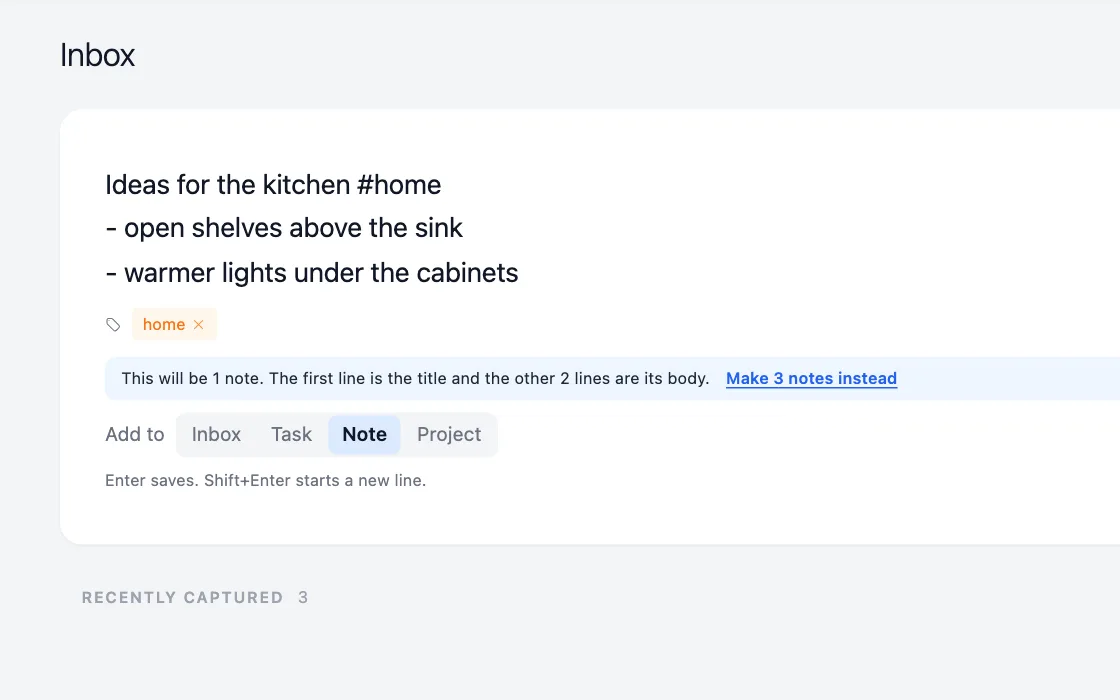
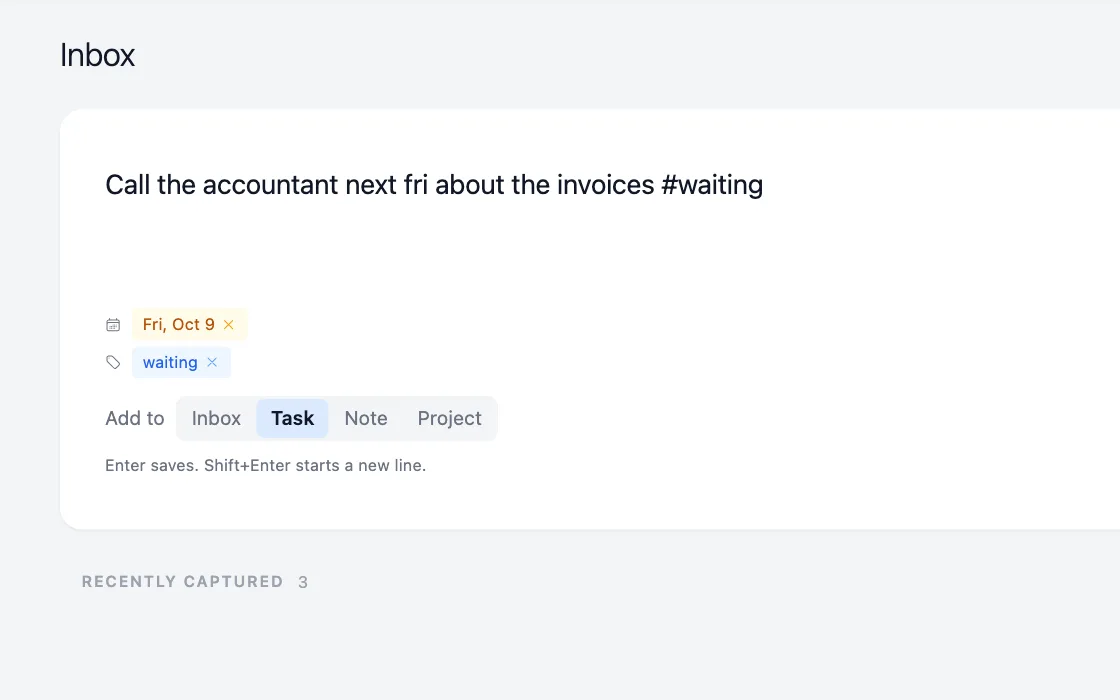
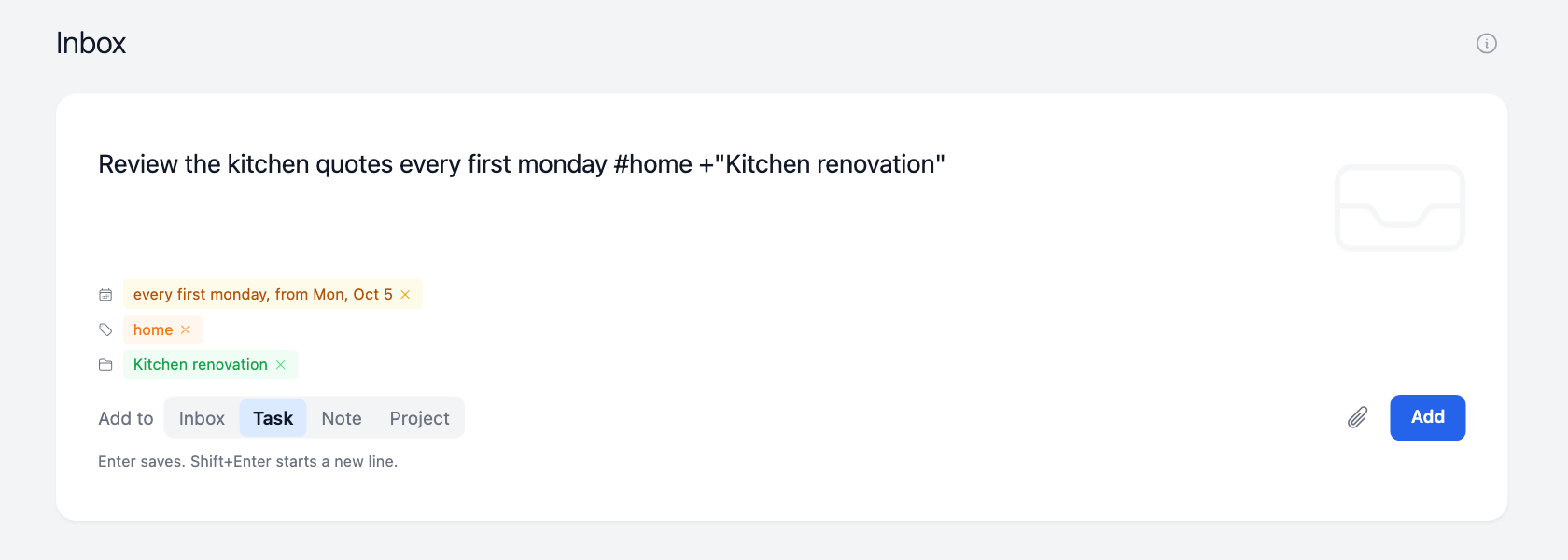
Une seule zone d’ajout pour la boîte de réception, les tâches, les notes et les projets, partout dans l’app. Écrivez comme vous pensez, tududi complète le reste.
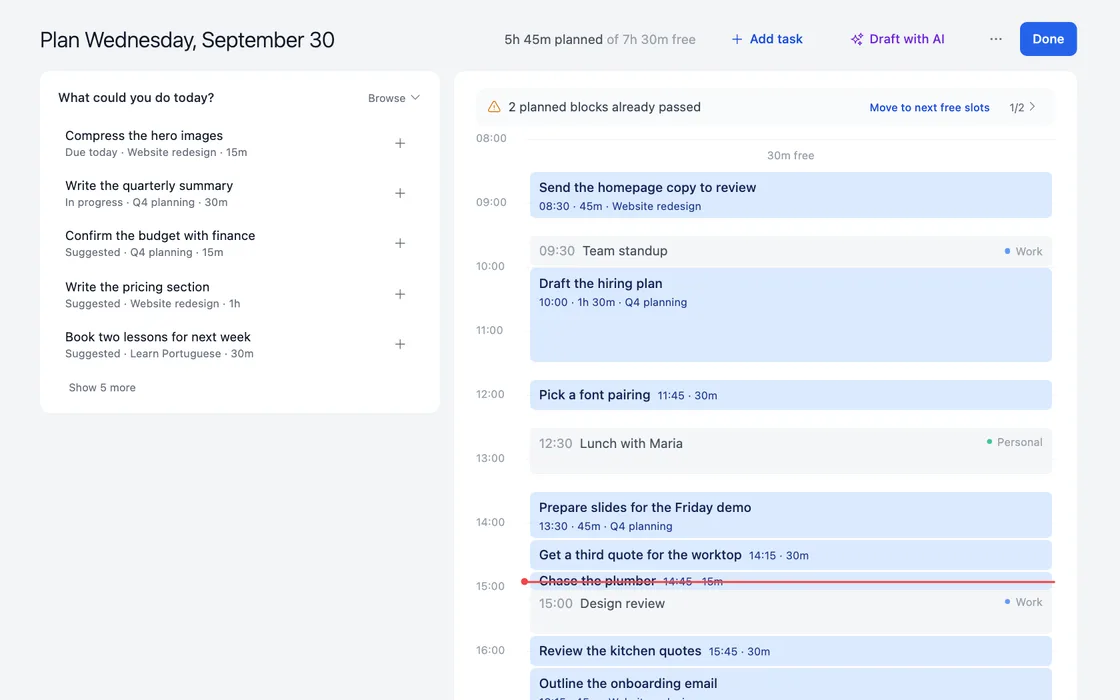
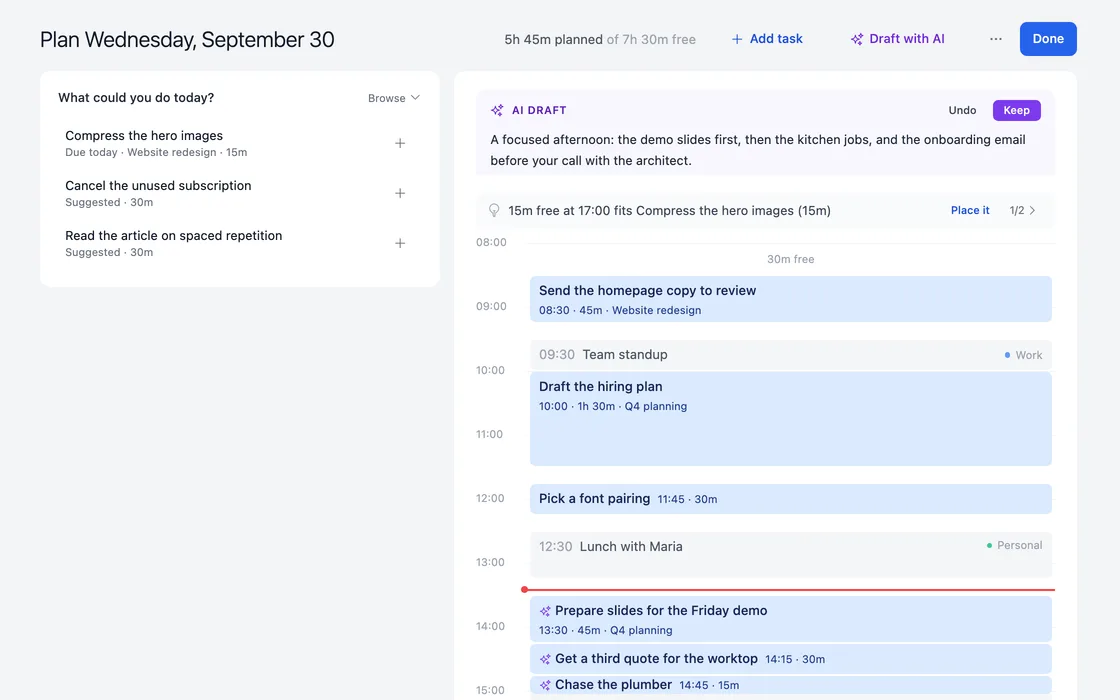
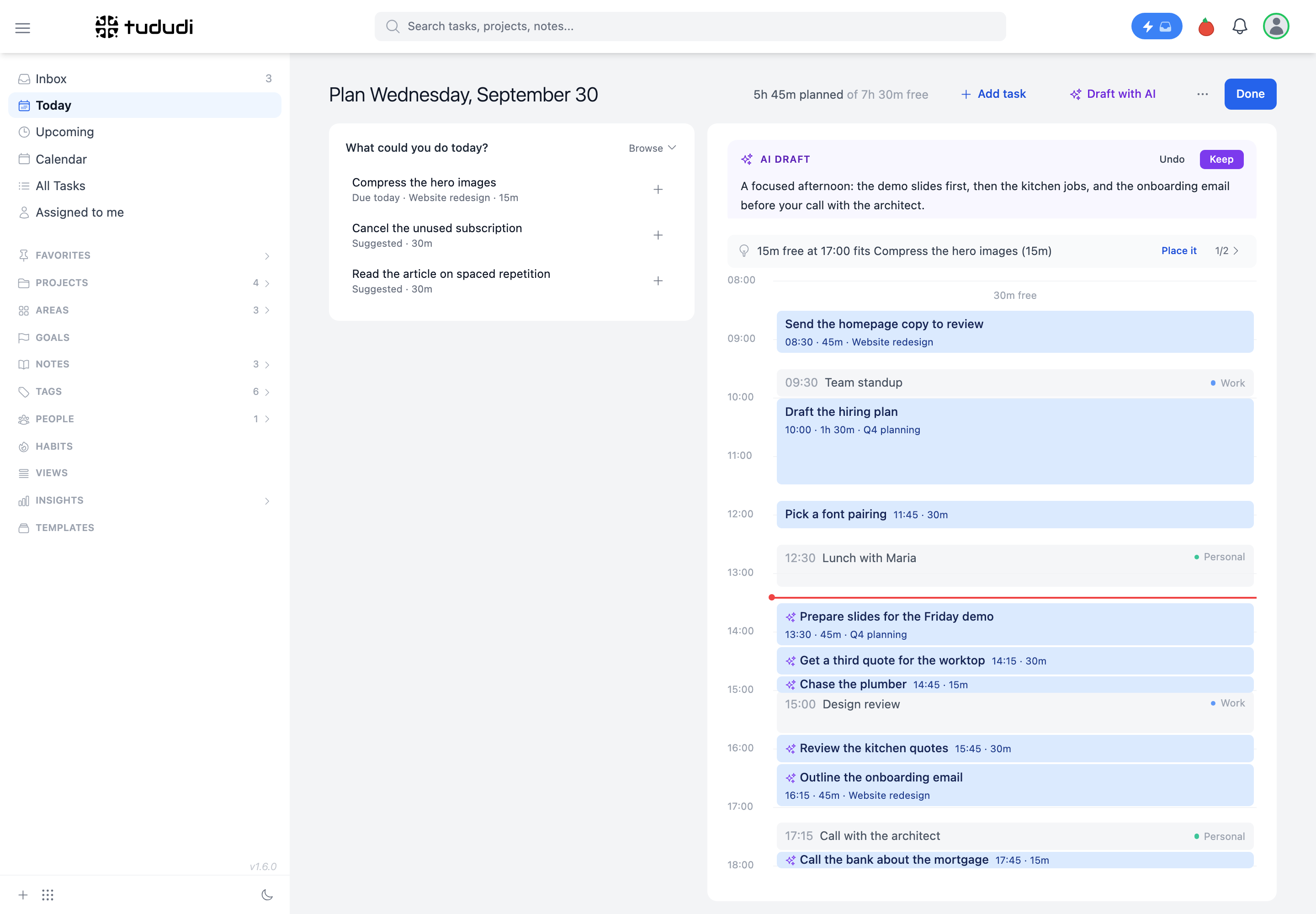
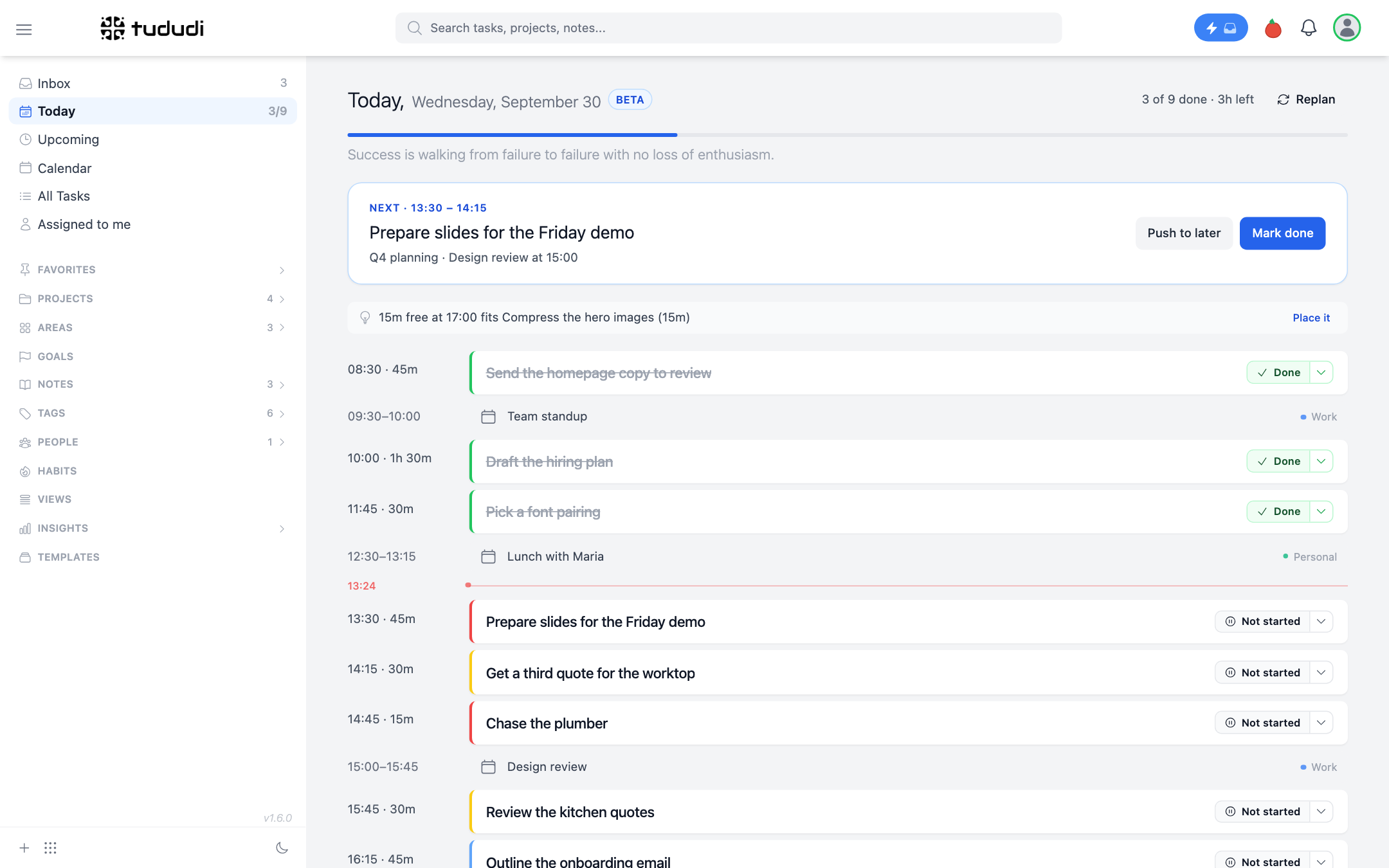
Le planificateur montre ce qui peut tenir aujourd’hui, dans l’ordre que vous choisissez. Donnez une durée à chaque tâche et placez-la entre vos réunions, ou laissez l’IA esquisser toute la journée.
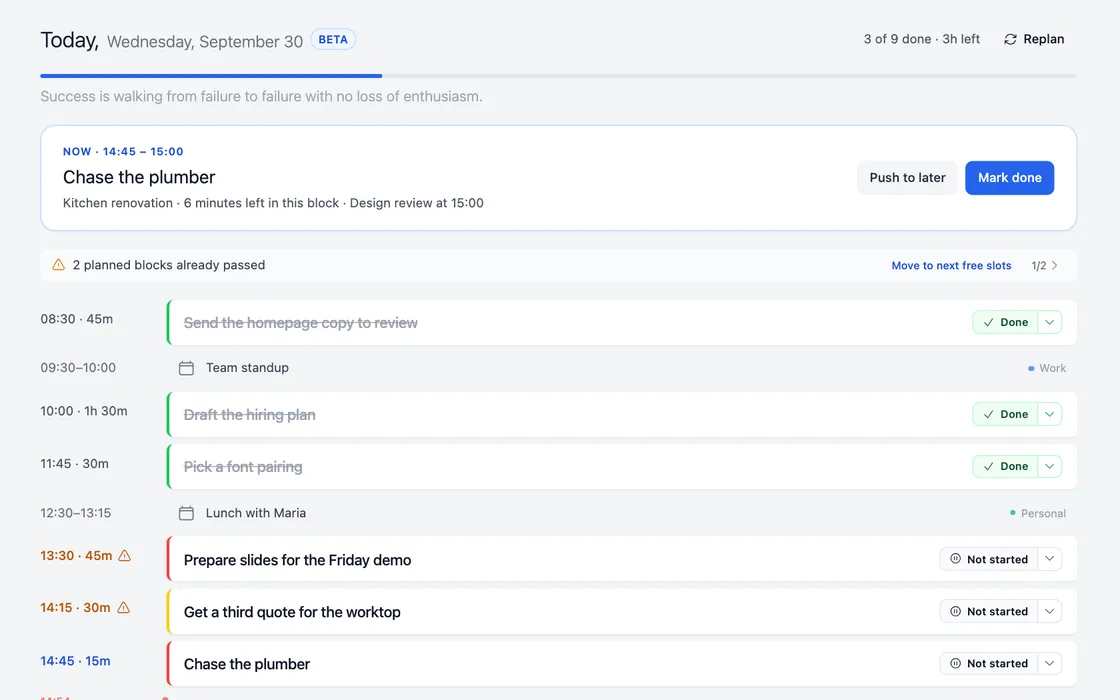
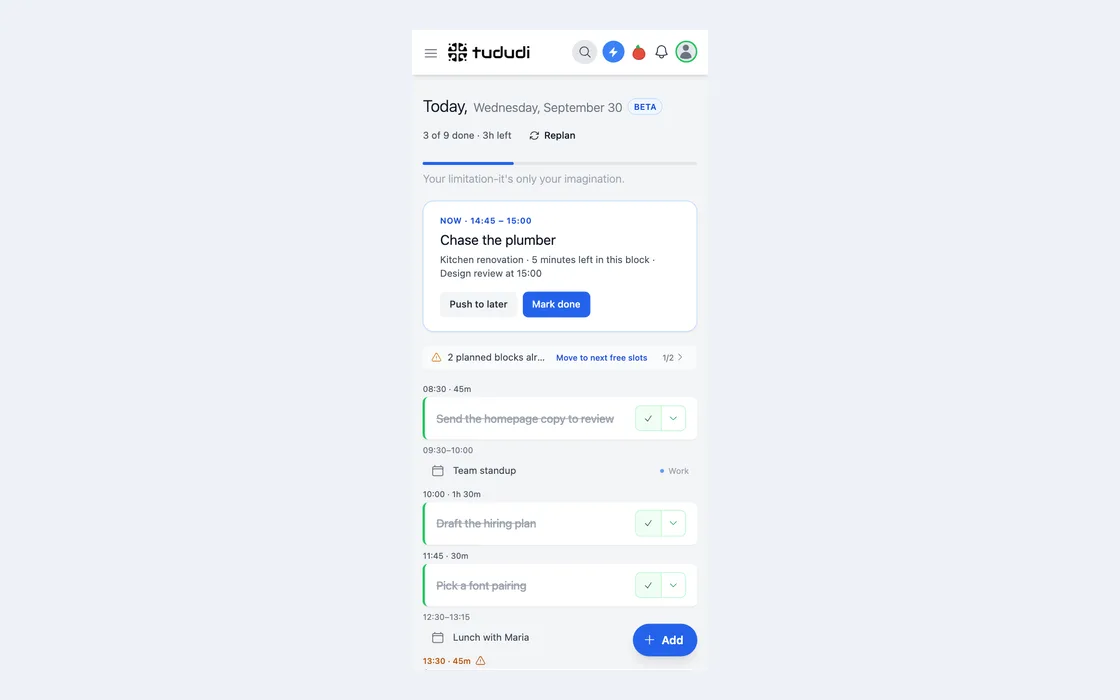
Lancez la journée et Aujourd’hui ne montre que vos engagements : le bloc en cours, puis l’agenda, avec vos réunions Google, Apple ou Outlook entre les deux.
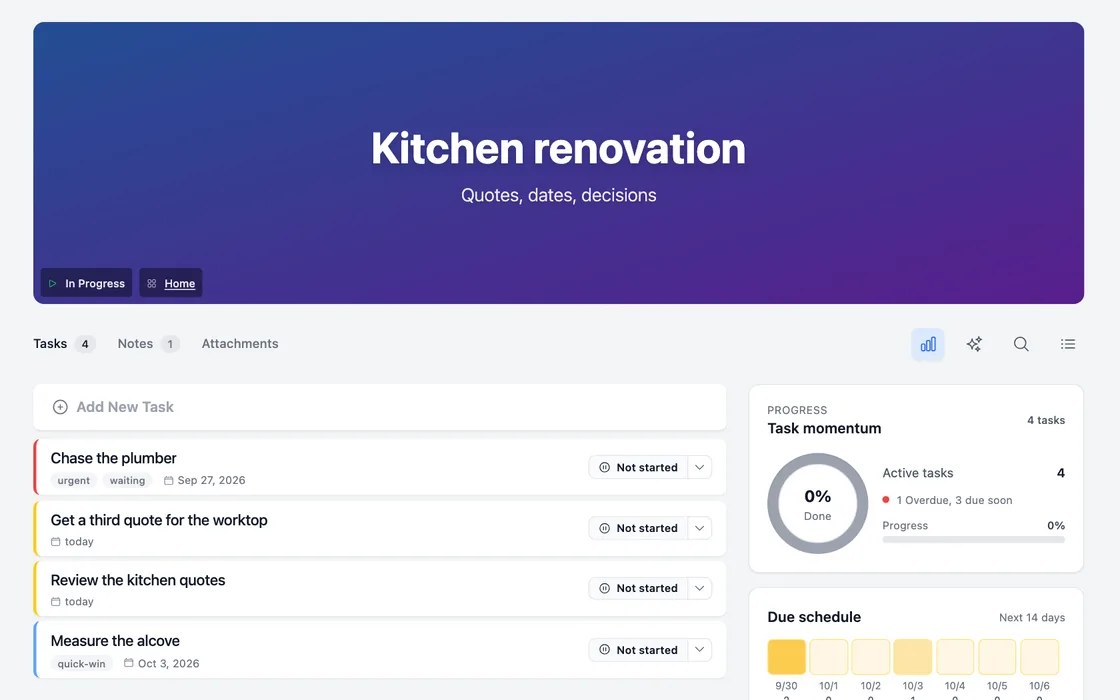
tududi combine objectifs, projets, tâches, notes et vues intelligentes en un seul système calme et concentré. Laissez-nous le gérer pour vous, ou gérez-le vous-même si vous préférez.
Ajoutez éléments de boîte de réception, tâches, notes ou projets de partout, avec fichiers. Une capture collée devient l’élément.
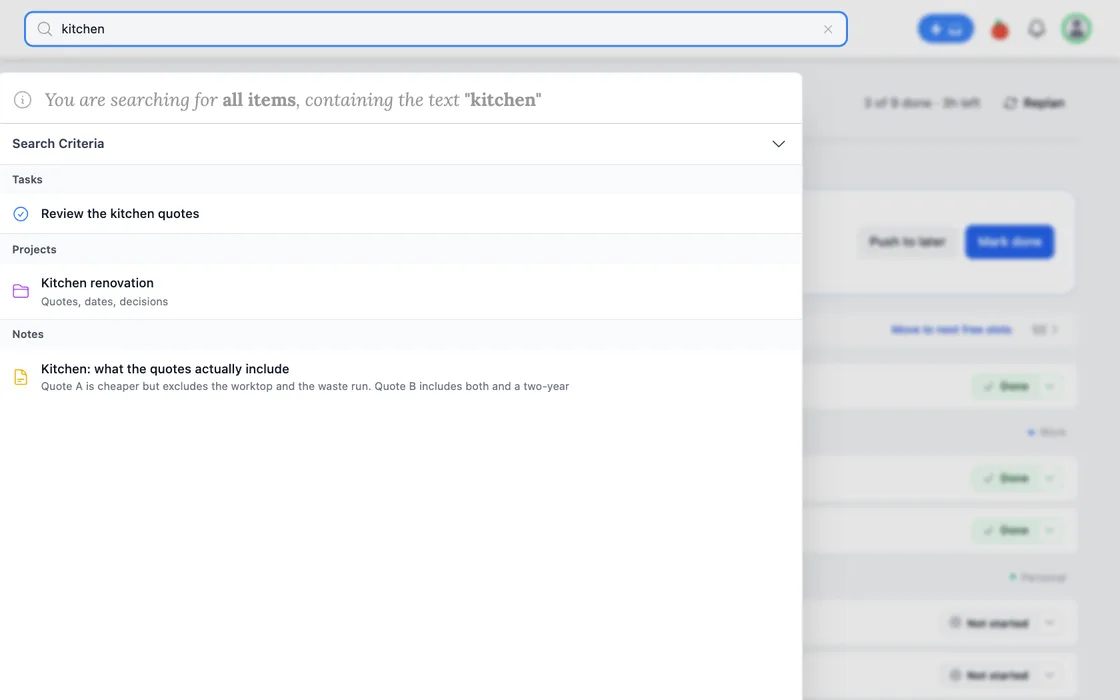
Aperçu« tomorrow », « next fri », « every weekday » : dates et répétitions sont lues pendant la saisie, avec #tags, +Projet et @personne.
AperçuUn planificateur qui place les tâches dans le temps libre autour de vos réunions, avec durées, suggestions classées et conseils.
AperçuConnectez Google, Apple ou Outlook et voyez vos réunions à côté de vos tâches, le bloc en cours en haut.
AperçuEsquissez la journée avec l’IA, obtenez des durées estimées et un bilan du soir qui reporte l’inachevé.
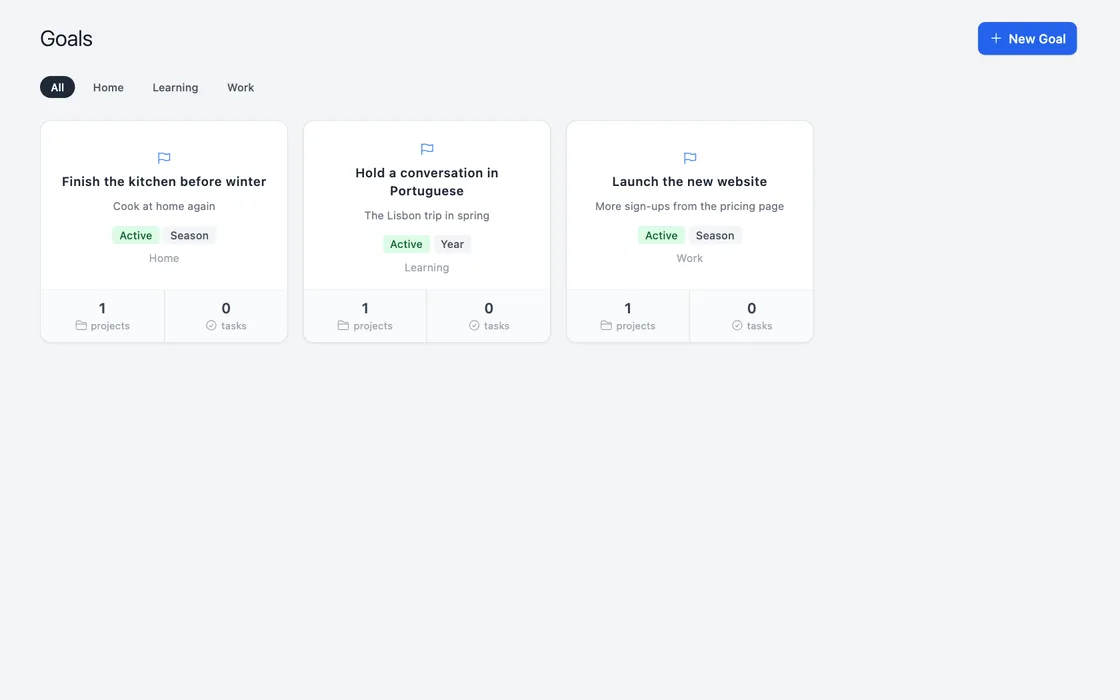
AperçuDéfinissez des résultats pour une saison ou une année, et voyez quels Domaines et Projets les font réellement avancer.
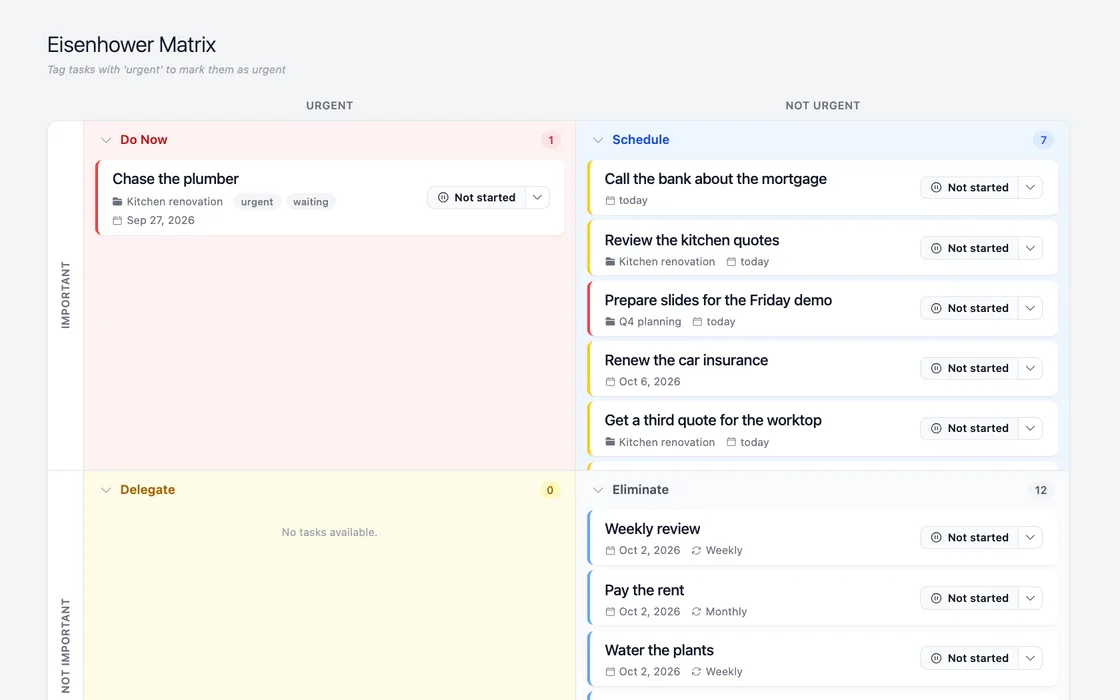
AperçuBasculez vers une matrice d'Eisenhower ou un tableau Kanban quand la question est simplement : que fais-je maintenant.
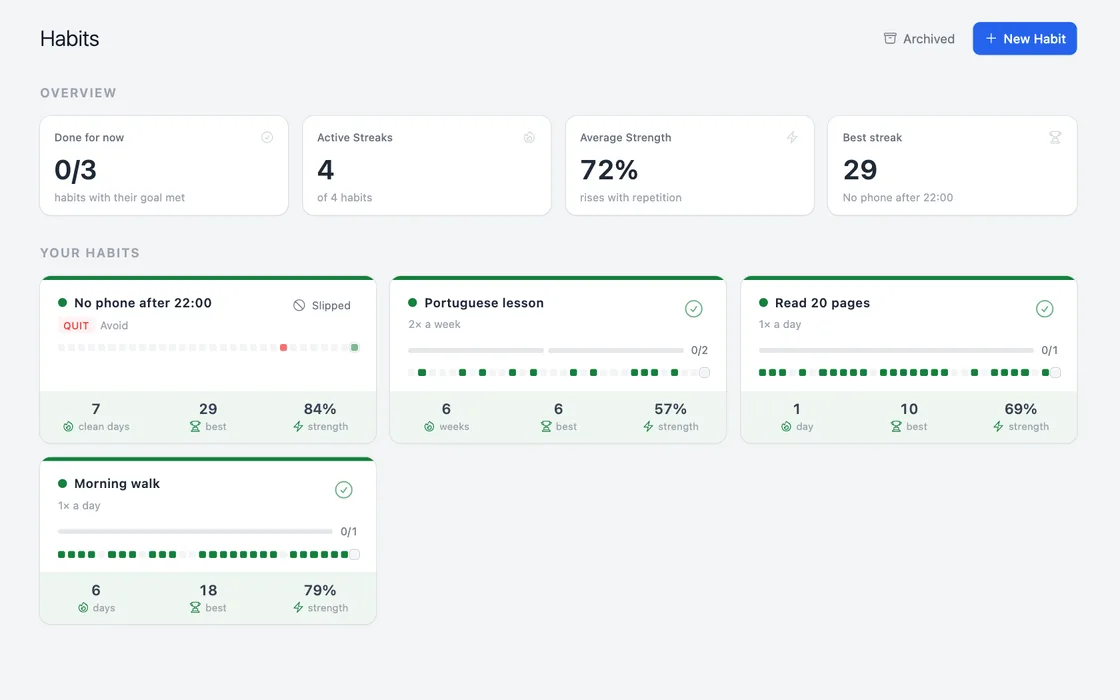
AperçuSuivez vos habitudes récurrentes aux côtés des tâches et des projets, avec des séries et un historique simples.
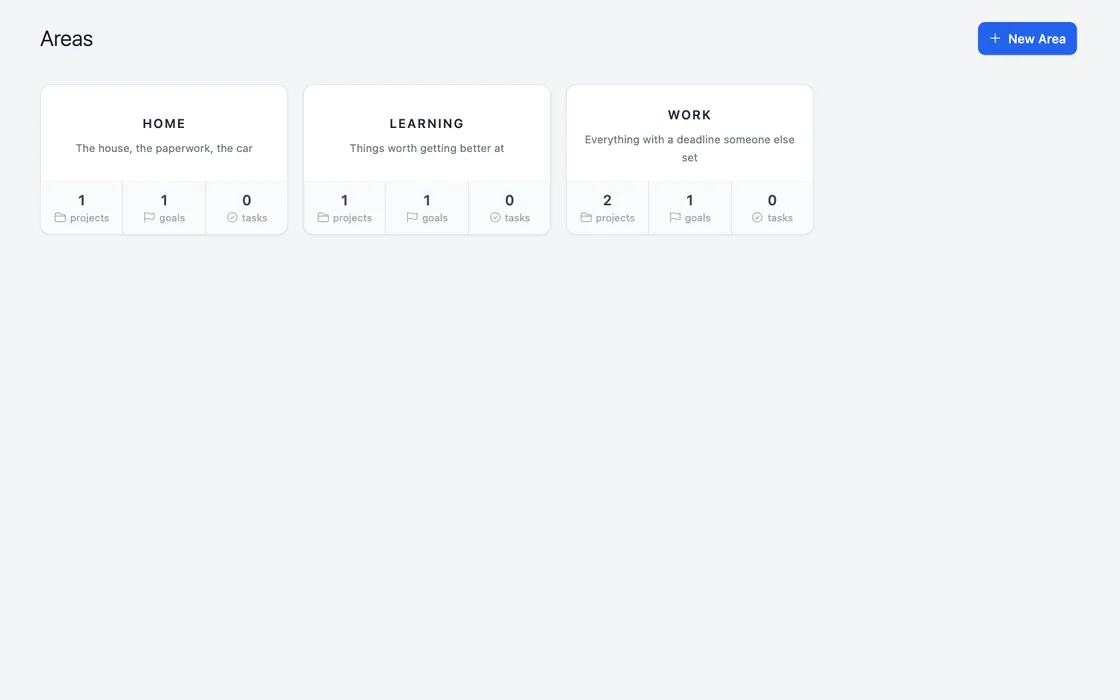
AperçuObjectifs et Domaines cohabitent au sommet : les résultats à long terme et les pans permanents de votre vie. Les deux contiennent des Projets, qui contiennent des Tâches.
AperçuOrganisez vos projets par domaine de vie - Travail, Personnel, Santé, Apprentissage.
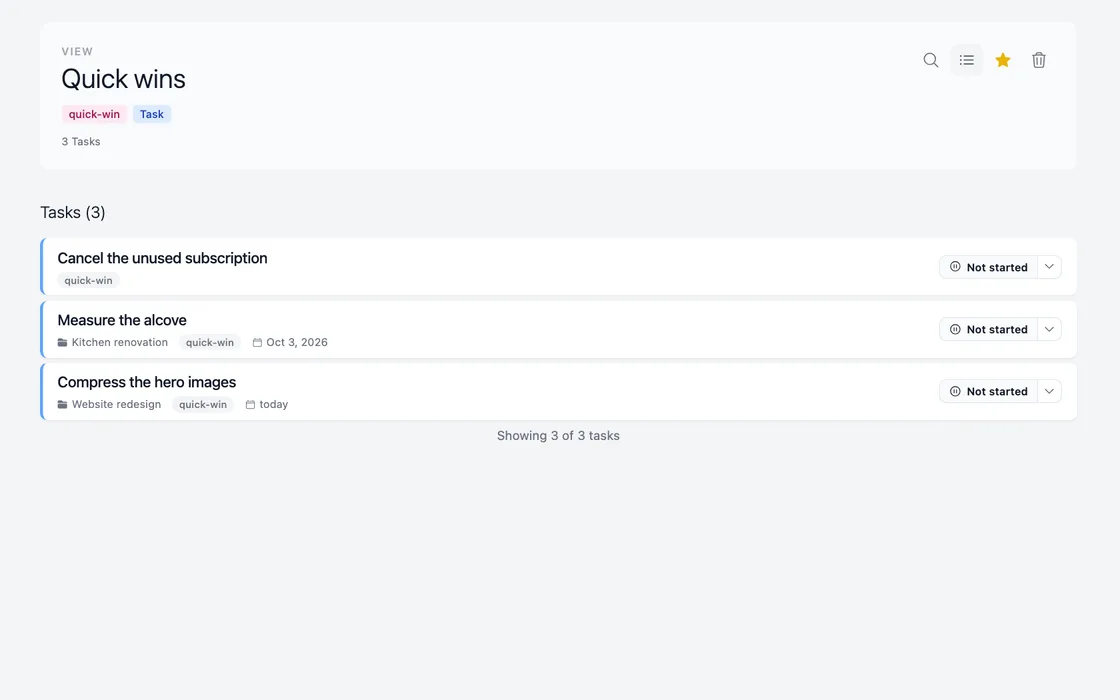
AperçuDes recherches enregistrées intelligentes comme « Aujourd'hui », « En retard » ou « Un jour ». Un clic, sans reconstruire un filtre à chaque fois.
AperçuSuivez vos tendances d'achèvement et votre charge par projet, pour savoir où passe réellement votre temps.
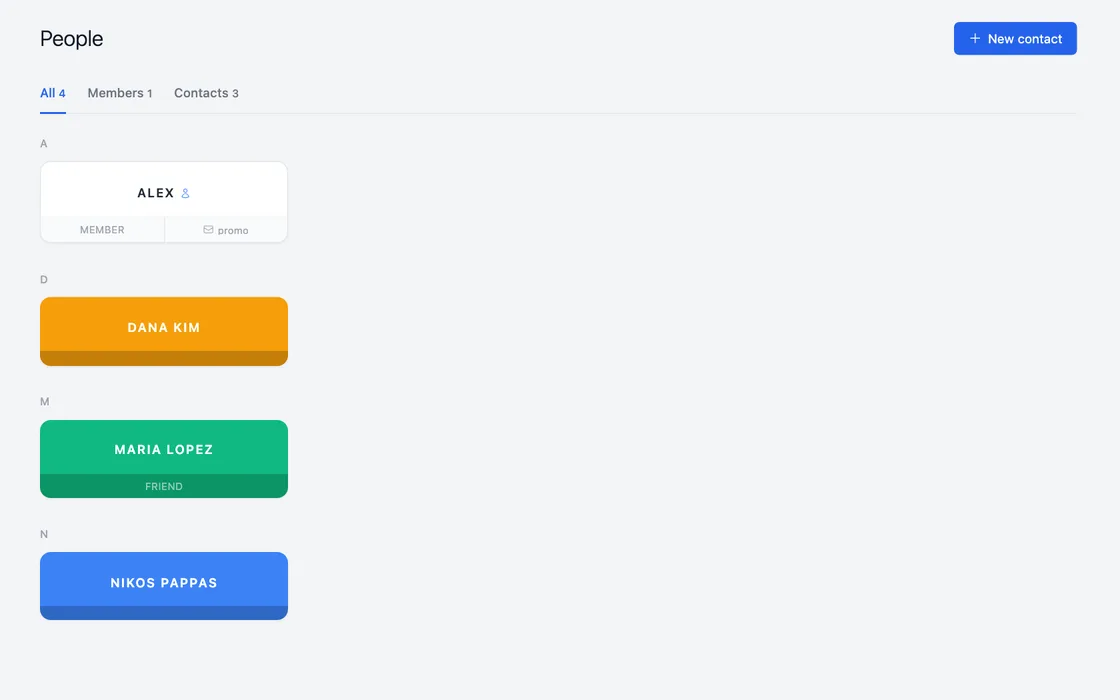
Attribuez des tâches à des personnes et voyez d'un coup d'œil qui participe à un projet.
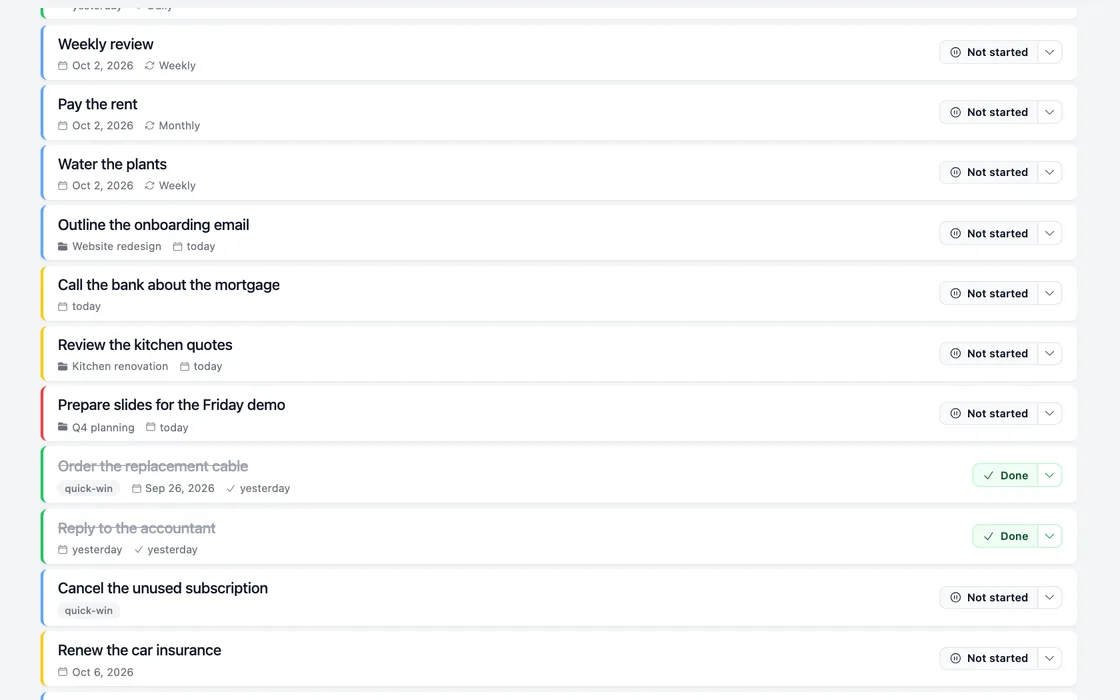
AperçuDes schémas quotidiens, hebdomadaires ou mensuels, avec récurrence basée sur l'achèvement et relations parent-enfant.
Priorités, échéances, étiquettes et tri intelligent. Un filtrage puissant pour trouver ce qui compte.
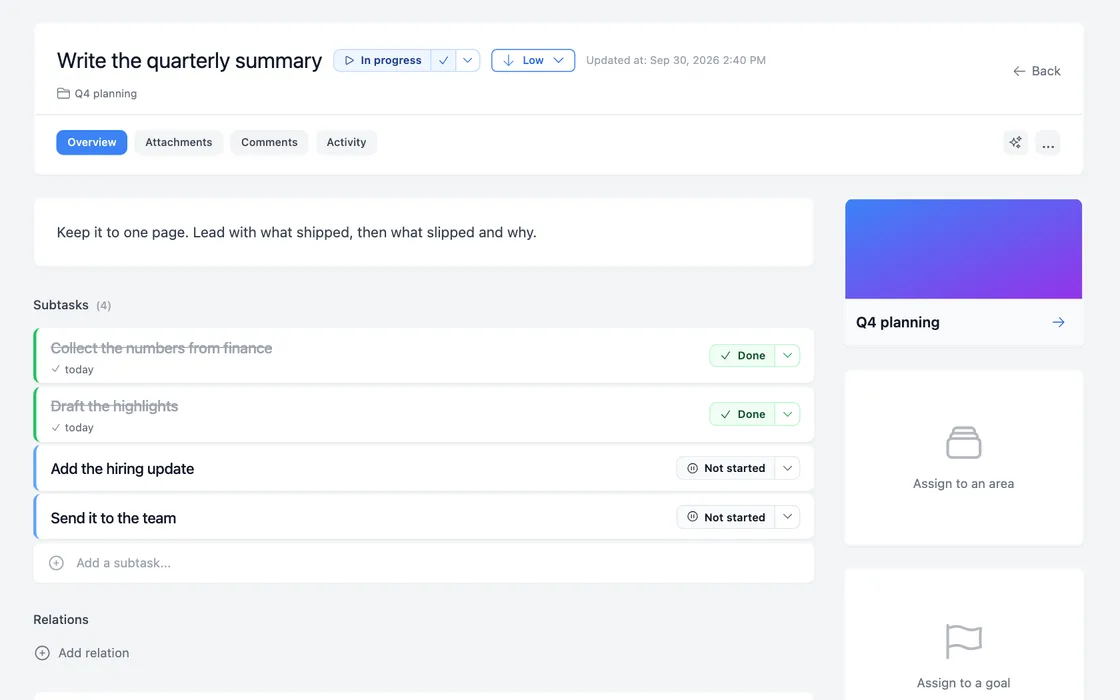
AperçuDécoupez les tâches complexes en sous-tâches gérables, avec suivi de l'avancement.
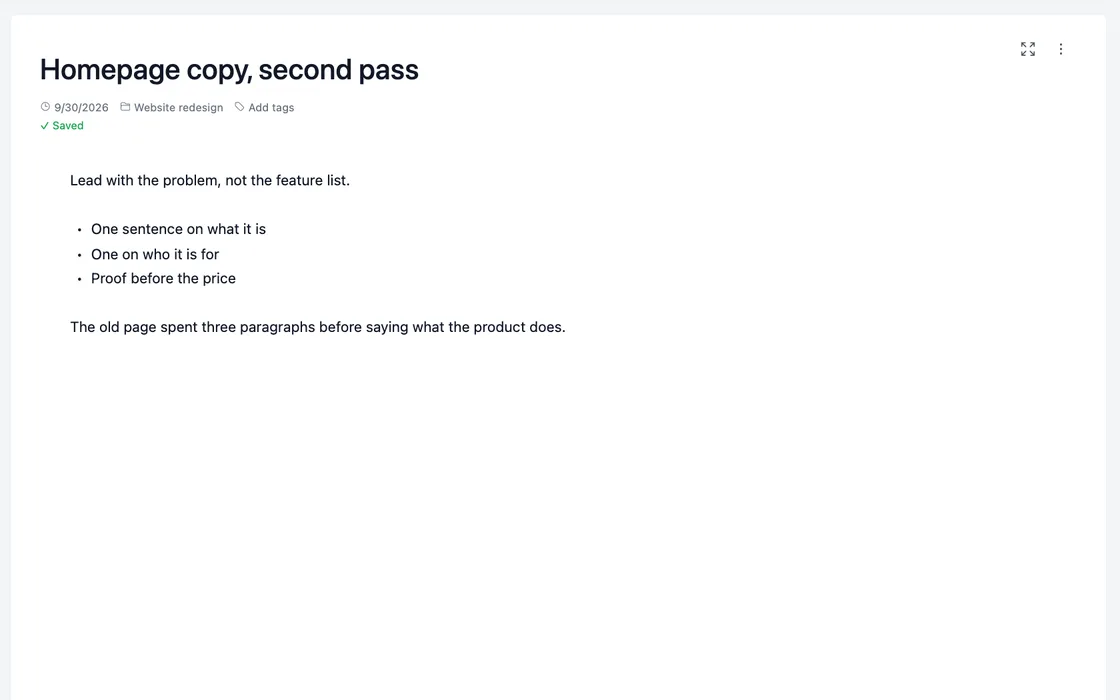
AperçuDes notes en texte enrichi pour vos projets, avec recherche complète et organisation.
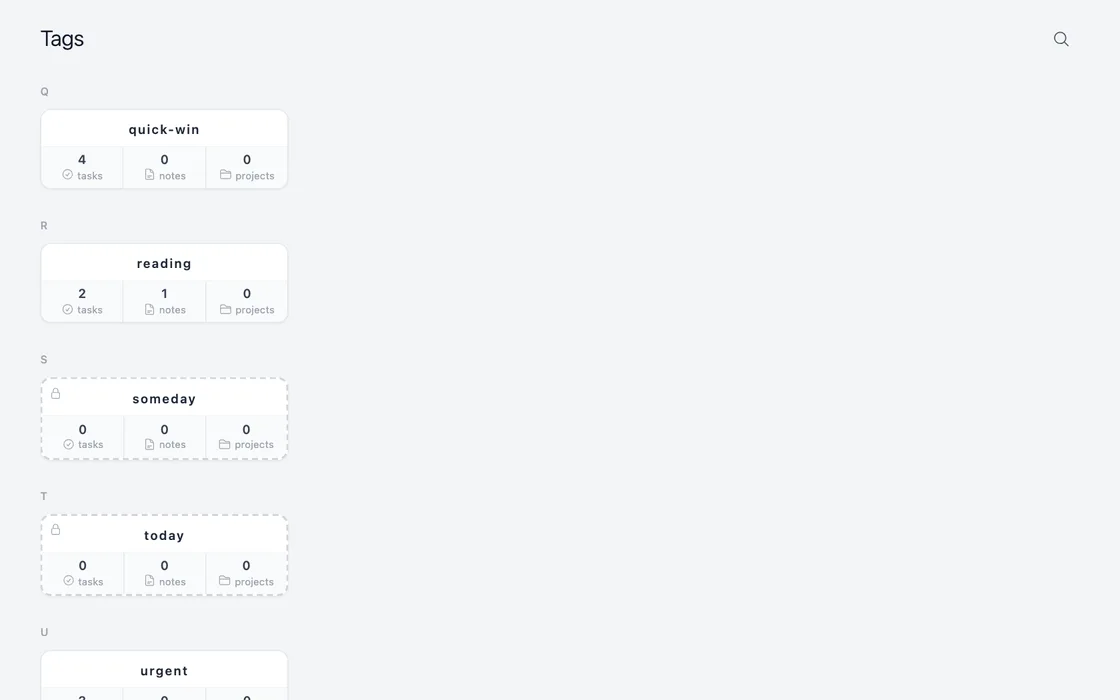
AperçuDes étiquettes personnalisées pour les tâches et les notes, avec filtrage instantané et organisation transversale.
AperçuRecherche plein texte et filtres par projet, étiquette, priorité ou échéance. Retrouvez n'importe quelle tâche en quelques secondes.
AperçuAjoutez tududi à votre écran d'accueil ou à votre bureau en PWA. Fonctionne hors ligne et se synchronise à votre retour.
AperçuConnectez-vous avec votre fournisseur d'identité existant : Authentik, Keycloak, Google Workspace ou tout fournisseur compatible OIDC.
Disponible en 26 langues avec une localisation complète.
Envoyez un message pour capturer une tâche instantanément, recevez un résumé quotidien et gérez votre liste en déplacement.
Synchronisation bidirectionnelle avec Apple Rappels, tasks.org, Thunderbird et toute application compatible CalDAV.
Une documentation Swagger versionnée et des jetons d'accès personnels pour vos intégrations sur mesure.
Gardez vos données privées. Auto-hébergez pour un contrôle total, ou choisissez une instance Infogérée avec sauvegardes chiffrées.
Partagez vos projets avec des droits d'accès fins - lecture seule ou lecture-écriture.
tududi propose un serveur MCP exposant 59 outils, couvrant les tâches, projets, domaines, objectifs, habitudes, notes, personnes, tags, vues, la boîte de réception, la recherche et les métriques. Connectez Claude ou tout agent compatible MCP directement à votre propre instance, qu'il s'agisse de votre compte Cloud ou d'un serveur que vous gérez vous-même. La connexion va vers votre instance plutôt que par un relais intermédiaire, une différence structurelle que Todoist et Notion ne peuvent pas offrir, quoi qu'ils promettent.
Sur quoi devrais-je me concentrer aujourd'hui, et quelque chose prend-il du retard ?
Commencez par Déployer la migration de facturation. Elle est due aujourd'hui, et trois tâches dans Paiements attendent derrière elle.
À savoir
Déplace la revue de la refonte à vendredi et ajoute une tâche pour débloquer Paiements.
Fait. Revoir la maquette de refonte est maintenant due vendredi, et Débloquer la file Paiements se trouve dans le projet Paiements, dû aujourd'hui.
Un exemple de session. Votre agent se connecte directement à votre propre instance via MCP.
Ajoutez, retrouvez et terminez des tâches sans quitter la conversation.
La connexion MCP va directement à votre propre instance tududi, sur Cloud ou sur votre propre serveur. Rien ne transite par un tiers.
Construit sur le Model Context Protocol ouvert. Fonctionne avec Claude et les autres clients MCP.
Cela fonctionne pareil avec Cursor, Windsurf, Cline et tout autre client MCP. Lire la documentation MCP →
MCP est inclus avec tududi Cloud, et avec chaque instance auto-hébergée.
Une couche séparée et optionnelle qui lit vos données et vous renvoie des résumés en langage clair. Compatible avec tout fournisseur compatible OpenAI, y compris auto-hébergé comme Ollama.
Des prochaines étapes suggérées pour une tâche précise, générées à la demande.
Répartit votre journée dans le temps libre autour de vos réunions, avec une raison pour chaque bloc.
En fin de journée : ce qui est fait, une tendance à noter et ce qu’il faut reporter à demain.
Un diagnostic rapide de l'état d'un projet : ce qui avance, ce qui bloque.
Ce que les testeurs ont écrit après avoir utilisé tududi eux-mêmes.
Tududi stands out as a breath of fresh air among over-engineered and often expensive productivity tools.
Tududi is an immensely useful tool, and one that is easy to integrate into day-to-day workflow.
A free, open-source application that allows you to efficiently categorize and track your work, from personal task management to large-scale project management and detailed note-taking.
Un forfait hébergé, ou faites tourner le serveur vous-même si vous préférez gérer l'exploitation.
Annulez à tout moment et exportez tout. Si tududi Cloud devait fermer, vous recevez vos données et un guide de migration vers l'auto-hébergement. Usage raisonnable pour le stockage et le volume d'API. Garantie satisfait ou remboursé 14 jours, sans question.
Comment tududi Cloud se compare aux applications auxquelles on le compare le plus, sur leurs offres individuelles.
Todoist Pro, TickTick Premium et Notion Plus, d’après leurs pages de tarifs publiques en septembre 2026. Vérifiez leurs sites pour les prix actuels. Leurs prix sont les tarifs américains en dollars.
La licence, l'IA, et ce qu'il advient de vos données. S'il manque quelque chose, demandez sur Discord.
L'application est open source sous licence MIT, vous pouvez donc la faire tourner sur votre propre serveur gratuitement, la modifier et construire dessus sans payer personne. Il n'y a ni nombre de sièges ni fonctionnalités retenues : la version auto-hébergée est le produit complet. tududi Cloud est un service payant, car l'hébergement, les sauvegardes et les e-mails coûtent de l'argent à faire tourner. Vous payez pour le travail d'exploitation, jamais pour l'accès au logiciel.
Oui, et vous n'avez rien à acheter au préalable. La licence MIT autorise l'usage commercial, y compris dans une entreprise et dans un produit commercial, sans seuil de revenu et sans rien à déclarer. Si votre service comptable a besoin d'une facture, un abonnement Cloud est facturé via notre prestataire de paiement et en produit une. Rien sur cette page ne vend une permission, parce que cette permission est déjà la vôtre.
Oui. Il est développé principalement par un mainteneur, avec des contributions de la communauté, et les versions sortent régulièrement. Chaque version est listée sur la page des releases GitHub, accessible depuis le Changelog dans le menu ci-dessus, afin que vous puissiez juger du rythme par vous-même plutôt que sur parole. Le développement se fait en public : des tickets, une feuille de route publique, et un Discord où les questions trouvent réponse.
L'application est sous licence MIT et le code source est public, elle ne peut donc pas vous être retirée. Chacun peut continuer à la faire tourner, et vous pouvez la forker. Sur tududi Cloud, vos données vivent dans une base tududi standard plutôt qu'un format propriétaire, donc si le service devait fermer un jour, vous récupéreriez vos données et un guide pour les faire migrer sur votre propre serveur.
Il n'y a pas d'offre gratuite, mais chaque nouveau compte a droit à un essai gratuit de 14 jours, sans carte bancaire. L'essai comprend tout sauf l'assistant IA, les liens publics de notes et l'ajout de membres. Sans abonnement, le compte passe en lecture seule pendant 30 jours pour que vous puissiez exporter vos données, puis il est supprimé. Après l'essai, Cloud coûte €5 par mois ou €50 par an et par personne. La façon gratuite d'utiliser tududi est de l'héberger sur votre propre serveur, c'est la même application.
Vous payez pour ne pas gérer l'infrastructure. tududi Cloud vous offre le même système avec le serveur, les mises à jour, les sauvegardes et les e-mails pris en charge pour vous, ce qui est la moitié fastidieuse et peu glorieuse de l'auto-hébergement. Cloud est la voie que nous recommandons. L'auto-hébergement n'est le meilleur choix que si vous faites déjà tourner Docker et un reverse proxy et que vous voulez activement gérer la pile.
Cela dépend de laquelle des deux couches vous parlez, et la différence compte. Le serveur MCP tourne à l'intérieur de votre propre instance : un agent comme Claude Desktop se connecte directement à cette instance, la conversation se déroule donc entre votre agent et votre propre tududi plutôt que via un intermédiaire. L'Assistant IA est différent. Il appelle un fournisseur compatible OpenAI, donc si vous le pointez vers un fournisseur hébergé, le contenu de ces requêtes part vers ce fournisseur. Pointez-le plutôt vers un modèle local, comme Ollama ou LM Studio, et rien ne quitte votre machine. Il reste désactivé tant que vous ne fournissez pas de clé, c'est donc toujours votre choix plutôt qu'un défaut.
MCP est le Model Context Protocol, un standard ouvert pour connecter des agents IA à de vrais systèmes. tududi propose un serveur MCP exposant 59 outils couvrant les tâches, projets, domaines, objectifs, habitudes, notes, personnes, tags, vues, la boîte de réception, la recherche et les métriques, pour qu'un agent puisse capturer, retrouver, mettre à jour et terminer du travail plutôt que simplement en parler. C'est optionnel, c'est inclus avec Cloud et avec chaque instance auto-hébergée, et cela fonctionne avec Claude Desktop, Cursor, Windsurf, Cline, ou tout autre client MCP.
Nous gérons le serveur, les mises à jour et les sauvegardes. Essayez gratuitement pendant 14 jours, sans carte.
Des actualités et nouveautés produit de temps en temps. Pas de spam, désinscription à tout moment.
Nous conservons votre adresse et la date à laquelle vous l’avez donnée, uniquement pour vous envoyer des actualités et nouveautés. Nous ne la partageons jamais.
L'application tududi est disponible en 26 langues dans le monde
Échangez avec les autres utilisateurs de tududi, obtenez de l'aide et suivez les nouveautés