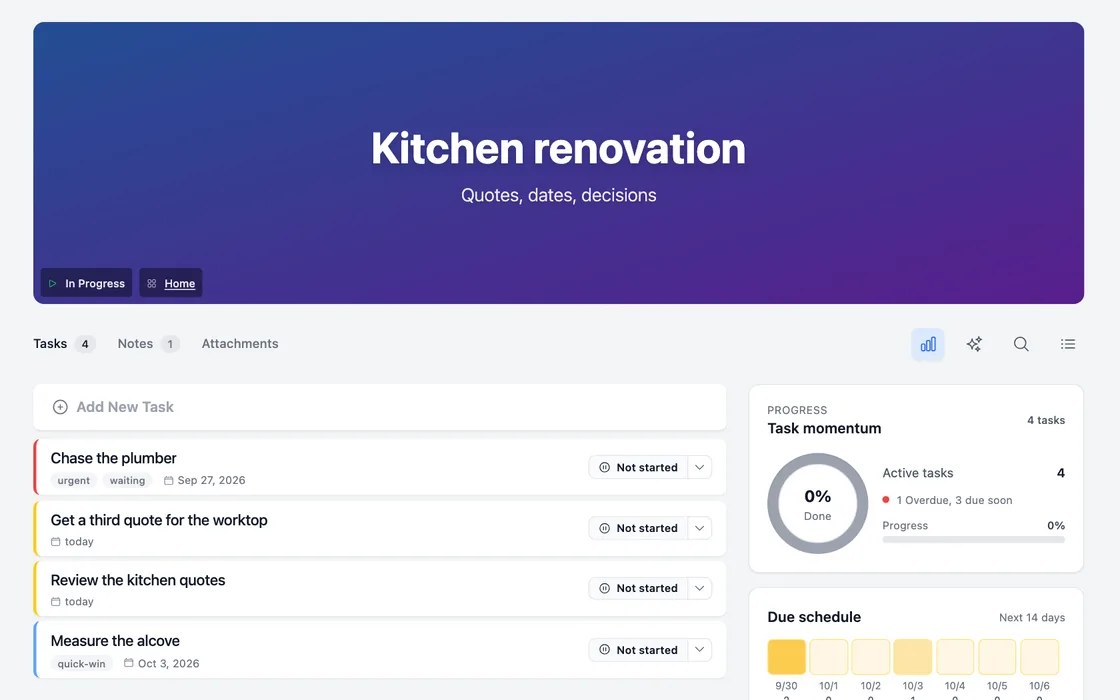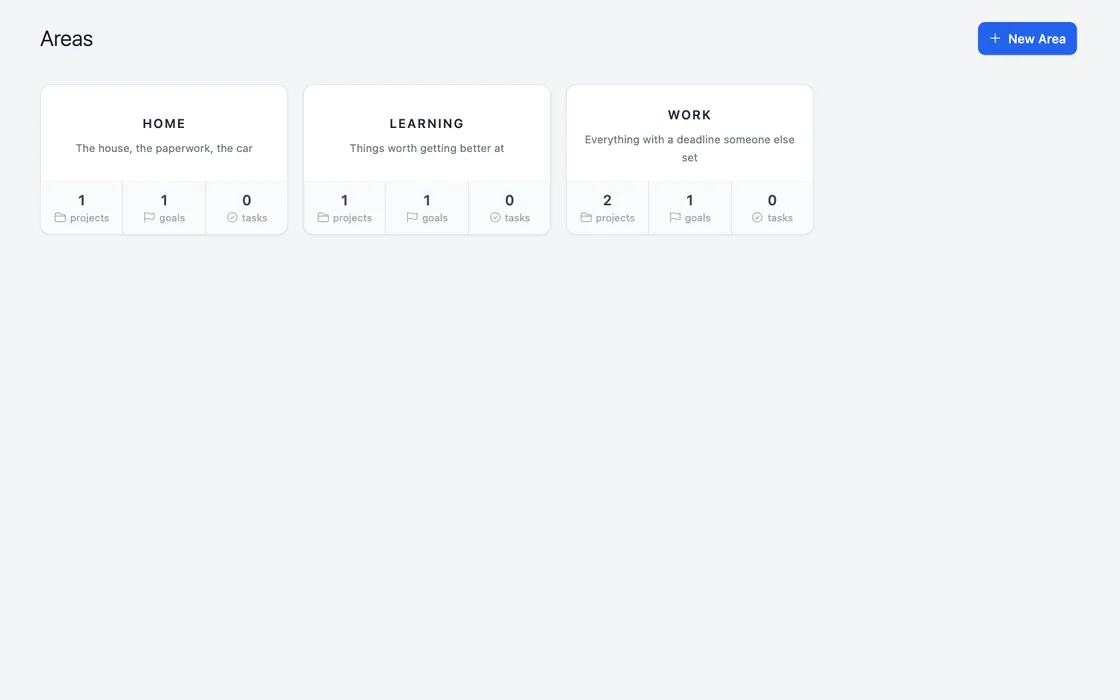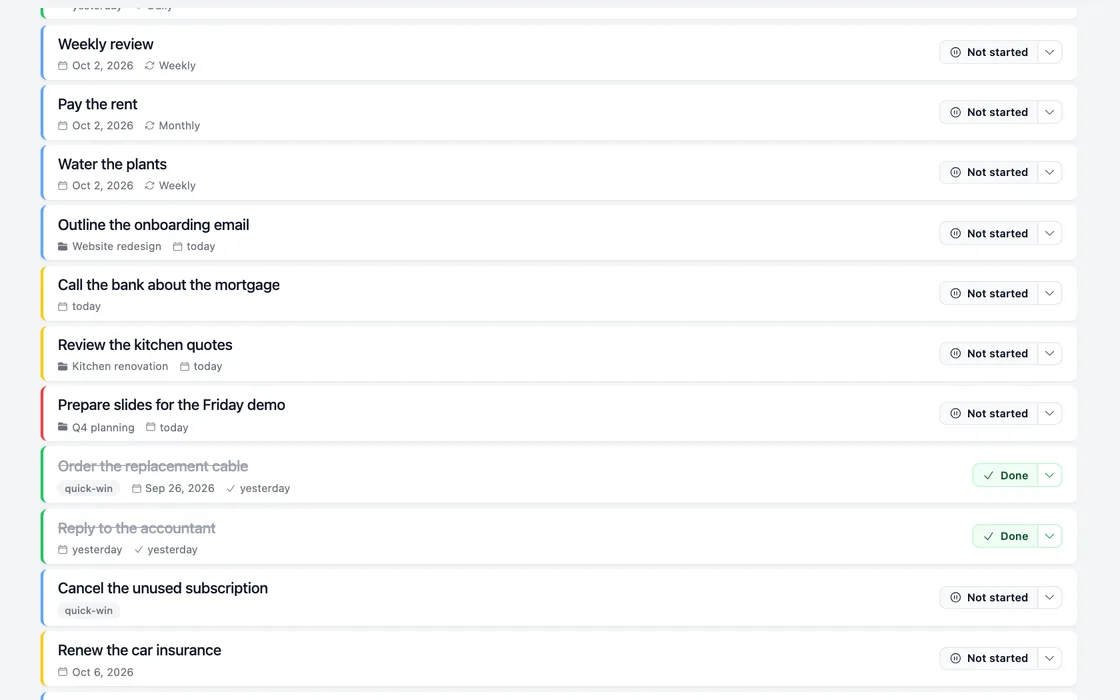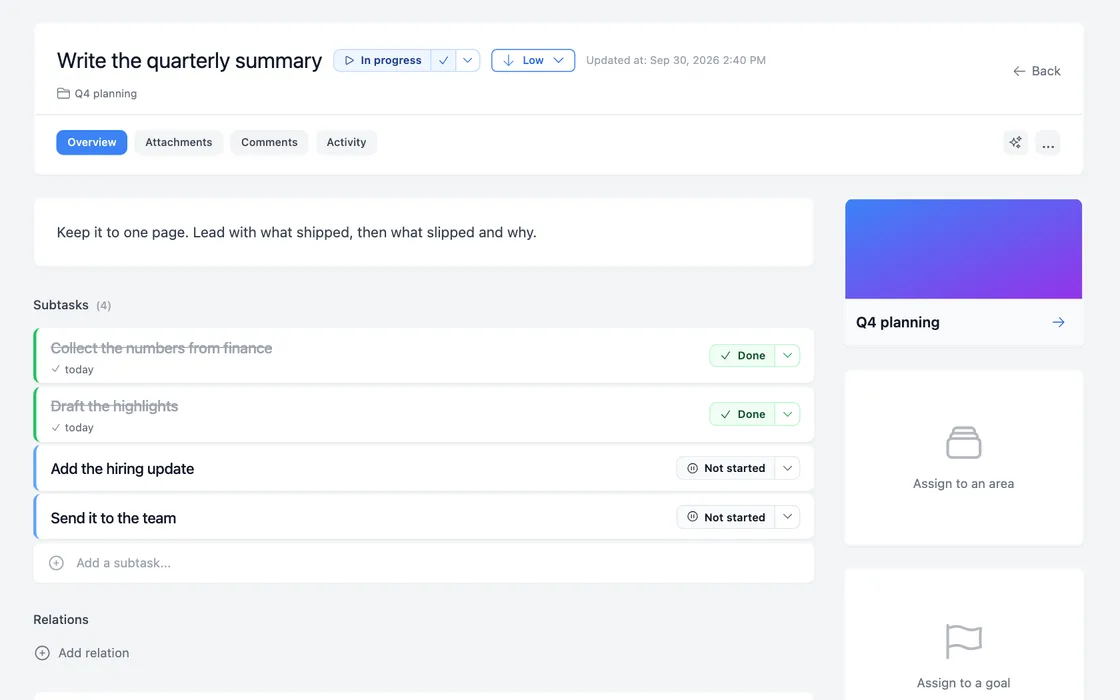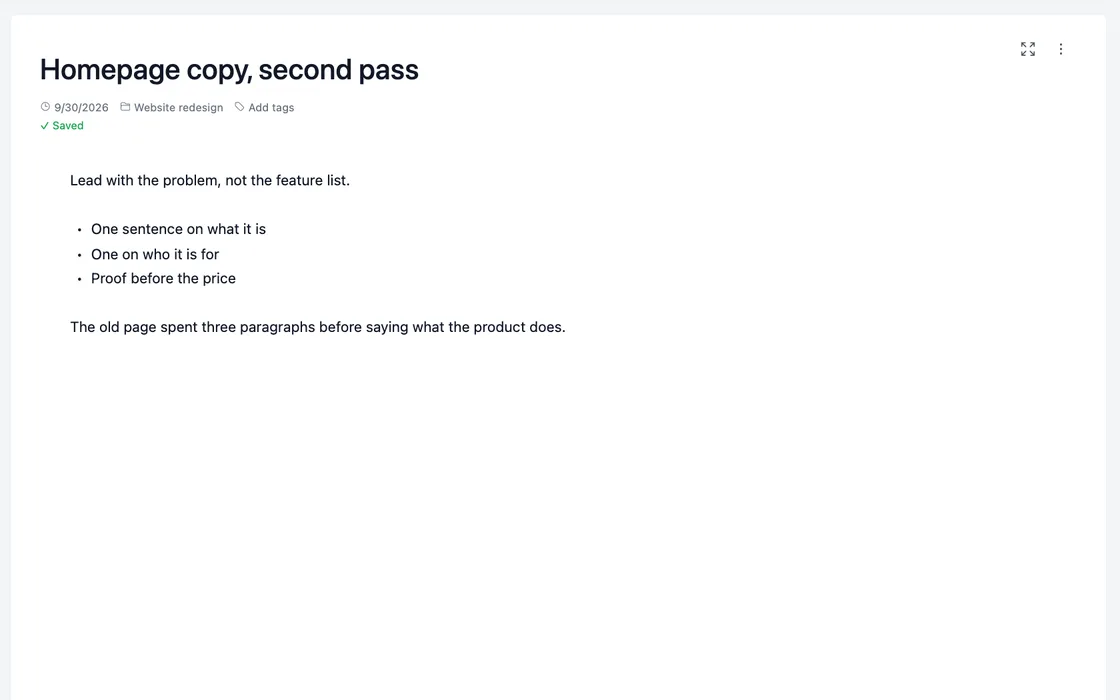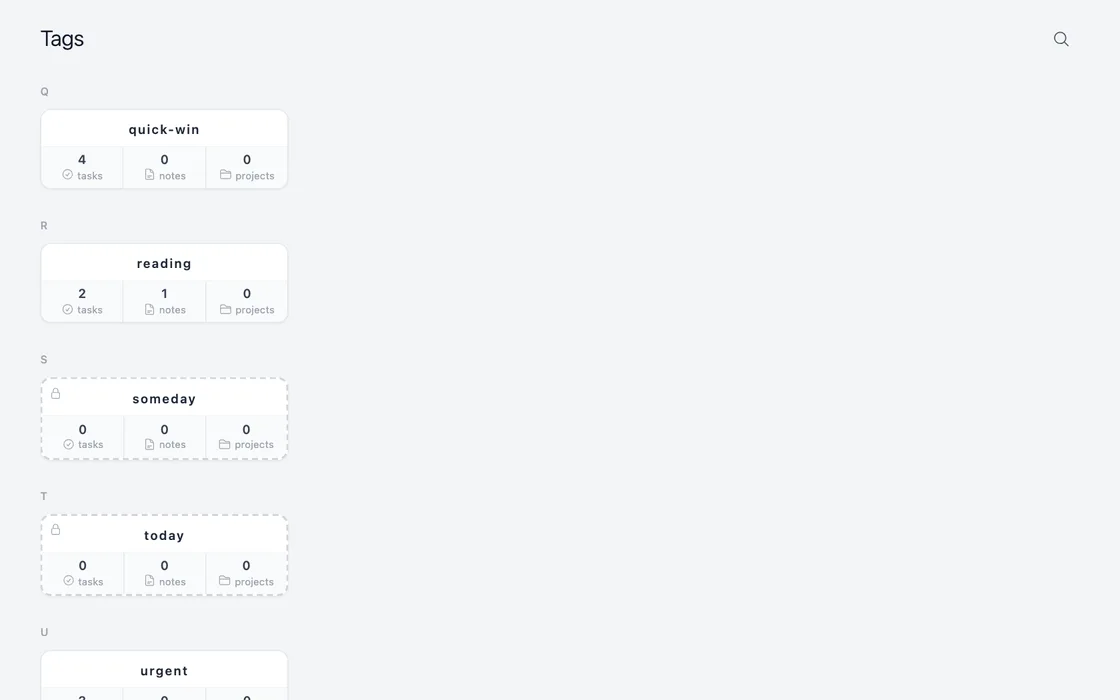
Work, home, family, health. The dentist, the renewal, the thing you promised someone. Put it all in one calm place, sorted by the parts of your life, and see only what matters today.
Free for 7 days, no card needed. Then €5 a month, cancel any time.
Most apps give you another place to type things. The problem was never typing. It is carrying all of it in your head.
The dentist, the car insurance, the present, the form that was due on Friday. It is all in there, and none of it ever gets put down.
A line typed at midnight is read by nobody, including you. It scrolls away and the worry comes back a week later.
A calendar here, a list there, reminders on the phone, a spreadsheet for the move. Five places to look, and the one you need is never the one open.
Write it once. Give it a place. Let it leave your head.
Capture things the moment they come up, plan the day around your meetings with AI, then work through it one block at a time.
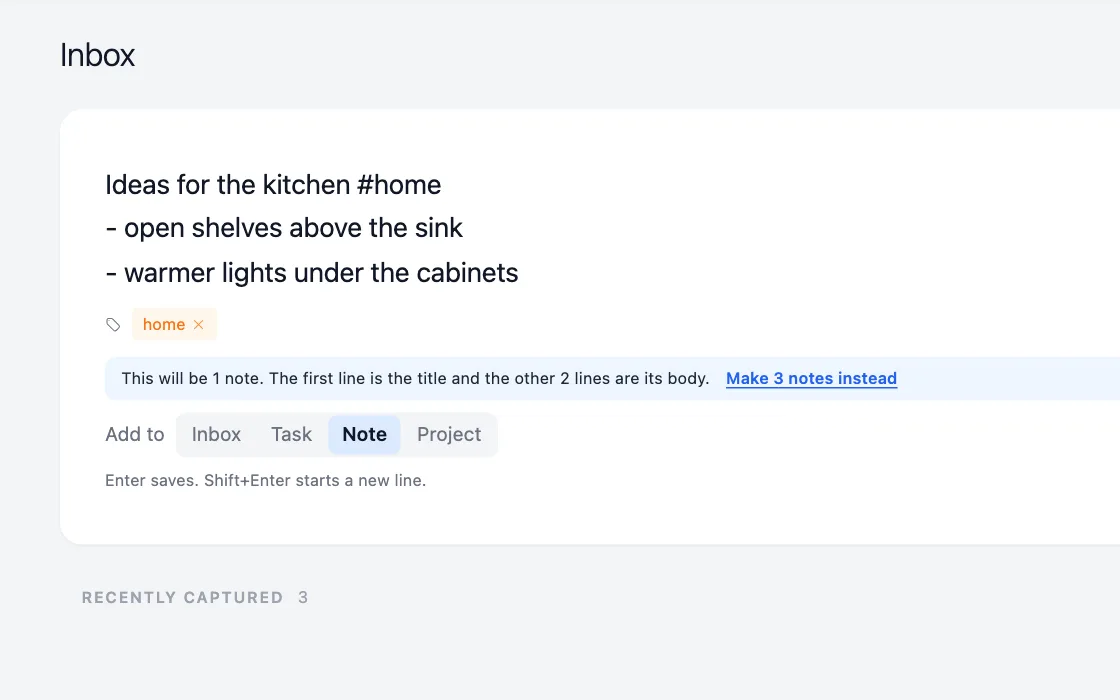
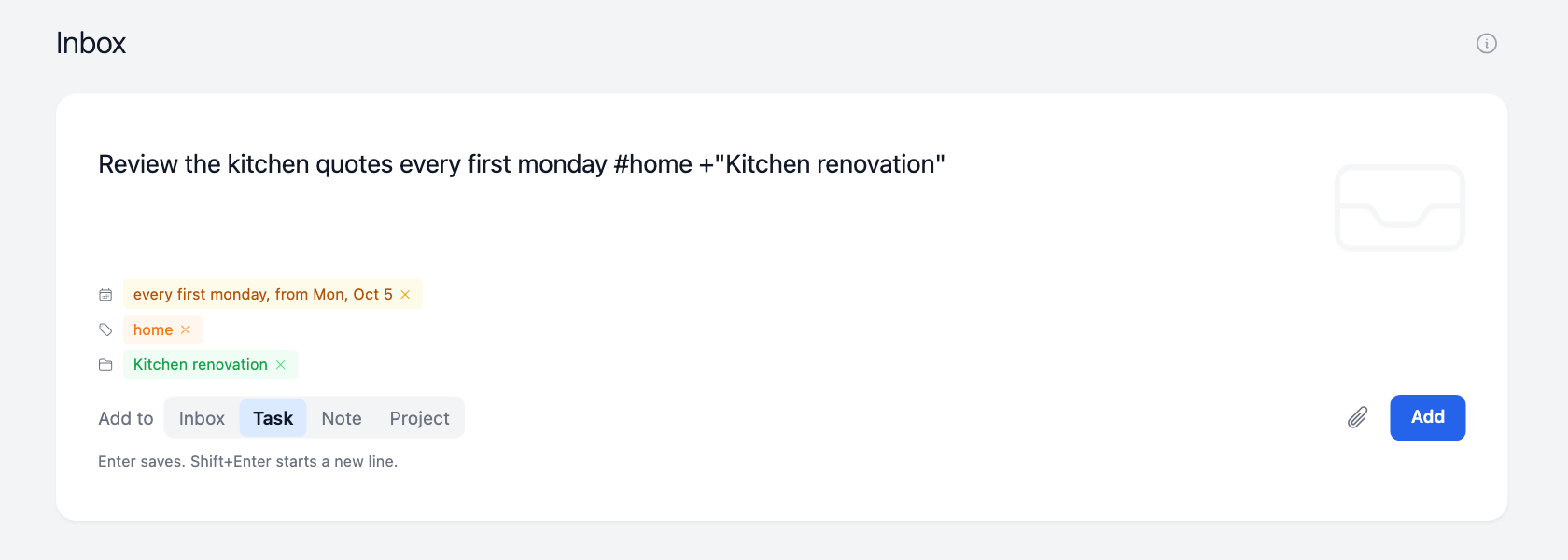
One Add box for the inbox, tasks, notes and projects, everywhere in the app. Write the way you think and tududi fills in the rest.
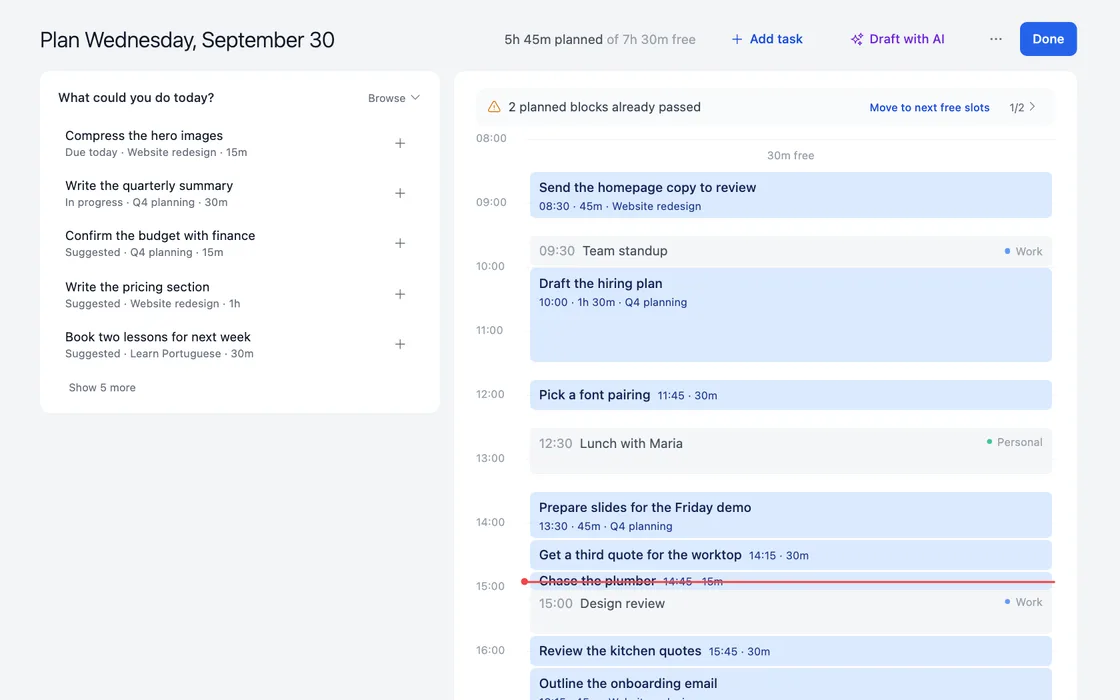
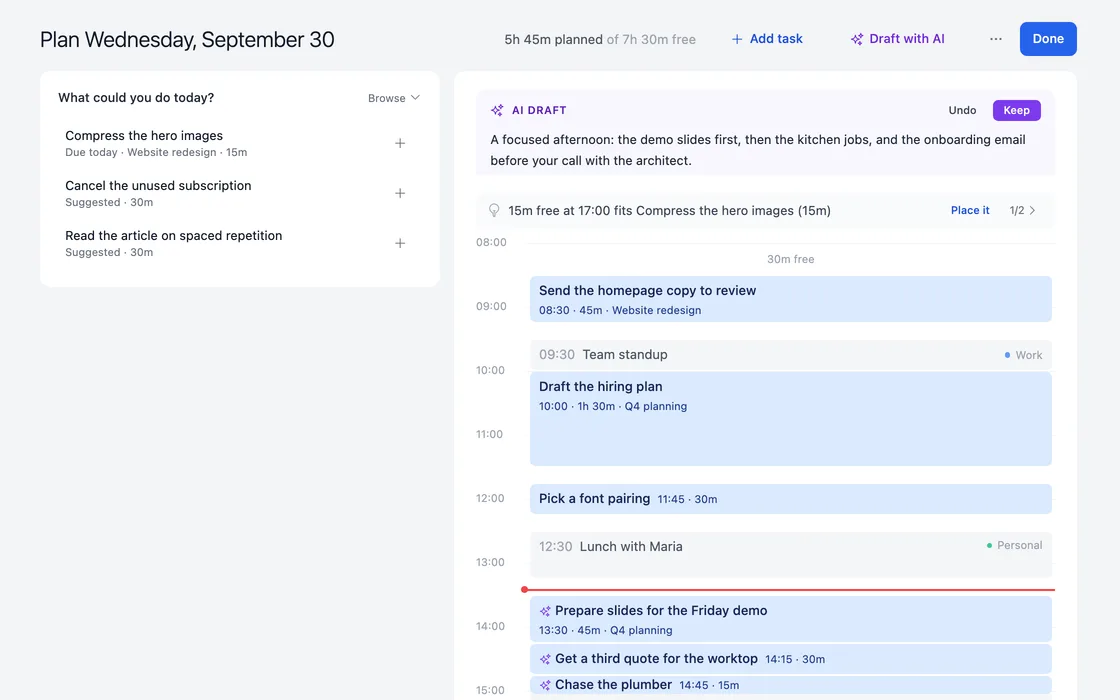
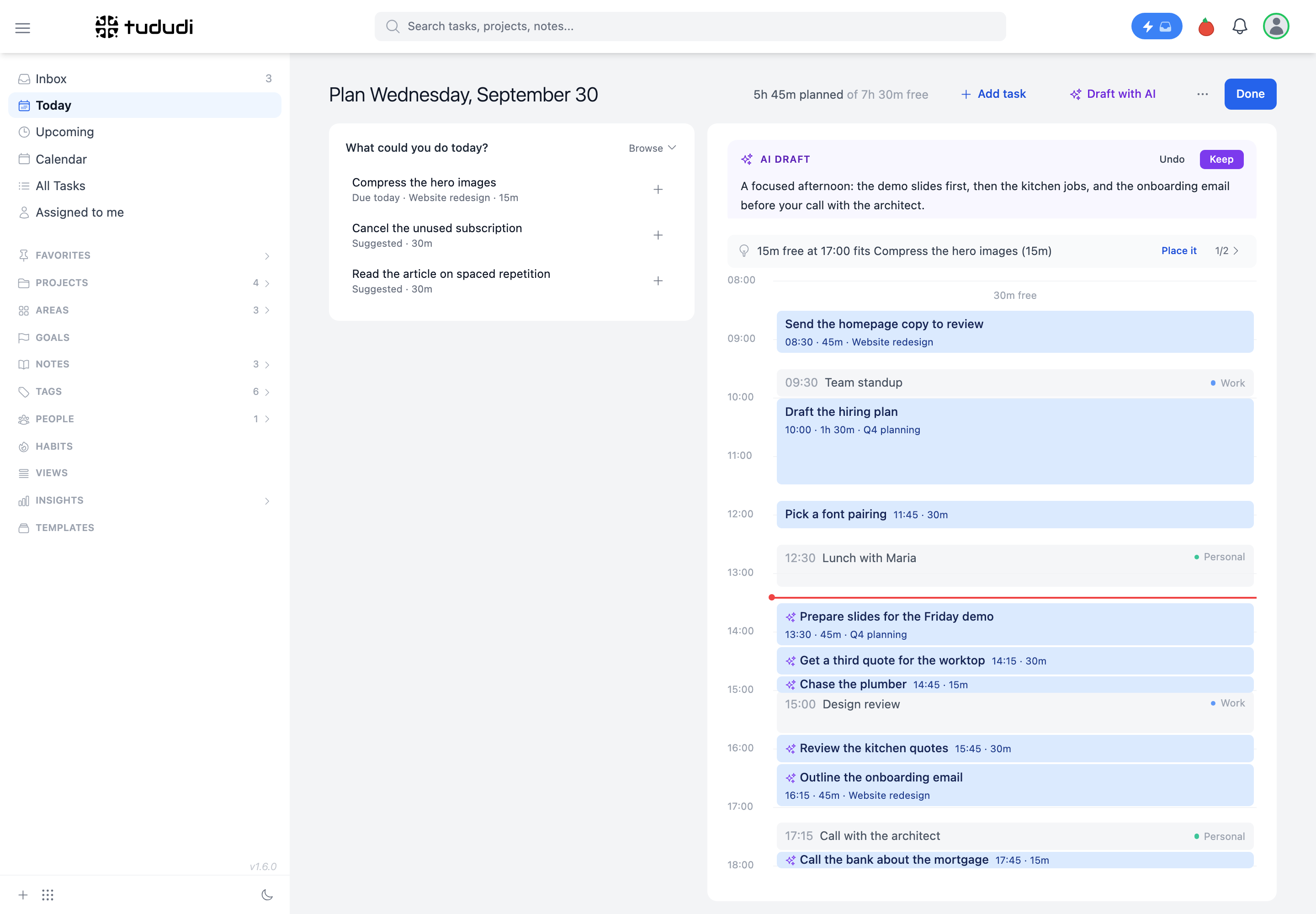
The planner shows what could fit today, in the order you choose. Give each task a length and place it in the free time between meetings, or let AI draft the whole day.
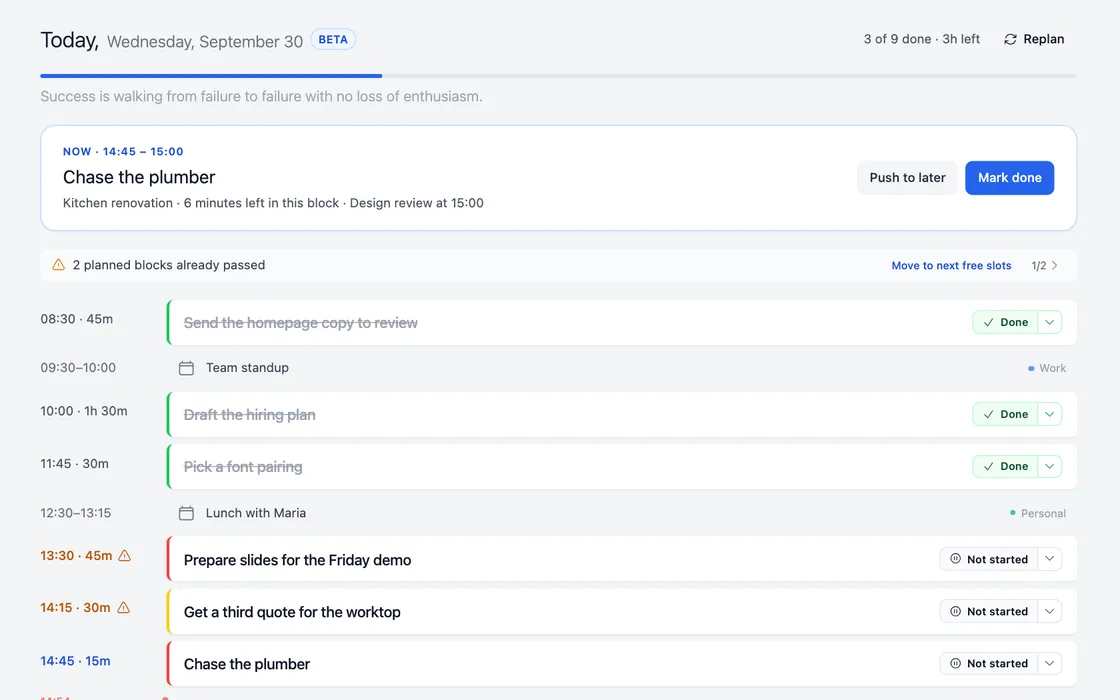
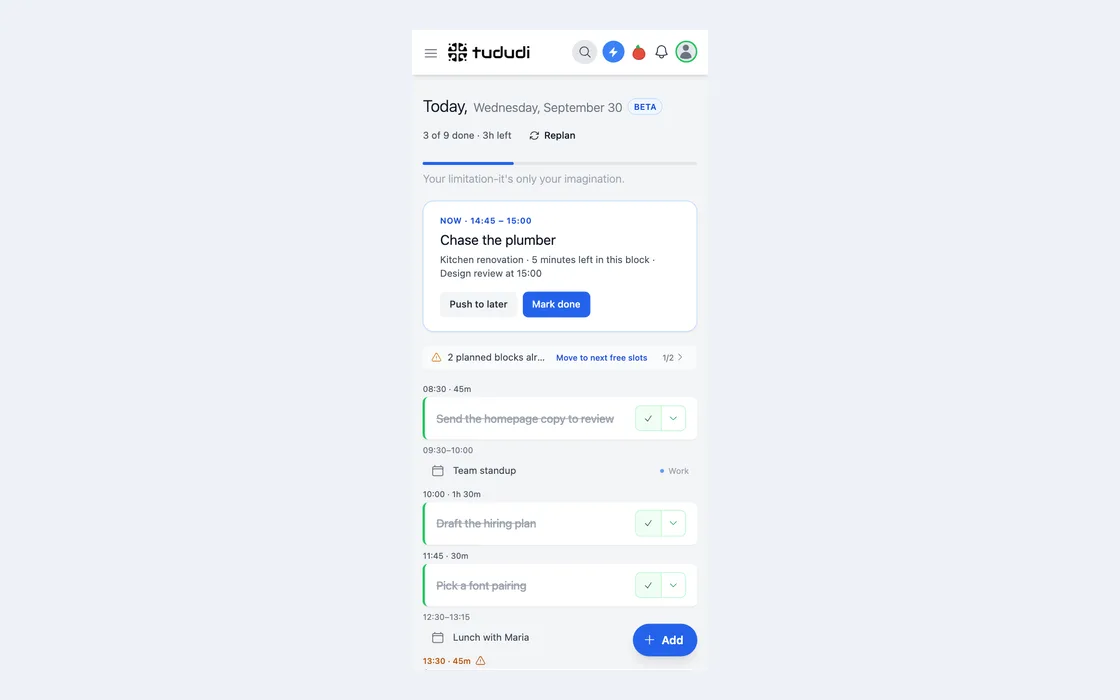
Start the day and Today shows only what you committed to: the block you should be on now, then the agenda, with your Google, Apple or Outlook meetings in between.
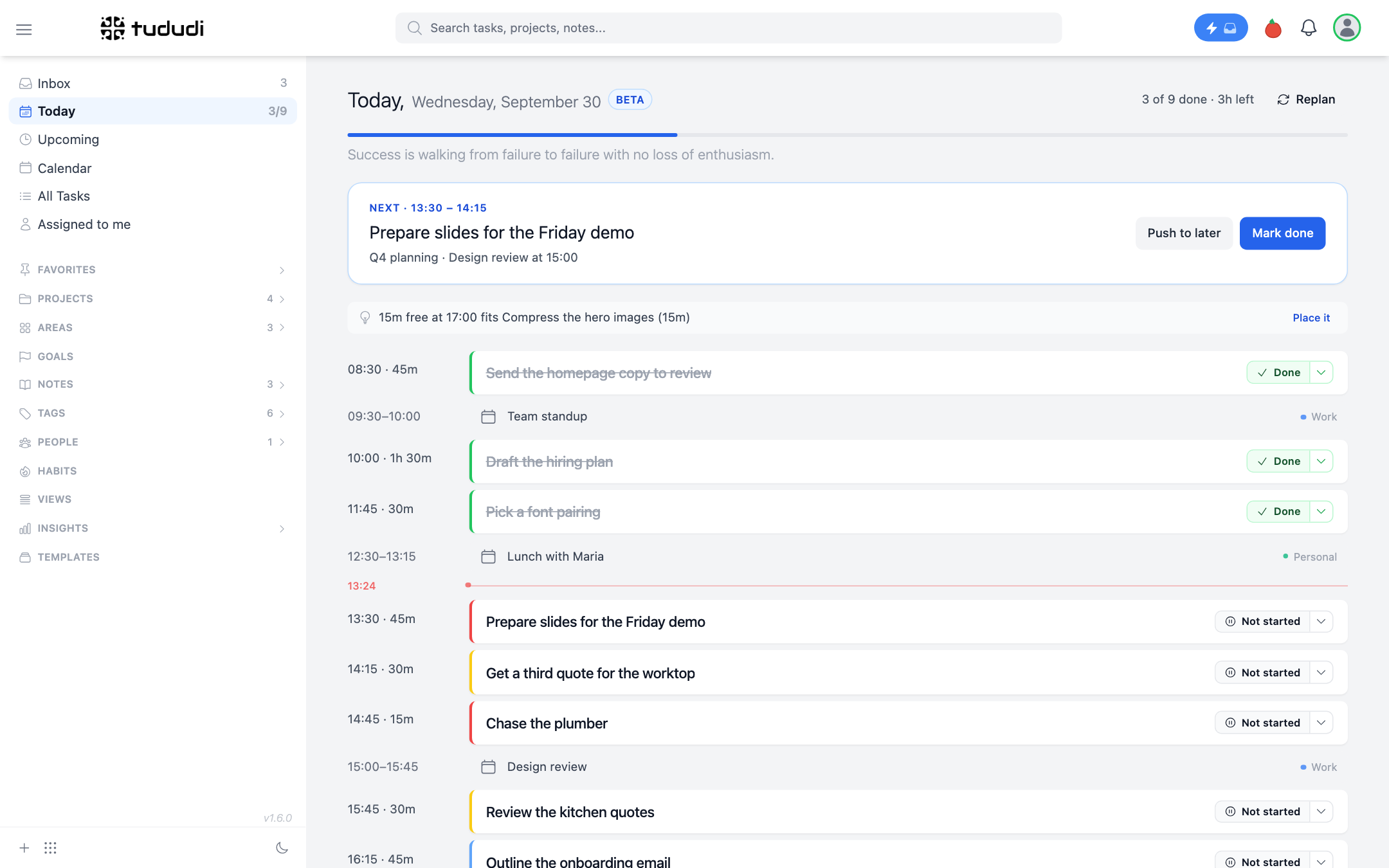
tududi combines goals, projects, tasks, notes, and smart views into one calm, focused system. We run it, so you never have to.
Add inbox items, tasks, notes or projects from anywhere, with files attached. Paste a screenshot and it becomes the item.
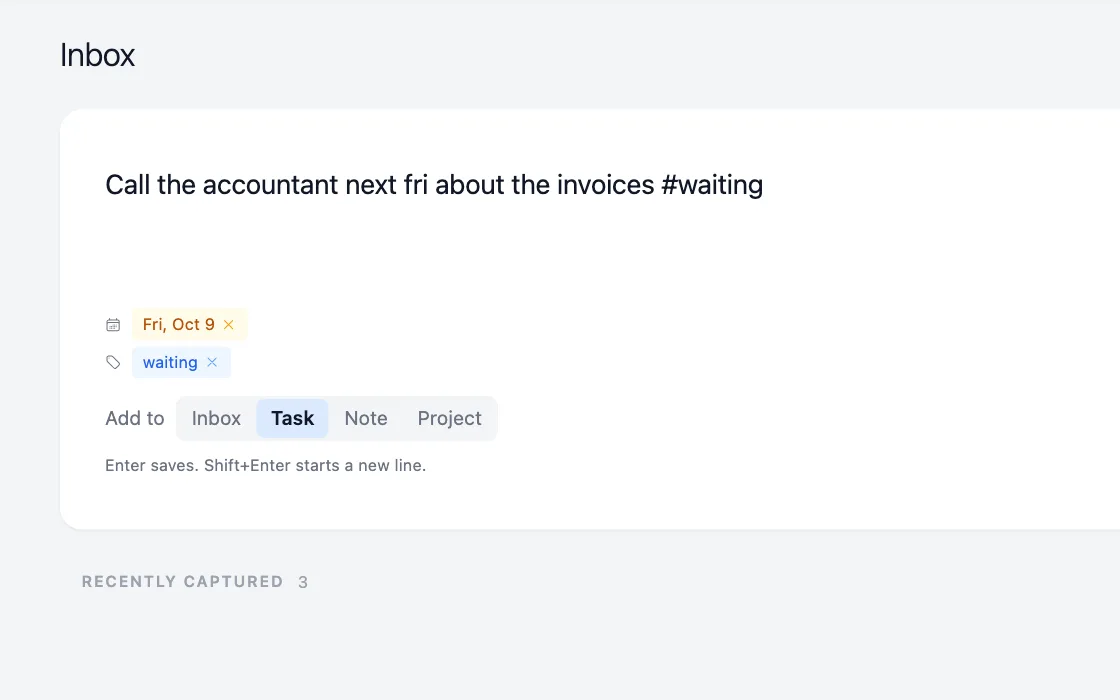
Preview“tomorrow”, “next fri”, “every weekday”: dates and repeats are read as you type, along with #tags, +Project and @person.
PreviewA planner that places tasks in the free time around your meetings, with lengths, ranked suggestions and planning tips.
PreviewConnect Google, Apple or Outlook calendars and see meetings next to your tasks, with the current block on top.
PreviewDraft the day with AI, get length estimates for tasks, and an end-of-day wrap-up that carries unfinished work over.
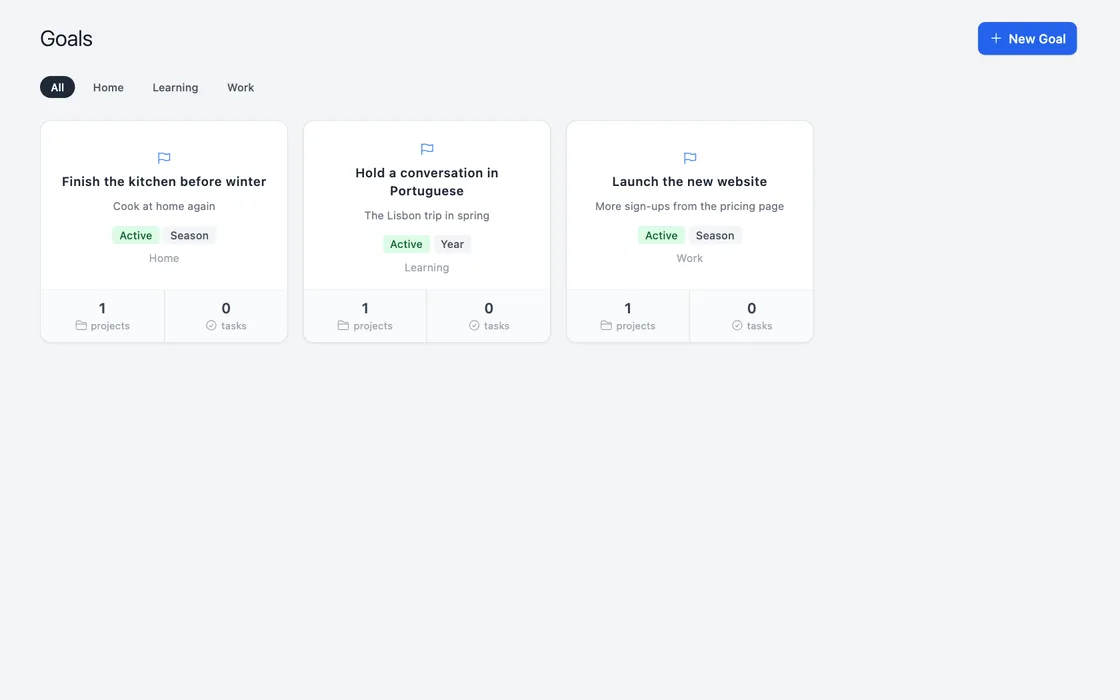
PreviewSet outcomes for a season or a year, and see which Areas and Projects are actually moving them forward.
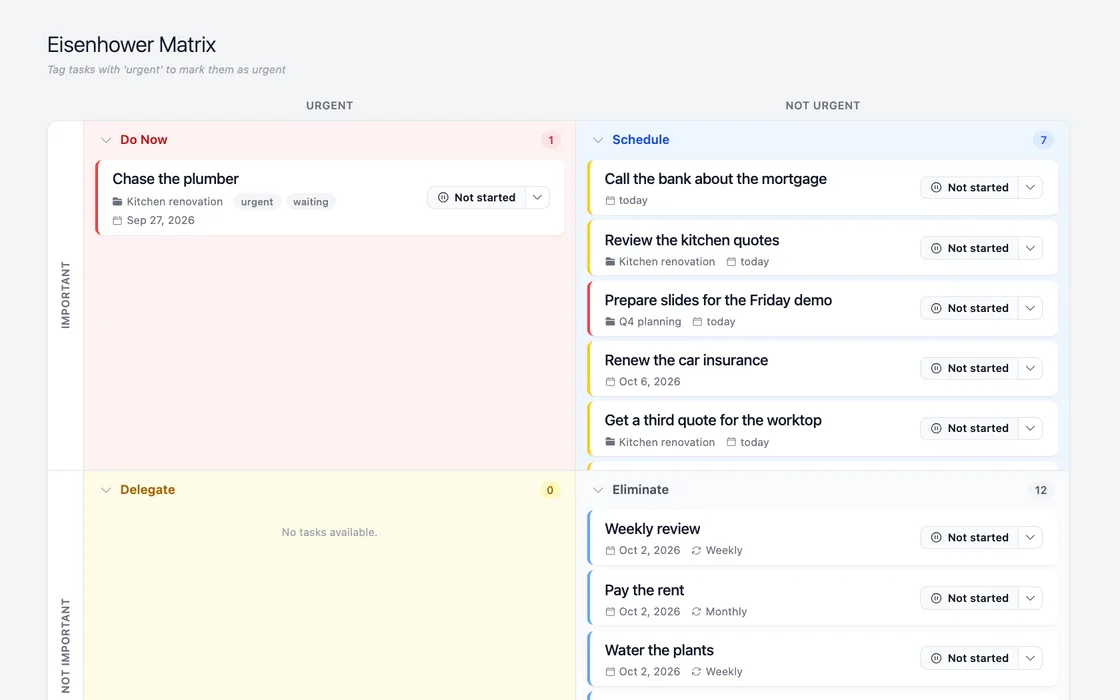
PreviewSwitch to an Eisenhower Matrix or a Kanban board when the question is simply: what do I do right now.
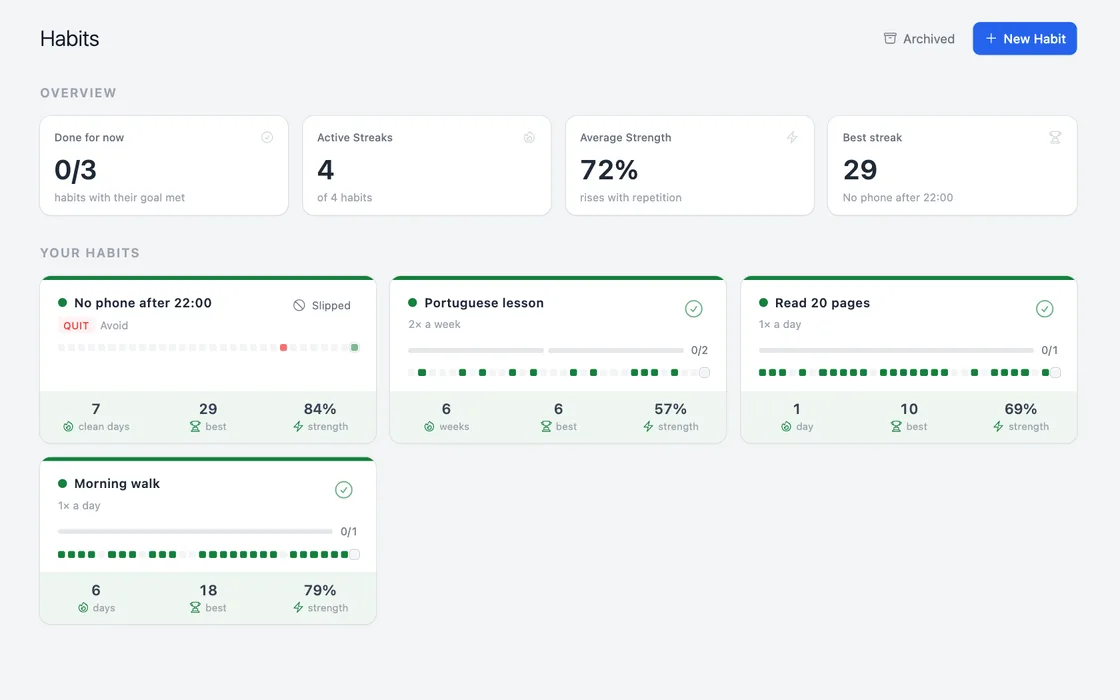
PreviewTrack recurring habits alongside tasks and projects, with simple streaks and completion history.
PreviewGoals and Areas sit side by side at the top: long-range outcomes and ongoing areas of life. Both contain Projects, which contain Tasks.
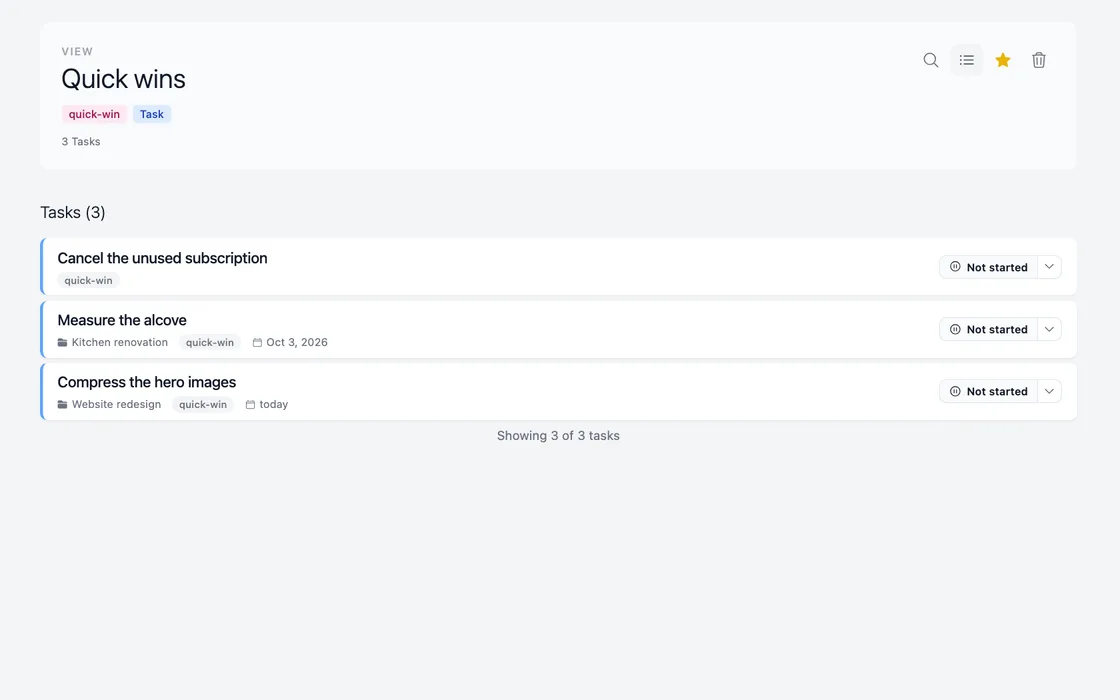
PreviewSmart saved searches like "Today", "Overdue", or "Someday". One click, no rebuilding a filter every time.
PreviewSee completion trends and workload across projects, so you know where your time is actually going.
Daily, weekly, monthly patterns with completion-based recurrence and parent-child relationships.
Priorities, due dates, tags, and smart sorting. Powerful filtering to find what matters.
PreviewBreak down complex tasks into manageable subtasks with progress tracking.
PreviewRich text notes for projects with full search and organization capabilities.
PreviewCustom tags for tasks and notes with instant filtering and cross-project organization.
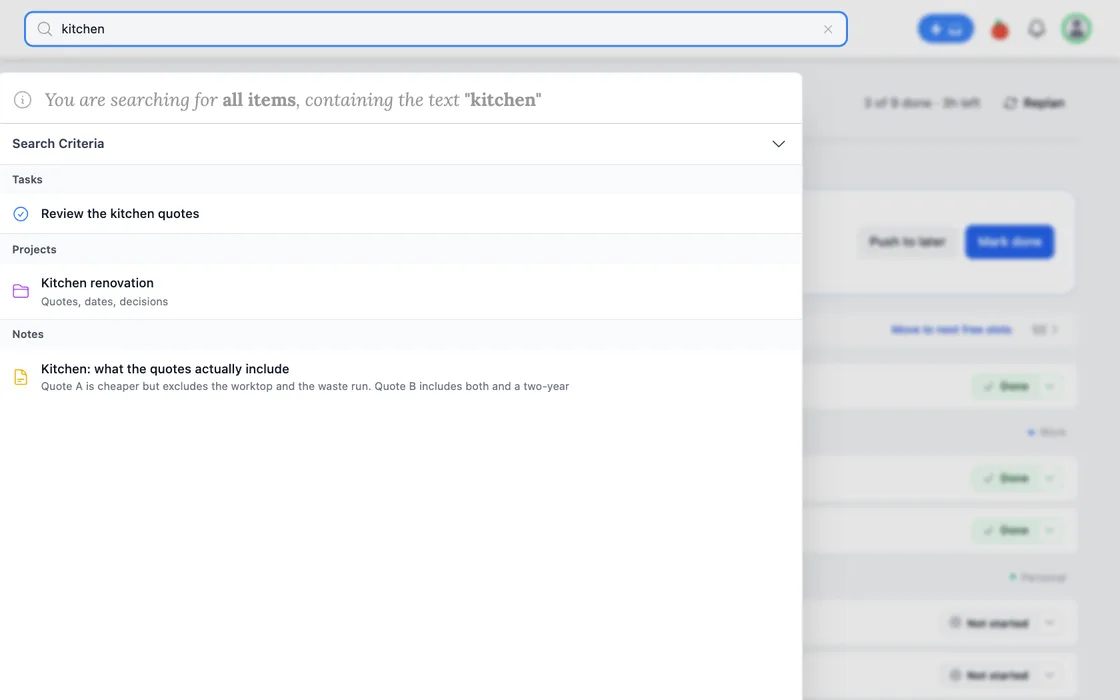
PreviewFull-text search plus filters by project, tag, priority, or due date. Find any task in seconds.
PreviewAdd tududi to your home screen or desktop as a PWA. Works offline and syncs when you're back online.
PreviewSign in with your existing identity provider: Authentik, Keycloak, Google Workspace, or any OIDC-compatible provider.
Available in 26 languages with full localization support.
Bidirectional task sync with Apple Reminders, tasks.org, Thunderbird, and any CalDAV-compatible app.
Versioned Swagger docs and personal access tokens for custom integrations.
Your data is yours. Encrypted backups, export everything as one file whenever you like, and delete your account yourself.
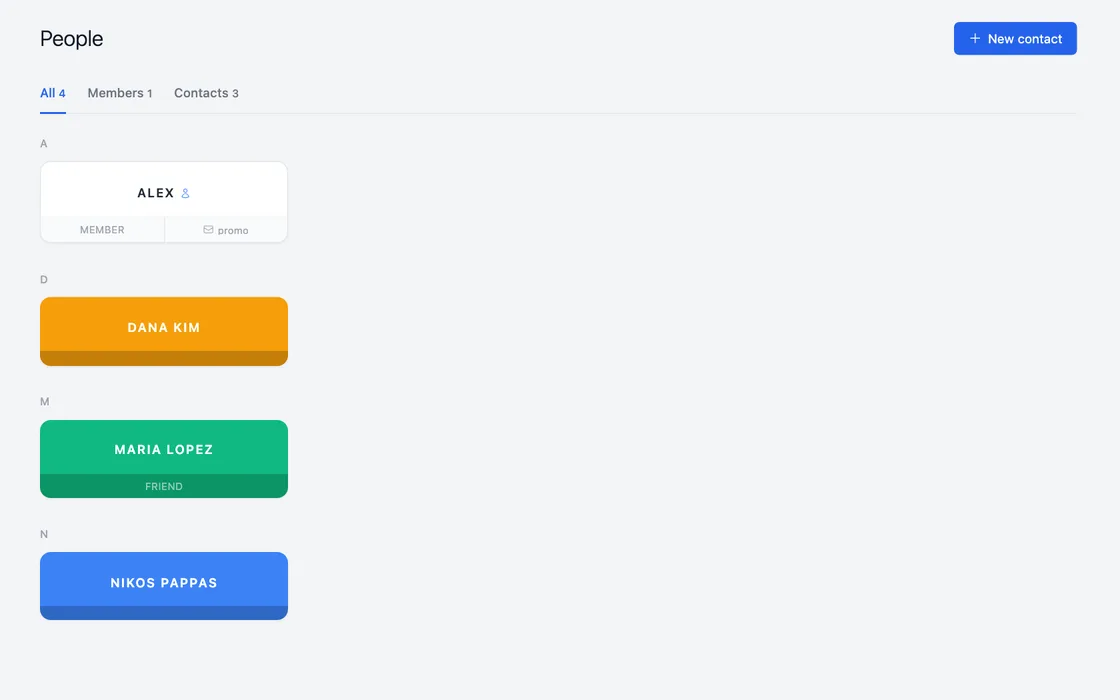
Share projects with granular access controls - read-only or read-write permissions.
tududi ships an MCP server exposing 59 tools, covering tasks, projects, areas, goals, habits, notes, people, tags, views, inbox, search and metrics. Connect Claude or any MCP-compatible agent straight to your own account. The connection goes to your instance rather than through a relay in between, which is a structural difference Todoist and Notion cannot offer, no matter what they promise.
What should I focus on today, and is anything slipping?
Start with Ship the billing migration. It is due today, and three tasks in Payments are waiting behind it.
Worth knowing
Move the redesign review to Friday and add a task to unblock Payments.
Done. Review redesign draft is now due Friday, and Unblock Payments queue is in the Payments project, due today.
An example session. Your agent connects straight to your own instance over MCP.
Add, find, and complete tasks without leaving the conversation.
The MCP connection goes straight to your own tududi account. Nothing routes through a third party.
Built on the open Model Context Protocol. Works with Claude and other MCP clients.
The same works with Cursor, Windsurf, Cline, and any other MCP client. Read the MCP docs →
MCP is included with tududi Cloud.
A separate, optional layer that reads your data and writes back plain-language summaries. Off until you switch it on.
Suggested next steps for a specific task, generated on demand.
Drafts your day into the free time around your meetings, with a reason for every block.
At the end of the day: what got done, a pattern worth noticing, and what to carry into tomorrow.
A quick health assessment for a project: what's moving, what's stuck.
What reviewers wrote after running tududi themselves.
Tududi stands out as a breath of fresh air among over-engineered and often expensive productivity tools.
Tududi is an immensely useful tool, and one that is easy to integrate into day-to-day workflow.
A free, open-source application that allows you to efficiently categorize and track your work, from personal task management to large-scale project management and detailed note-taking.
No tiers, no add-ons, no features held back. Try it free, then one price.
Cancel any time and export everything. If tududi Cloud ever shuts down, you get your data and a guide to keep running it. Fair use applies to storage and API volume. 14-day money-back guarantee, no questions asked.
Developers: tududi is open source and can be run on your own server. Read the guide →
How tududi Cloud compares with the apps people usually weigh it against, on their individual plans.
Todoist Pro, TickTick Premium and Notion Plus, from their public pricing pages in September 2026. Check their sites for current prices. Their prices are US list prices in dollars.
Your data, the AI, and billing. If something is missing, ask in Discord.
You do not have to take our word for it. tududi is open source, so anyone can read exactly how it handles your data. On Cloud, everything you put in stays yours: export it as a single file at any time, delete your account yourself, and there is a 14-day money-back guarantee if it turns out not to suit you.
Yes. It is built primarily by one maintainer, with contributions from the community, and it ships often. Every release is listed on the GitHub releases page, linked from the Changelog in the menu above, so you can judge the pace yourself rather than take our word for it. Development happens in the open: issues, a public roadmap, and a Discord where questions get answered.
The app is MIT licensed and the source is public, so it cannot be withdrawn from you. Anyone can keep running it, and you can fork it. On tududi Cloud your data lives in a standard tududi database rather than a proprietary format, so if the service ever shut down you would get your data and a guide to moving it onto your own server.
There is no free plan, but every new account gets a 7-day free trial, no card needed. The trial includes the AI assistant with a smaller allowance and one member you can add. Public note links open once you subscribe. If you do not subscribe, the account turns read-only for 30 days so you can export your data, and is then deleted. After the trial, Cloud is €5 a month or €50 a year.
That depends which of the two layers you mean, and the difference matters. The MCP server runs inside your own instance: an agent such as Claude Desktop connects to that instance directly, so the conversation is between your agent and your own tududi rather than a broker in between. The AI Assistant is different. It calls an OpenAI-compatible provider, so if you point it at a hosted one, the contents of those requests go to that provider. Point it at a local model instead, such as Ollama or LM Studio, and nothing leaves your machine. It stays off until you supply a key, so this is always your choice rather than a default.
MCP is the Model Context Protocol, an open standard for connecting AI agents to real systems. tududi ships an MCP server exposing 59 tools spanning tasks, projects, areas, goals, habits, notes, people, tags, views, inbox, search and metrics, so an agent can capture, find, update and finish work rather than just talk about it. It is opt-in, included with Cloud, and it works with Claude Desktop, Cursor, Windsurf, Cline, or any other MCP client.
We run the server, the updates and the backups. Try it free for 7 days, no card needed.
Occasional product news and updates. No spam, unsubscribe any time.
We store your address and the date you gave it, only to send news and updates. We never share it.
The tududi app is available in 26 languages worldwide
Connect with other tududi users, get support, and stay updated